Bird houses have small entrance holes for two very practical reasons: to keep out predators and to control which bird species can actually get inside. A hole sized precisely for, say, a chickadee (1-1/8 inches) is physically too small for a starling to squeeze through, and too small for a raccoon's paw to fish around inside and grab eggs or nestlings. That one design decision does more work than almost anything else you can do for nesting success.
Why Bird Houses Have Small Holes and How to Size Them

Maya Thompson
27 Jun 2026
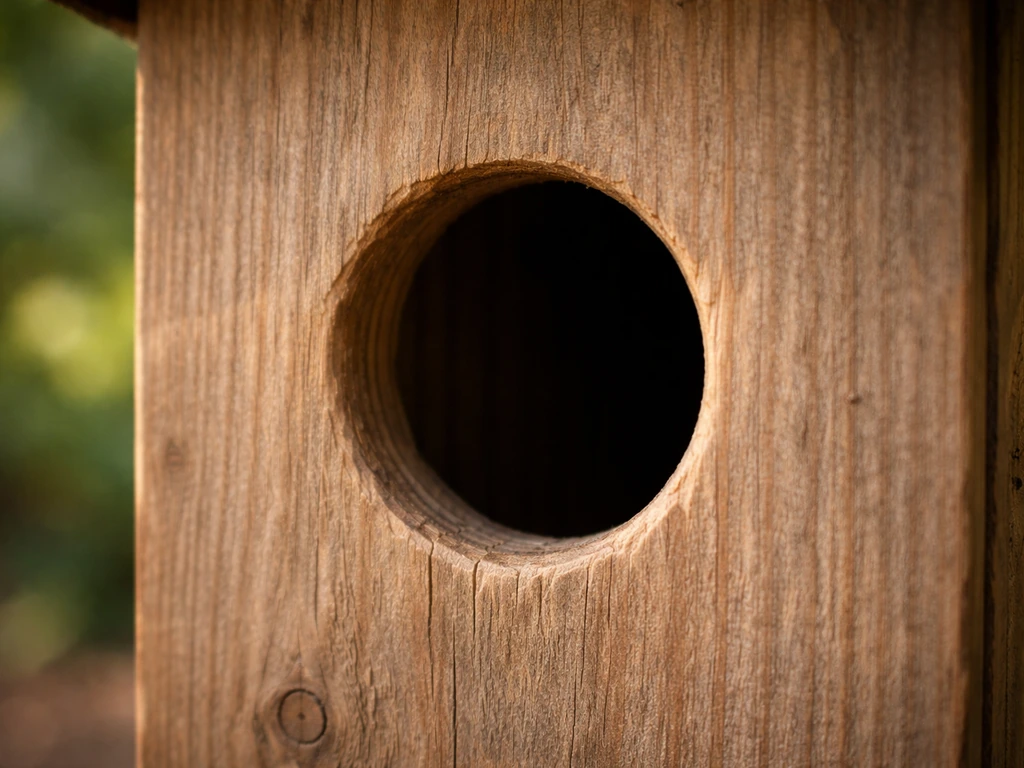
Why the small hole matters: safety and species control
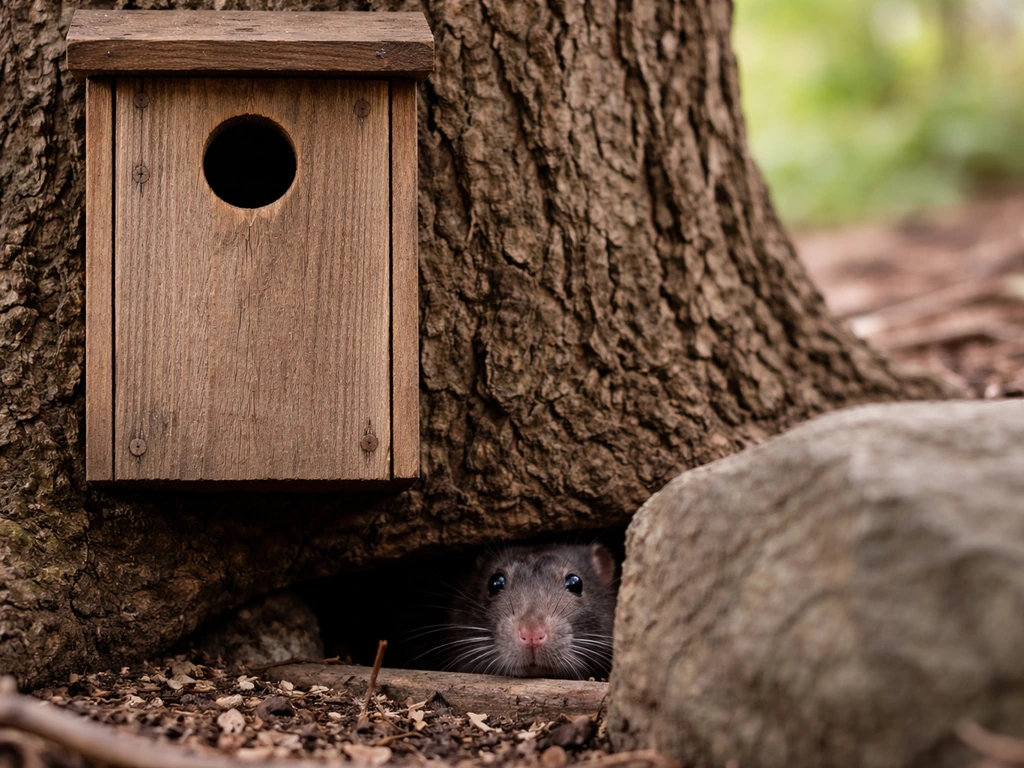
Cavity-nesting birds evolved to seek out tight, enclosed spaces because small openings are naturally harder for predators to access. When you build or buy a nest box, you're replicating that logic on purpose. A hole that's just large enough for your target species acts as a first line of defense against the things most likely to wreck a nest: raccoons, snakes, squirrels, house sparrows, and European starlings.
Starlings and house sparrows are the big competitive threat in most backyards. Both are introduced species that aggressively take over nest boxes meant for bluebirds, tree swallows, and other natives. A 1.5-inch entrance hole, which is correct for Eastern Bluebirds, is too small for a European starling to enter. That single half-inch difference in diameter is enough to blank" rel="noopener noreferrer">shut starlings out entirely. House sparrows are smaller and can fit through many standard holes, which is why placement, monitoring, and sometimes hole restrictors matter alongside the hole itself. How close you can put bird houses together depends on the species, spacing, and whether the boxes are separated enough to reduce competition and keep intrusions from one nest affecting another.
It's worth being direct about predators: there is no fully predator-proof nest box. A small hole slows things down and reduces risk, but a determined raccoon can still reach a short distance inside, and snakes can enter holes sized for larger birds. That's why hole size is the starting point, not the whole solution. Predator guards work alongside the hole to genuinely protect nests, and I'll cover those below.
How birds actually choose a nest box entrance
Birds don't just look at a hole and decide. They assess it physically, hovering or clinging at the entrance and testing whether they can fit through comfortably. A hole that's too tight will cause a bird to investigate and then leave. A hole that feels right, meaning the bird can enter and exit without struggling, signals that the space is appropriate for their body size. This is why tolerances matter: even 1/8 of an inch can make a real difference for smaller species.
The height of the hole above the floor of the box also matters to the bird. Most species prefer an entrance positioned high enough on the front panel that a predator can't easily reach down to the nest from outside. A standard interior depth of 6 to 10 inches below the entrance hole (depending on species) gives nesting birds that sense of security. If the hole is too low on the front panel, birds will often reject the box entirely.
Cavity nesters are also drawn to holes that face away from prevailing weather. In most of North America, that means facing somewhere between north and southeast to avoid afternoon sun and driving rain. This isn't about the hole size itself, but birds integrate all these cues together when deciding whether to move in.
Choosing the right hole size for your target species
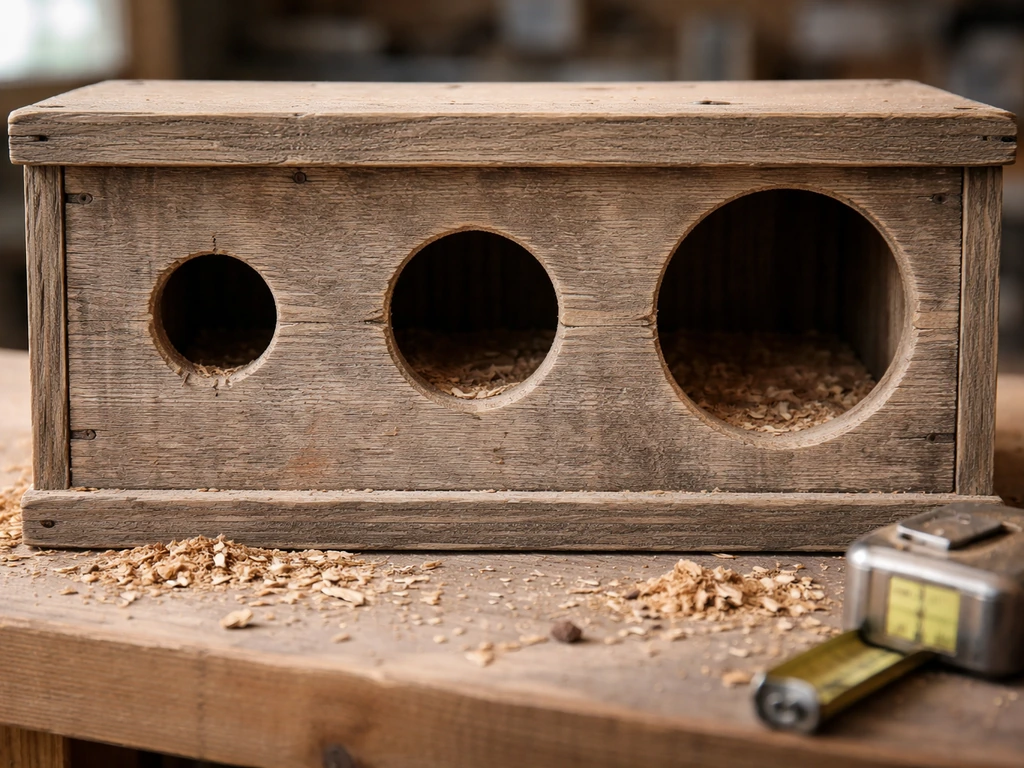
Here are the standard entrance hole diameters for the most common backyard cavity nesters in North America. If you are wondering what size hole for bird house to choose, use the target species diameter below as your starting point. These are the diameters to drill, not rough approximations. A spade bit or Forstner bit will give you a cleaner hole than a standard twist bit, and cleaner edges matter because rough splinters can deter birds and create gaps that let in weather.
| Species | Hole Diameter | Floor Size (interior) | Mounting Height |
|---|---|---|---|
| Black-capped / Carolina Chickadee | 1-1/8 inches | 4 x 4 inches | 5–15 feet |
| House Wren | 1-1/8 to 1-1/4 inches | 4 x 4 inches | 5–10 feet |
| White-breasted Nuthatch | 1-1/4 inches | 4 x 4 inches | 5–15 feet |
| Tree Swallow / Violet-green Swallow | 1-1/2 inches | 5 x 5 inches | 4–15 feet |
| Eastern / Western / Mountain Bluebird | 1-1/2 inches | 5 x 5 inches | 4–6 feet |
| Tufted Titmouse | 1-1/4 inches | 4 x 4 inches | 5–15 feet |
| Downy Woodpecker | 1-1/4 inches | 4 x 4 inches | 5–20 feet |
| Hairy Woodpecker | 1-1/2 inches | 6 x 6 inches | 8–20 feet |
| Northern Flicker | 2-1/2 inches | 7 x 7 inches | 6–20 feet |
| Wood Duck | 4 x 3 inch oval (or 4-inch round) | 12 x 12 inches | 4–20 feet over water or on pole |
| American Kestrel | 3 inches | 8 x 8 inches | 10–30 feet |
| Eastern Screech-Owl | 3 inches | 8 x 8 inches | 10–30 feet |
Chickadees specifically want the tightest fit of any common backyard species. They will actually excavate soft wood around a hole to widen it slightly to suit themselves, which is a useful behavior to know: if you're building for chickadees, you can use softer wood like cedar and leave the hole just slightly undersized at 1-1/8 inches. The birds will do the fine-tuning. For bluebirds, the 1.5-inch standard is well-established and worth sticking to precisely, since it's the dimension that excludes starlings.
If you're in the western U.S., Mountain Bluebirds sometimes do better with a 1-9/16-inch hole rather than the standard 1.5. It's a small adjustment, but western populations tend to be slightly larger-bodied. Regional habitat and subspecies variation is real, and it's worth checking with your local Audubon chapter or state wildlife agency for locally refined guidance.
Troubleshooting: no birds, wrong species, or predation problems
If your box has been up for a full season without occupancy, run through this checklist before assuming the hole size is the issue. You can also use the box count guidance for your yard size and target species to figure out how many bird houses you should have how many bird houses should i have. Hole size is often not the first problem.
- Check that the hole diameter actually matches your target species. Measure it with calipers or a drill bit gauge. Nominal sizes on hardware store bits can run 1/16 inch oversized.
- Confirm the hole height above the floor. It should be 6 to 8 inches for most small cavity nesters, and the interior depth below the hole needs to match.
- Look at the habitat. Bluebirds won't use a box in dense woodland. Wrens won't use one mounted on a post in an open field. Match the bird to the habitat.
- Check the mounting height and orientation. Too low, too shaded, or facing west into afternoon sun are common reasons birds skip a box entirely.
- Look for signs of predation: scratch marks around the hole, feathers inside, destroyed nests, or a hole that looks enlarged. These are signs of a predator problem, not a sizing problem.
- If house sparrows or starlings have taken over, the hole may be too large for the species you want. A hole restrictor plate (a metal or wooden plate with the correct hole drilled in it) can be mounted over the existing hole to reduce its diameter.
If you're seeing predation, the usual suspects are raccoons reaching in through the entrance and snakes climbing the mounting pole. A hole extender (a wooden block 1.5 to 2 inches thick with a matching hole drilled through it, attached to the front of the box) makes it much harder for a raccoon to reach the nest. It doesn't change the entrance diameter for the bird, but it adds 1.5 to 2 inches of reach required to get past it. For pole-mounting, a cone-style baffle below the box stops most climbing mammals and snakes.
Competition from house sparrows is trickier because they can fit through most holes sized for native cavity nesters. If sparrows are the problem, the most effective responses are active monitoring (check the box every few days during nesting season), removing sparrow nests promptly, and considering a sparrow-resistant design like a Peterson bluebird box, which has an oval entrance that sparrows find less comfortable. Relocating the box to a more open location away from buildings also helps, since house sparrows prefer to nest close to human structures.
Mounting, placement, and predator-proofing that work with hole size
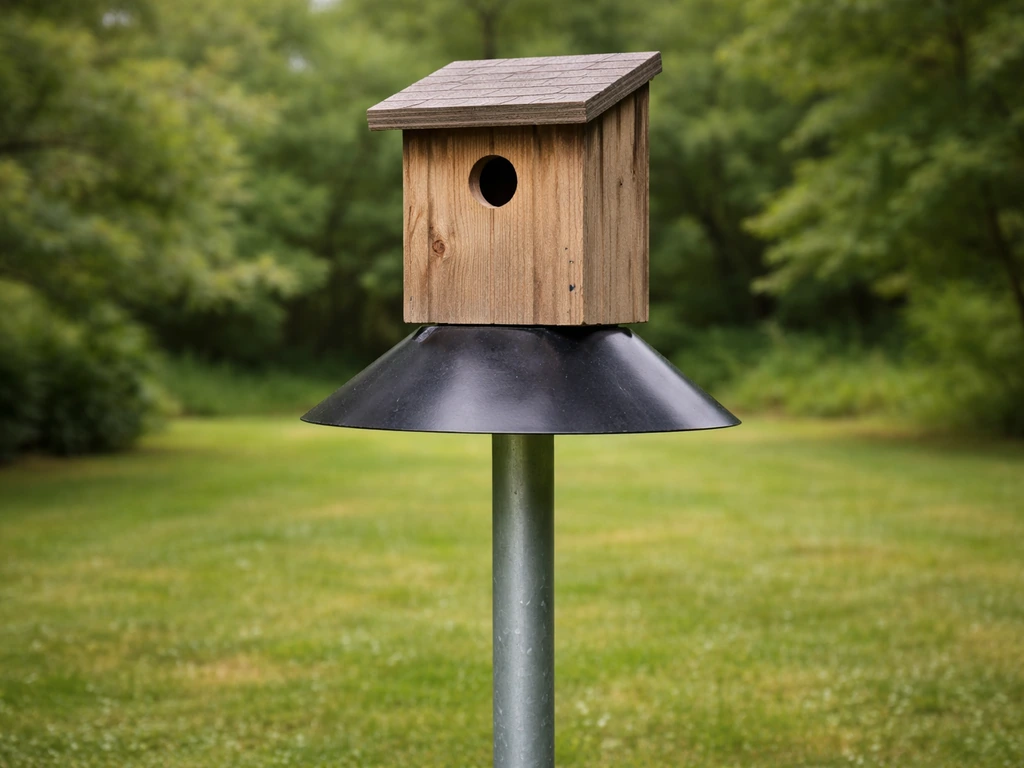
Getting the hole size right is step one. A quick rule for how big your bird house should be is to match the entrance hole size to the specific species you want to attract Getting the hole size right is step one. Getting everything else right is what actually produces successful nesting. Here's how to set up a box so the hole can do its job.
- Mount on a smooth metal pole rather than a tree or fence post whenever possible. Raccoons and squirrels can climb wood easily; a smooth conduit pole with a cone baffle is much harder.
- Install a cone or stovepipe baffle on the pole, positioned at least 4 feet off the ground and at least 4 feet below the box. This stops climbing predators before they reach the entrance.
- Use a hole guard plate made of metal (aluminum or steel at least 1/16 inch thick) around the entrance. Woodpeckers, squirrels, and even raccoons will enlarge a wood entrance hole over time; a metal plate keeps the hole at exactly the right diameter permanently.
- Face the entrance away from prevailing wind and afternoon sun. North to southeast is the usual recommendation for most of North America.
- For bluebird boxes specifically, mount at 4 to 6 feet high on a smooth pole in open habitat with short grass, at least 100 yards from woodland edges where possible.
- Keep boxes at least 100 feet apart for the same species (more for bluebirds, which are territorial), and do not mount boxes for the same species facing each other directly.
Ventilation and drainage are easy to overlook but matter for nest health. Drill three or four small drainage holes (1/4 inch) in the floor, and cut or drill vent holes near the top of the side panels. A hot, wet box will kill nestlings. These don't affect entrance hole function but they affect whether a successful nest actually fledges young.
Keeping boxes clean and ready year after year
An entrance hole in perfect shape connected to a filthy box won't attract birds. Old nests harbor mites, blowfly larvae, and bacteria that can harm or kill nestlings. Clean every box once a year, minimum, and ideally after each brood if you're monitoring actively. If you're trying to budget, the cost of a bird house varies based on size, materials, and how predator-resistant the design is.
- Clean boxes in late winter or very early spring, before the first prospecting birds arrive in your area. In most of the U.S., that means February to early March.
- Remove all old nesting material completely. Wear gloves and a dust mask since old nests can carry parasites and histoplasma fungal spores.
- Scrub the interior with a stiff brush. A dilute bleach solution (one part bleach to nine parts water) can be used if you rinse thoroughly and let the box dry completely before closing it up. Plain hot water works fine if you don't want to use bleach.
- Inspect the entrance hole while you have the box open. Check for enlargement by predators or weathering. If it's been widened, add a metal hole guard plate or replace the front panel.
- Check that ventilation and drainage holes are clear and not blocked by debris or wasp nests.
- Inspect mounting hardware for rust or loosening. A box that falls during nesting season is a complete loss for that brood.
- If you missed the pre-season clean, do it between broods (after young have fledged and before a second clutch begins, typically a 1 to 2 week window).
Timing your maintenance around the birds' calendar is just as important as the cleaning itself. Disturbing an active nest during incubation or early brooding can cause the adults to abandon it. NestWatch recommends checking boxes briefly and infrequently during active nesting, and doing major cleaning only when the box is empty. If you're not sure whether a box is active, watch from a distance for 10 to 15 minutes before opening it.
One last thing worth knowing: if your box is in good shape, clean, mounted correctly with a predator baffle, and has the right hole size for your target species, give it at least two full seasons before concluding there's a problem. Some locations simply take time for birds to discover, especially in areas without an established local population of the species you're targeting. Patience is part of the process, but at least with the right hole size and setup, you're giving every bird that does come by a safe and genuinely useful place to raise a family. The next step is spacing: place multiple bird houses far enough apart to reduce competition and keep each nest territory undisturbed how far apart should bird houses be placed.
FAQ
Why do bird houses have small holes instead of just letting birds pick any entrance?
Small holes act like a species filter and a physical delay. Birds can still fit and maneuver normally, but common threats (especially raccoons) are less able to reach inside quickly, and larger competitor species have trouble entering at all.
If a bird can fit through the hole, does that mean the hole size is always correct?
Not necessarily. Birds also judge comfort and footing at the entrance, so a hole that is technically the right diameter but has rough edges, splinters, or gaps around the trim can cause birds to reject the box.
What happens if the entrance hole is slightly too large for my target species?
Even small increases can let competitors enter. House sparrows often use openings intended for other natives, and a larger-than-recommended hole can also make predator access easier, so “almost right” can still reduce nesting success.
Can I use one “universal” hole size for multiple bird species?
Usually not effectively. Hole diameters are designed for a narrow fit, so a universal size tends to admit several species (including competitors) and can exclude the specific birds you want. It is better to match the hole to your target species and adjust placement for different boxes.
Do birds require a perfectly sized hole, or can they enlarge it?
Some species can adjust, especially chickadees, which may widen soft wood around the entrance. Still, relying on birds to do the fine-tuning can create unintended gaps that affect weather and predator risk, so the starting size should be close to the recommended diameter.
How can I tell whether the box failure is due to hole size versus placement or timing?
Check for signs of interest (birds perching at the entrance, visits during the correct season) and compare to local activity. If you have good activity but no occupancy after two full seasons, the hole size or predator/competition factors may still be involved, but ventilation, drainage, cleaning, and spacing are frequent culprits too.
Does the hole height on the front panel matter as much as the hole diameter?
It matters. If the entrance sits too low, predators can reach in more easily and some species will reject the box. Use a species-appropriate entrance height, and keep the interior depth adequate so the bird has a secure nesting space.
Are round holes always best, or do shapes change entrance requirements?
Shape can matter for competitor control. An oval or restricted-entry design can reduce access for house sparrows while still allowing your target species to enter, but it should still match the intended dimensions for that bird.
If I add a predator guard or hole extender, will it reduce bird entry success?
A properly sized extender usually does not change the bird’s entrance diameter, but it increases how far a raccoon would need to reach. That added obstruction can help a lot, but make sure it does not create sharp edges, block ventilation, or interfere with how the bird lands at the entrance.
Do I need to measure the hole diameter precisely, or is there leeway?
There is very little leeway for smaller birds. Even differences on the order of 1/8 inch can shift which species can enter comfortably, especially when competitors are involved. Measure after drilling, and avoid enlarging the hole unintentionally.
What tools or drilling mistakes most often ruin an otherwise correct hole size?
Twist bits can leave rough edges, and rough splinters can deter birds or create unintended gaps. Also avoid drilling off-center or out of square, since a slightly crooked entrance can be effectively smaller for some birds or easier for predators to probe.
If predators are getting in, should I just reduce the hole size further?
Not as the first move. If the hole is too small, your target birds may reject the box, and some snakes can still enter openings meant for larger birds. Instead, address reach and access with guards like a cone baffle for poles and an entrance extender for raccoons.