The entrance hole is the single most important dimension on any bird house. Get it right and the species you want moves in. Get it wrong by even a quarter inch and you either end up with an empty box or, worse, an invasive species taking over. The short answer: hole size depends entirely on the bird you're building for. For the most common backyard species, you're looking at a range of roughly 1" to 2", and the difference between each size determines who gets the key.
What Size Hole for Bird House? Entrance Sizes by Species
Maya Thompson
13 Apr 2026
Species-specific hole sizes: the numbers that actually matter
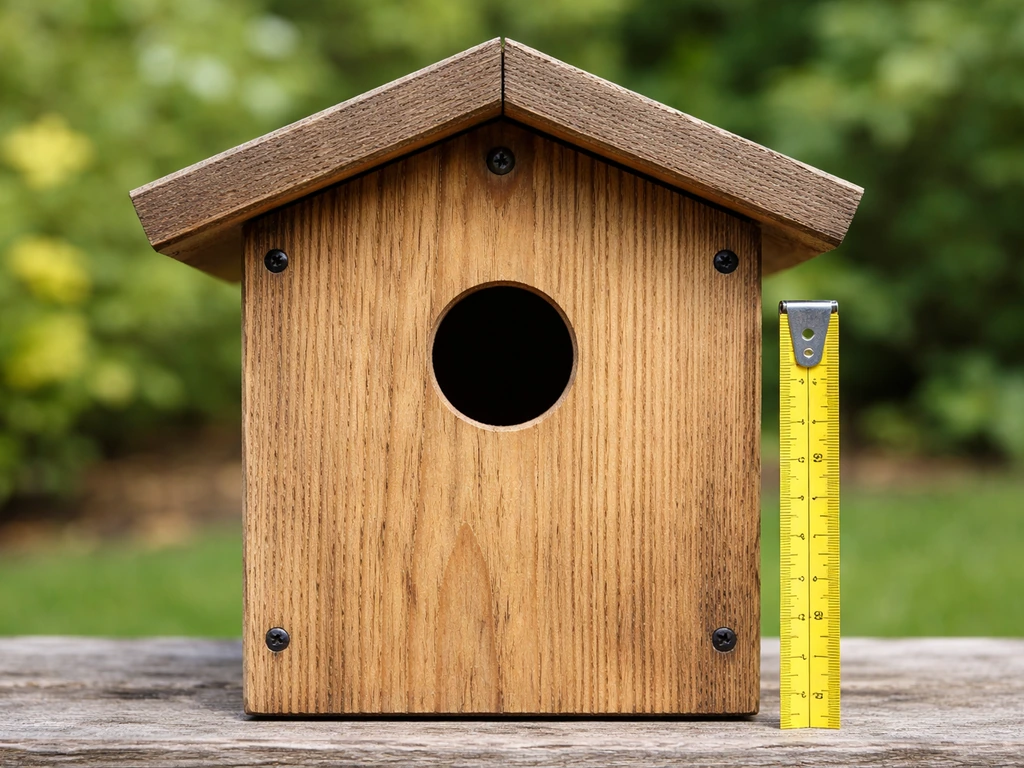
Every cavity-nesting bird has a preferred entrance size, and most won't squeeze through a hole that's clearly too small or feel safe in one that's too large. Below is a practical reference table covering the most common North American backyard species. These dimensions come from NestWatch (Cornell Lab) and OSU Extension guidance.
| Species | Entrance Diameter | Hole Height Above Floor | Mounting Height |
|---|---|---|---|
| House Wren | 1" | 1 1/4" | 5–10 ft |
| Black-capped Chickadee | 1 1/8" | 7" | 6–15 ft |
| Carolina Wren | 1 1/2" round (or 1 1/2" x 2 1/4" slot) | ~6" | 3–6 ft |
| Tree Swallow | 1 1/2" | 6" | 4–10 ft |
| House Finch | 2" | 4" | 8–12 ft |
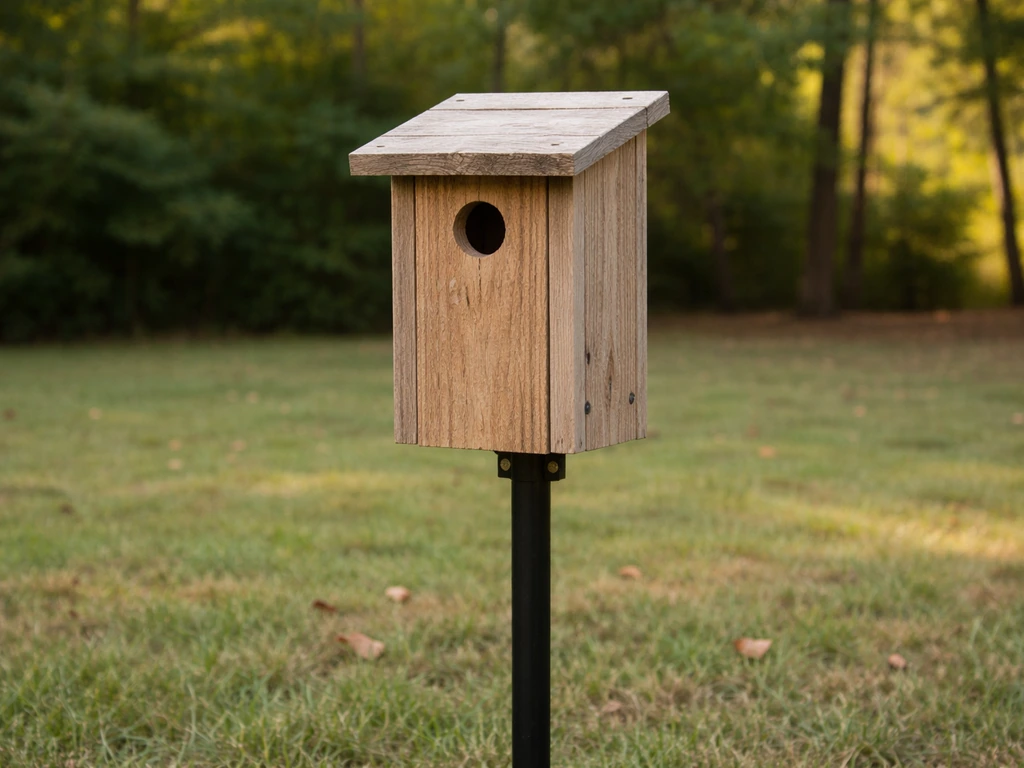
| Eastern Bluebird | 1 1/2" | 6" | 4–6 ft |
| Northern Flicker | 2 1/2" | 14–16" | 6–20 ft |
| Wood Duck | 3" x 4" oval | 12–16" | 5–20 ft |
These aren't suggestions. A chickadee needs 1 1/8" (or up to 1 1/4" at the outside of the acceptable range). Go to 1 1/2" and house sparrows will claim the box first. That's exactly why bird houses have small holes: tight entrances are a filtering system, not a design quirk. Matching the hole to the bird is your first and most powerful predator-proofing move.
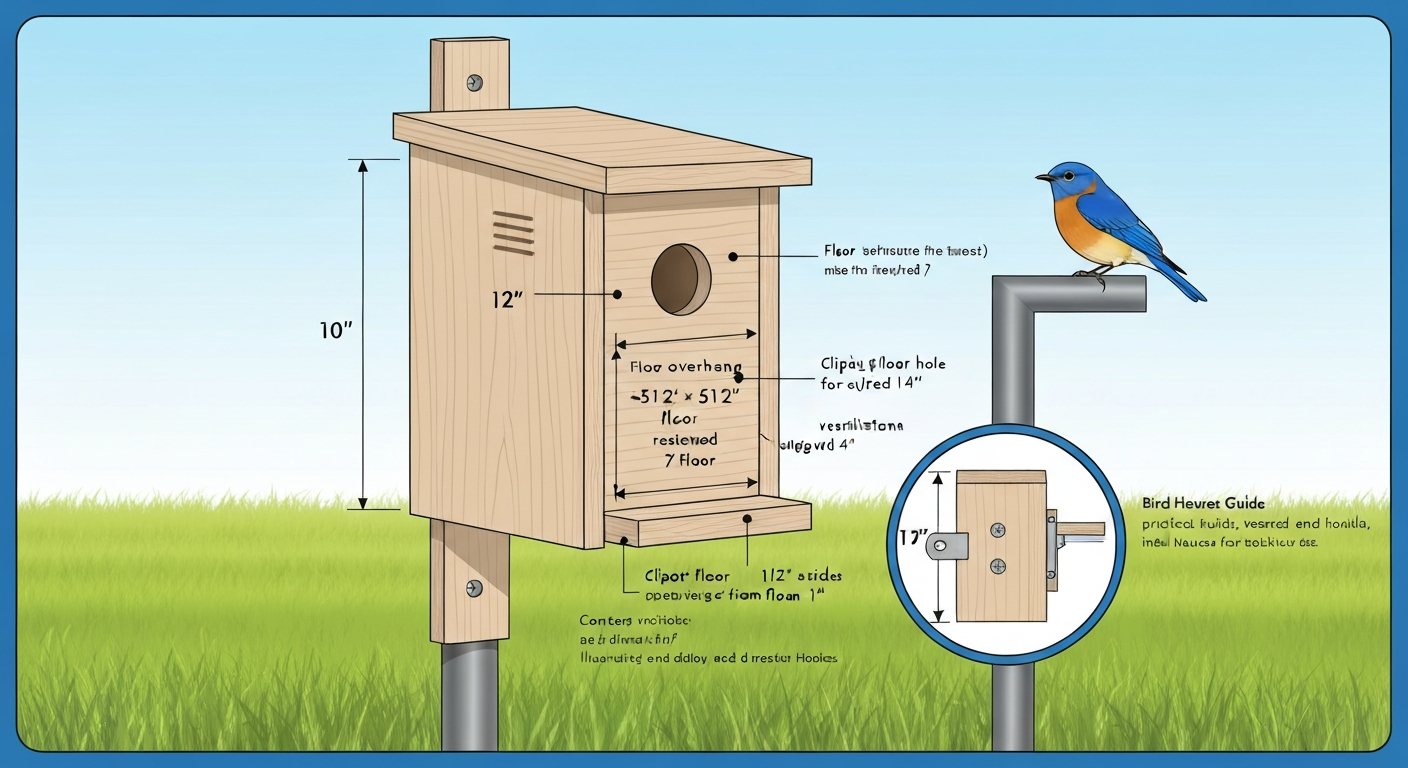
It's also worth pairing your hole size decisions with the right interior dimensions. How big a bird house should be covers floor area and depth, which work together with the entrance height to give the nesting pair enough room while keeping the hole-to-floor distance predator-resistant.
Sparrow bird house entrance-hole dimensions
House Sparrows are among the most common birds people build for in suburban backyards, but they're also the species that most often hijacks boxes meant for other birds. So this section serves double duty: it tells you the right size if you specifically want sparrows, and it helps you avoid accidentally inviting them in.
For a house sparrow box, the correct entrance diameter is 1 1/2" (about 38mm). That's large enough for a sparrow to enter comfortably but won't meaningfully attract larger, more aggressive starlings. If you're targeting the smaller chickadee-sized entrance hole at 1 1/8", house sparrows will usually leave it alone because it's simply too tight for them. The key takeaway: if you don't want house sparrows, stay at or below 1 1/8" for small songbirds.
If you're building a sparrow box intentionally, use a 1 1/2" Forstner bit or spade bit, mount the box between 5 and 12 feet high on a post or building wall, and position it in an open area near cover. Sparrows are adaptable and will tolerate busy locations, unlike more wary species.
How to measure and cut the entrance hole cleanly
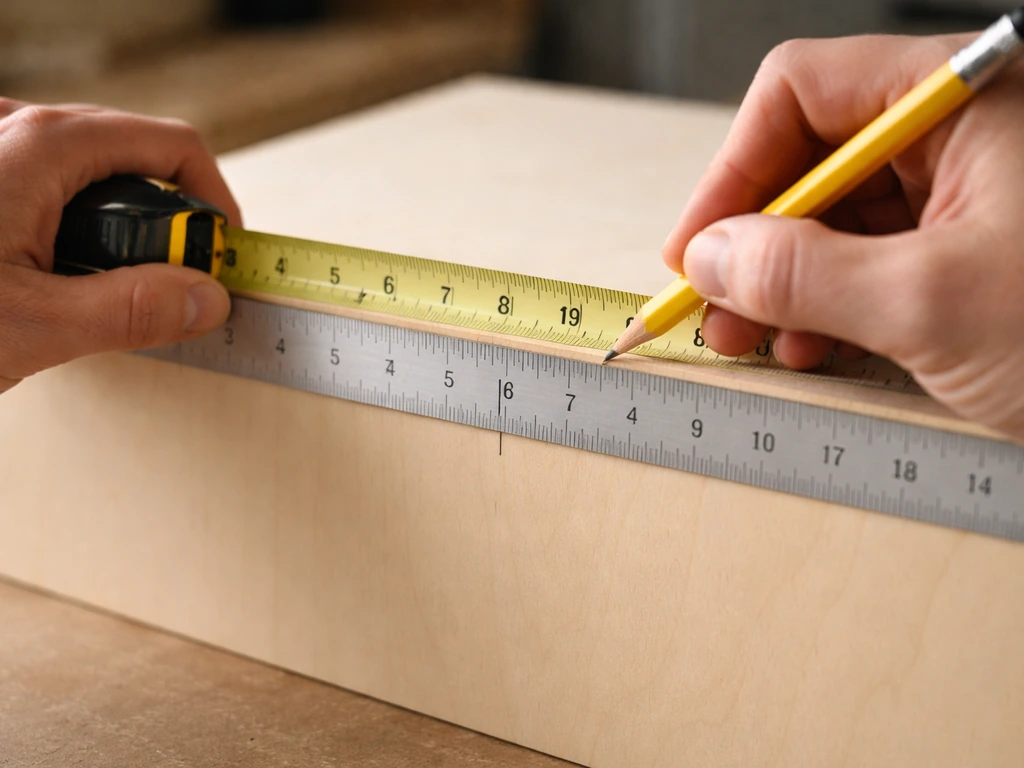
Marking the hole correctly before you drill is the step most beginners skip, and it's usually why entrance holes end up off-center, too high, or ragged around the edges. Here's how to do it right.
- Mark the center point. Measure the width of the front panel and draw a faint pencil line down the vertical center. Then measure up from the inside floor height (not the bottom of the panel) to find your target hole-center height, e.g., 7" above the floor for a chickadee box. Mark that intersection clearly.
- Dimple the center. Use an awl or the tip of a nail to make a small indent at your center mark. This stops your bit from walking when you start drilling.
- Choose the right bit. A Forstner bit gives the cleanest, flattest-bottomed hole with minimal tear-out on the face of the wood. A sharp spade bit works well too. Avoid standard twist bits for holes larger than 3/4" as they tear the grain badly.
- Drill from the outside face in. Start slowly, keeping the bit perfectly perpendicular to the panel. Once the pilot point just breaks through the back face, stop and finish from the back side. This two-direction approach eliminates blow-out on both faces.
- Sand the edge smooth. A quick pass with 80-grit wrapped around a dowel cleans up any fuzz or splinters inside the hole. Birds will spend time squeezing past that edge every day, so smooth it properly.
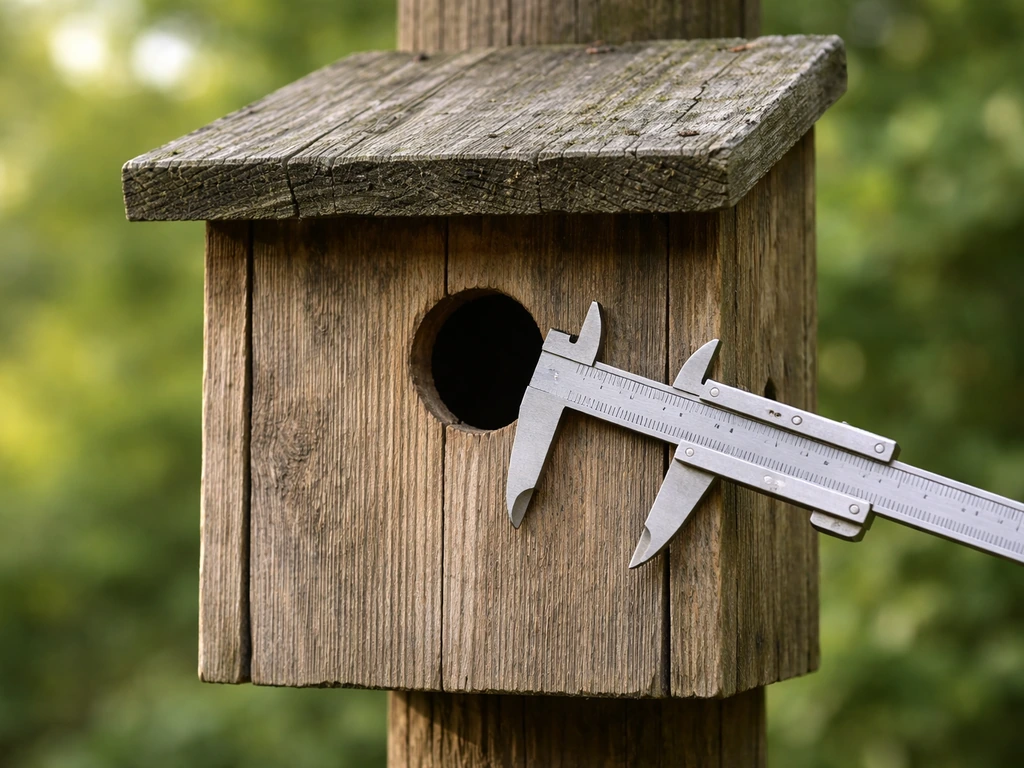
- Check the diameter. Use a drill gauge, a caliper, or even the correct-sized drill bit as a go/no-go reference. The acceptable tolerance for most species is plus or minus 1/16". Don't eyeball it.
One practical note on wood species and bit behavior: softwoods like pine and cedar cut cleanly with almost any sharp bit. Hardwoods like oak or walnut need a Forstner bit and slower drill speed to avoid burning. If you're working with plywood, always drill from the good face in to protect the surface veneer.
Where to place the hole on the box: height and orientation rules
The entrance hole's position on the front panel matters almost as much as its diameter. Placing it too low gives predators easy reach inside. Too high and it may interfere with roof drainage and ventilation. The standard guidance is to position the center of the hole so there's enough vertical distance from the floor to make the nest unreachable by a raccoon or cat reaching in from outside.
For most small songbird boxes (wrens, chickadees, nuthatches), the hole center should sit about 6 to 7 inches above the interior floor. For bluebird boxes, 6 inches is the standard. For larger species like wood ducks, 12 to 16 inches is recommended. Ducks Unlimited’s wood duck nest box guide also calls for placing the entrance hole on the box at a height range of 12 to 16 inches for wood ducks wood ducks use a specific 12 to 16 inch entrance-hole height. The physics here are simple: a raccoon's arm is roughly 4 to 6 inches long, so putting the nest depth below that reach saves nests even without a baffle.
Orientation-wise, angle the front panel or the box itself so the entrance faces away from the prevailing wind and driving rain. In most of North America, that means facing east or southeast. If the box is on a post, a very slight forward tilt (5 degrees) toward the ground helps rainwater run out and prevents a wet interior. Never face the entrance into direct afternoon sun in hot climates: an overheated interior is one of the fastest ways to kill nestlings.
UK bird house hole sizes: what you need to know
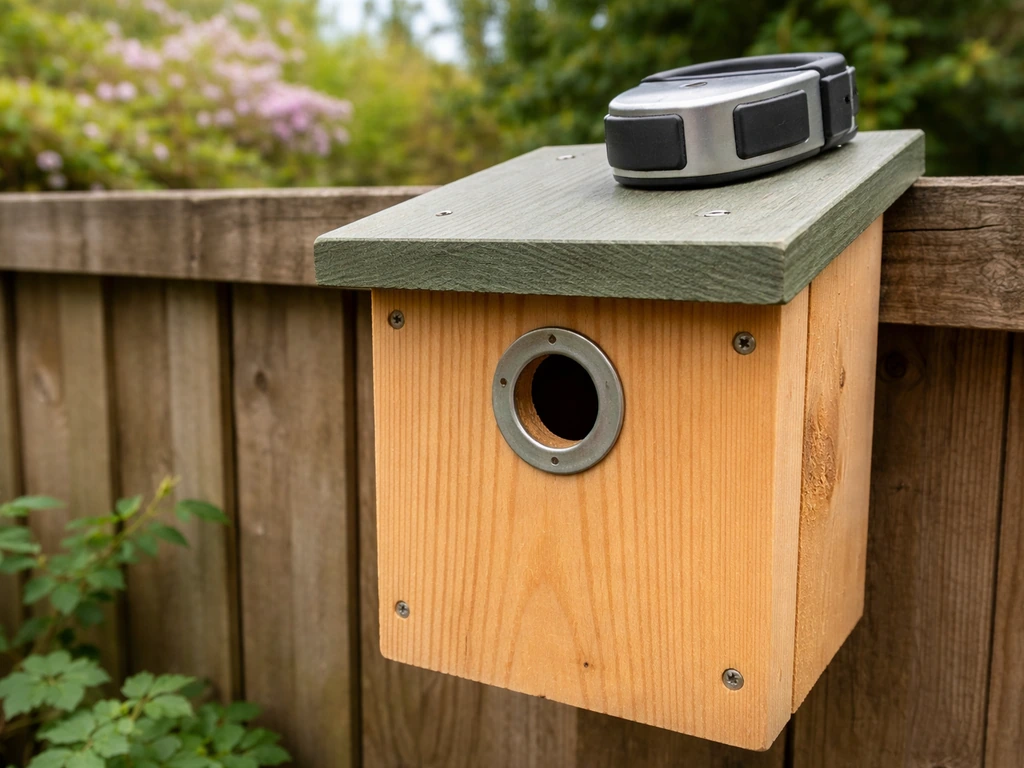
If you're building or buying a nestbox in the UK, the species list is different and the measurements shift from imperial inches to metric millimeters. The RSPB publishes clear guidance on this, and it's worth knowing the exact numbers rather than converting roughly from American charts.
| UK Species | Entrance Hole Diameter | Recommended Mounting Height |
|---|---|---|
| Coal Tit / Marsh Tit / Blue Tit | 25–26mm | 2–4m |
| Great Tit / Tree Sparrow | 28–29mm | 2–4m |
| House Sparrow / Nuthatch | 32mm | 2–4m |
| Starling | 45mm | 3–5m |
The RSPB sells purpose-made stainless steel hole-protection plates in 32mm diameter, which fits great tits, tree sparrows, house sparrows, nuthatches, and lesser spotted woodpeckers. That 32mm size is essentially the UK equivalent of North America's 1 1/2" sweet spot: it covers the widest range of desirable common garden species without opening the door to starlings.
One important UK-specific note: blue tits are the most common garden nestbox occupants in Britain, and their preferred hole is 25 to 26mm. Drilling 29mm or larger significantly increases the chance of a great tit or house sparrow evicting them. If blue tits are your target, keep it tight at 25mm and mount the box between 2 and 4 meters high on a sheltered wall or tree, facing between north and southeast to avoid the worst of the summer sun and prevailing wet winds from the southwest.
Birds not using your box? Start with the hole
If your box has been up for a full season and no bird has investigated it seriously, the entrance hole is the first thing to reassess. Here's a practical diagnostic approach.
- Measure the hole again. It's surprisingly easy to drill the wrong bit size. Confirm you have the right diameter for the species present in your area.
- Check for rough edges. If the hole has splinters or feels irregular, birds will hesitate. Sand it smooth and round the outer lip very slightly.
- Look at the interior depth. If the hole-to-floor distance is less than 5" for small birds, a passing bird can see or smell the floor from the entrance, which feels exposed and unsafe. Rebuild with more depth.
- Consider whether the hole feels too large. A box with too wide an entrance looks like a dangerous, open cavity to most cavity nesters. They'll inspect and leave. Reduce the diameter with a wooden reducer ring glued around the inside or outside of the hole.
- Reassess the species in your yard. If you've built a bluebird box in a dense woodland, bluebirds won't find it. Match the box, hole size, and placement to birds that actually live in your habitat.
- Give it time. Most species scout boxes in late winter and early spring. A box put up in June might sit empty until the following February.
Thinking about how many boxes to put out can also affect occupancy. If you have several competing boxes too close together, territorial birds may simply avoid all of them. How many bird houses you should have gives good guidance on density relative to yard size, and the related question of how far apart bird houses should be placed is directly relevant here. Spacing matters, especially for territorial species like bluebirds and tree swallows who won't tolerate a competing pair within sight.
It's also worth considering how close together bird houses can go when you're setting up multiple species at once. The answer varies by species, but as a rule, colonial nesters like purple martins tolerate proximity, while most songbirds want at least 25 to 30 feet of buffer.
Common beginner mistakes and how to predator-proof the entrance
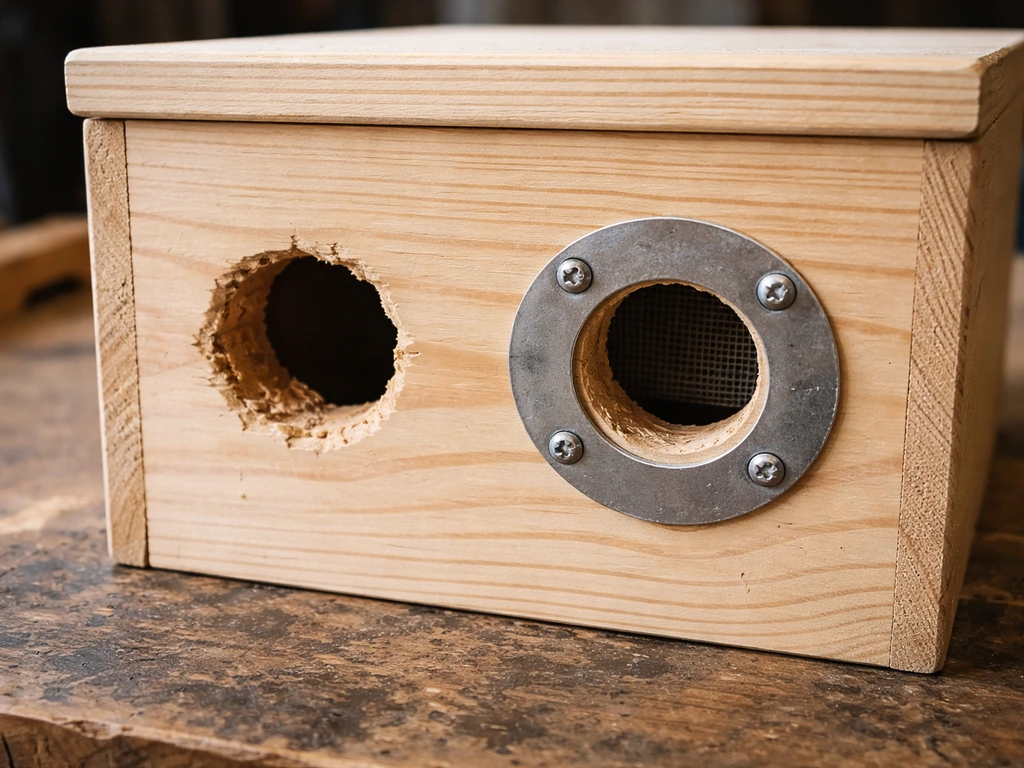
The entrance hole is the most vulnerable point on the whole box. Here are the mistakes I see most often, and what to do instead.
Drilling the wrong size (the most common mistake)
People reach for whatever drill bit is closest. A 1 1/4" bit when you need 1 1/8" seems close, but it's the difference between keeping sparrows out and inviting them in. Always confirm your bit size with a caliper before drilling. Bits get mislabeled or mixed up in tool bags constantly.
Smooth-faced boxes around the entrance
The inside face of the front panel below the hole needs to be rough so fledglings can grip it and climb out. If you've used planed or sanded lumber, score the inside face below the hole with a chisel or saw kerf cuts. This is a simple step that dramatically improves fledgling survival.
Skipping the entrance guard plate
Squirrels and woodpeckers will enlarge a plain wood entrance hole within a season. A metal hole-guard plate (also called a portal protector) drilled over the entrance locks the diameter permanently. In the UK, the RSPB's 32mm stainless steel plate is a ready-made solution. In North America, aluminium or galvanized steel plates are widely available in 1 1/8", 1 1/2", and 1 9/16" sizes. Screw one on before the box goes up. The cost is minimal, and the value is high.
No baffle on the mounting pole
A correctly sized hole means nothing if a raccoon climbs the post and reaches in. A cone or stovepipe baffle mounted at least 4 feet off the ground on a smooth metal post is the single most effective predator guard. Baffles stop climbing predators completely when installed correctly. Don't skip this step, especially for ground-level species like wrens or Carolina wrens nesting below 6 feet.
Perches: skip them
Commercial boxes almost always include a perch below the entrance hole. Remove it. Cavity-nesting birds don't need it, and it gives house sparrows and starlings a convenient launching pad to harass residents. Take it off before mounting.
If you're building from scratch and thinking about what materials and tools to budget for, how much a bird house costs to build or buy gives a realistic breakdown. A well-built box with a metal entrance guard, a smooth pole, and a baffle can be done for under $30 in materials, and it will outperform a $60 decorative box every time.
The bottom line: get the diameter right for your target species, drill it cleanly from both sides, position the center at the correct height above the interior floor, face it away from driving rain and hot afternoon sun, and protect it with a metal guard. Those five steps are what separate a box that gets used year after year from one that sits empty and weathered in the corner of the yard.
FAQ
What size hole for a bird house should I choose if I’m not sure which species is around my yard?
Start with a smaller range (about 1 1/8 inches / 28 to 29mm) to reduce the chance of house sparrows taking over. If you later confirm a target species, adjust by building a second box with the appropriate diameter, rather than resizing after birds begin nesting.
If my measured hole is slightly off, like 1/16 to 1/8 inch larger than intended, will it matter?
It often matters. Many backyard species are separated by small tolerances, for example chickadees accept around 1 1/8 to 1 1/4 inches while sparrows target 1 1/2 inches. A caliper check before installation is the safest fix, because once birds start investigating, eviction pressure increases.
Can I use the same size entrance hole for both house wrens and chickadees?
Usually not. House wrens commonly use smaller apertures, while chickadees are typically around 1 1/8 inches (up to about 1 1/4 inches at the outer acceptable edge). If you put one box between these, you risk the wrong species fitting best, so use separate boxes when targeting multiple species.
How do I drill a clean entrance hole if my bit tends to tear the wood?
Drill from both faces, or at minimum drill from the finished side inward so the exit tear happens on the inside. For very clean edges, tape the front where the bit breaks through, then stop as soon as the bit exits, rather than pushing through aggressively.
Should the entrance hole be circular only, or does a slightly oval hole still work?
Aim for a true circle. Oval holes change the effective opening area and can reduce the predator filtering benefit of a tight fit, making it easier for non-target birds to enter. If your hole is ragged or distorted, repair or rebuild rather than enlarging it to make it “rounder.”
Does the entrance hole size depend on the bird’s height above the ground or on the box orientation?
No, hole diameter is mainly about entry fit, not placement. Orientation and height control temperature, wetness, and predator access, but they do not substitute for correct diameter when it comes to preventing sparrow takeover or keeping larger birds out.
My box has an interior ledge or perch, does that affect what birds can use the entrance hole?
Yes. Perches under the hole are especially likely to increase harassment and access for aggressive species, and they also help non-target birds land and reach inside. Even with the correct diameter, removing the perch improves nest safety and reduces unwanted visitors.
How can I tell if the entrance hole is too small without opening the box?
Watch for repeated failed landings, lots of hovering near the entrance without entry, or birds abandoning after brief investigation. However, don’t disturb nests, and if you see fledglings, the hole was likely adequate. The best prevention is to lock the diameter in before mounting using caliper measurements.
What size hole for a bird house in the UK, if I want blue tits specifically?
Use 25 to 26mm for blue tits, and avoid jumping to 29mm or larger because it increases eviction risk from larger tenants like great tits or house sparrows. Mount it at about 2 to 4 meters high on a sheltered location, facing between north and southeast to reduce heat and sun exposure.
Do I need a hole guard or baffle if I already have the right entrance diameter?
Yes, because entrance diameter does not prevent squirrels or woodpeckers from enlarging the opening or predators from reaching inside. Add a metal entrance guard sized to your opening (such as common 1 1/8, 1 1/2, or 1 9/16 inch North American options) and use a climbing-prevention baffle on the post.