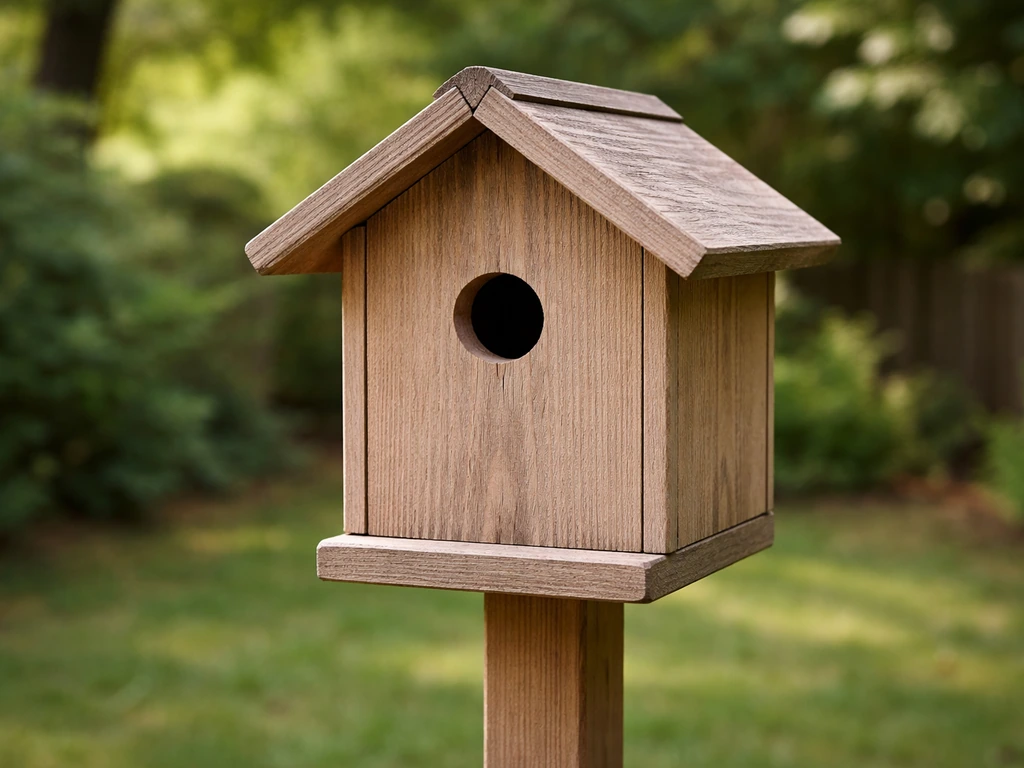
Match the entrance hole to your target species, mount the box on a baffled pole away from trees and fences, clean it out after every brood fledges, and never disturb an active nest. Get those four things right and you'll have healthy, successful nesters year after year. Get them wrong and you'll mostly host house sparrows, squirrels, and mold.
Bird House Do’s and Don’ts: Setup, Placement, Care
Maya Thompson
15 Jun 2026
Choose the right birdhouse for your target species
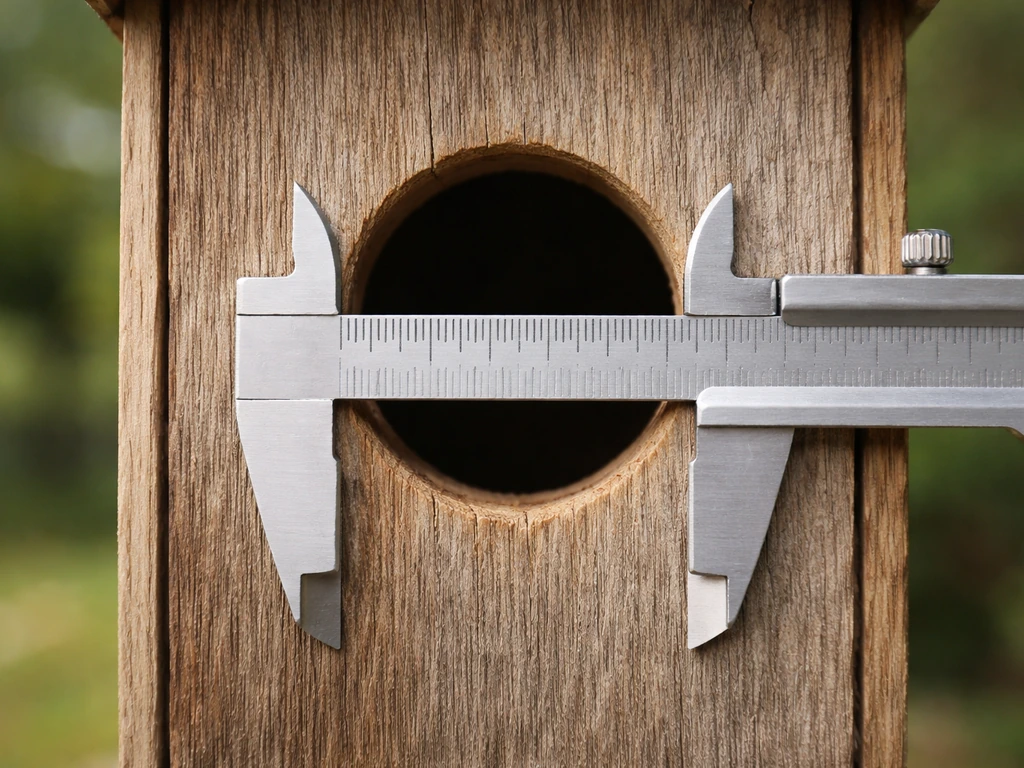
Every cavity-nesting bird has a preferred range of interior dimensions, and the single most important number is the entrance hole diameter. A hole that's too large lets in competitors and predators. A hole that's slightly too small will be enlarged by the birds themselves (chickadees and titmice will do exactly this), which wastes time and can compromise the box. So start with the right size, not close enough. If you're comparing options like in a game, you can also look up best seeds for bird houses osrs to decide what to prioritize first.
| Species | Entrance Hole Diameter | Floor Size | Entrance Height Above Floor |
|---|---|---|---|
| Eastern Bluebird | 1.5 inches (38 mm) | 4×4 to 5.5×5.5 inches | 6–8 inches |
| Chickadee / Titmouse | 1.125 inches (1-1/8") | 4×4 inches | 6–8 inches |
| House Wren / Carolina Wren / Bewick's Wren | 1.125 inches (1-1/8") | 4×4 inches | 6–8 inches |
House sparrows can squeeze through a 1.5-inch hole, which is the same size bluebirds use. That's a real problem because house sparrows are aggressive and will destroy bluebird eggs and kill nestlings. The entrance hole alone won't exclude them, but pairing the correct hole size with proper placement and active monitoring (more on both below) makes a big difference. If you're targeting wrens or chickadees, that 1-1/8-inch opening is small enough to physically block starlings, which is a meaningful advantage.
Beyond hole size, think about the interior floor area. Bluebirds do best with a floor between 4×4 inches and about 5.5×5.5 inches. Too small and the nestlings are crowded; too large and the nest doesn't stay warm. The entrance height above the floor matters too: 6 to 8 inches is the standard recommendation for most common cavity nesters, giving birds room to climb up to the hole while keeping the nest itself deep enough to deter predators from reaching in.
Materials, dimensions, ventilation, and drainage basics
Use untreated, unpainted wood. Cedar is the classic choice because it's naturally rot-resistant and handles weather well without any chemical treatment. White pine and yellow pine work too. What you want to avoid is pressure-treated lumber, plywood with adhesives that off-gas, and any kind of interior paint or stain. The Cornell Lab and the North American Bluebird Society both land on the same conclusion: untreated natural wood is the safest option, and there's no good evidence that painted interiors help birds.
For the exterior, if you do want to paint or stain to extend the life of the box, use a light color on the outside only. Dark colors absorb heat and can cook a nest on a hot afternoon. A double roof with a small air gap between layers is another smart option for temperature management in warmer climates, and it's worth the extra few minutes of work if you're building from scratch.
Ventilation and drainage are non-negotiable, but they're easy to build in. For ventilation, either leave a small gap between the roof and the side walls, or drill a row of 1/4-inch holes just below the roofline on the sides. For drainage, cut small 'dog-ear' notches at each corner of the floor, or drill at least four 3/8-inch holes through the floor itself. Either method lets rainwater escape so the nest doesn't sit in standing water. Without drainage, nests get wet, mold grows, and nestlings die.
- DO use cedar, white pine, or yellow pine — untreated and unfinished on the interior
- DO add ventilation holes (about 1/4 inch) near the top of the side walls or leave a roof gap
- DO cut corner notches or drill 3/8-inch holes in the floor for drainage
- DO use a light exterior color if you paint — never paint the interior
- DON'T use pressure-treated wood, plywood, or OSB for the main structure
- DON'T use metal boxes without serious heat shielding — they become ovens in summer
- DON'T add a perch below the entrance hole — native cavity nesters don't need it, and it helps predators and competitors
Placement and mounting do's and don'ts
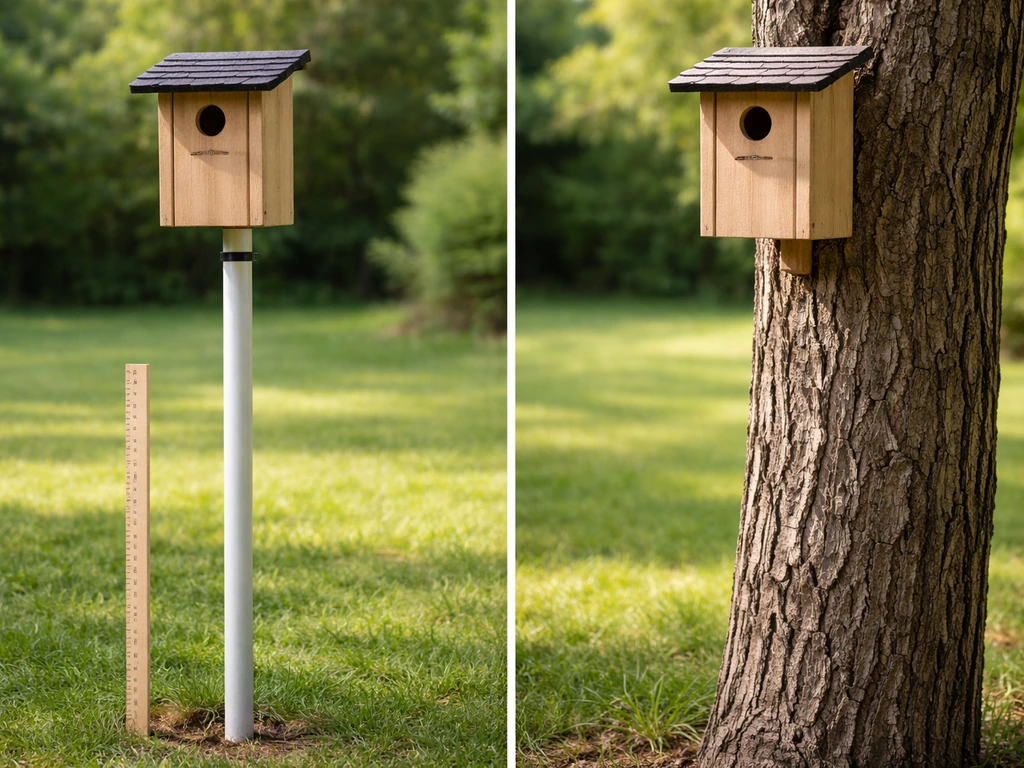
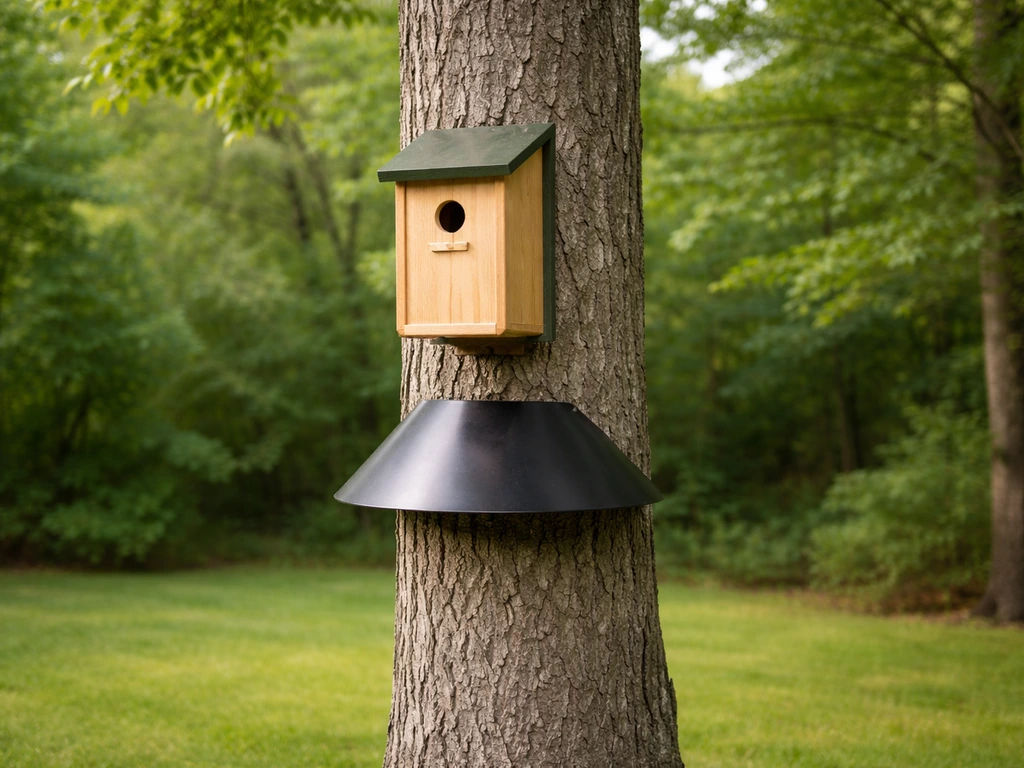
Where you put the box matters almost as much as how you build it. The first rule: mount on a smooth metal or PVC pole, not a tree or fence post. Trees and fence posts are highway ramps for raccoons, cats, and snakes. A smooth pole with a baffle makes it genuinely difficult for most predators to reach the box. The Tennessee Wildlife Resources Agency is direct about this, if you can't attach a proper predator guard, don't put the box there at all.
Height depends on species. For bluebirds, 4 to 6 feet off the ground is standard and keeps the box easy to monitor. Wrens are more flexible and will use boxes mounted anywhere from 5 to 10 feet. What matters more than exact height is making sure the entrance hole is clear of branches, leaves, or any surface a predator could use to jump from. Keep at least 6 inches of clear space below the nest box floor between the floor and the baffle, this helps disrupt a climbing predator's reach.
Face the entrance hole away from prevailing weather. In most of North America, that means facing east or southeast. This keeps rain from blowing directly into the box and gives the birds morning sun at the entrance, which they seem to prefer. Avoid facing the hole due west in hot climates, afternoon sun heats the interior fast. Also keep birdhouses well away from feeders. Feeders attract traffic, noise, and competition, and nesting birds want a quieter neighborhood.
- DO mount on a smooth metal or PVC pole with a baffle
- DO face the entrance east or southeast in most regions
- DO space multiple boxes at least 100 yards apart for territorial species like bluebirds
- DO keep the area in front of the entrance clear of branches and shrubs
- DON'T mount on tree trunks, wooden fence posts, or structures that predators already use
- DON'T place boxes near feeders or high-traffic areas of the yard
- DON'T hang boxes from a swinging hook if stability matters — bluebirds and swallows prefer stationary boxes
Entrance hole and predator/nuisance prevention
The entrance hole is the most vulnerable point of any birdhouse. A predator or competitor that can reach it can wipe out an entire clutch in minutes. There are two layers of defense: the hole itself, and the mount.
For the hole, a metal hole reinforcer or a hardwood block drilled to the correct diameter and screwed over the entrance prevents squirrels and other gnawers from enlarging it. A 'Bird Guardian' style plastic tube extended inward from the entrance hole adds extra depth, making it harder for a raccoon to reach in and pull out eggs or nestlings. These are inexpensive and worth adding to every box. One honest caveat: plastic entrance tube guards do not stop snakes. For snake protection, you need a smooth pole and a stovepipe or cone baffle mounted partway up, that's where the real snake defense lives.
House sparrows are the other major threat, especially for bluebird boxes. They're non-native, protected by no federal law (unlike native species), and aggressively take over boxes while destroying native bird eggs and young. There's no single design fix that completely excludes them from a 1.5-inch hole. The practical approach is to monitor boxes weekly from April through August, remove any house sparrow nest materials promptly, and consider a Slot entrance design (a horizontal rectangular opening) if house sparrows are a persistent problem in your area, as some bluebird organizations have found it slightly more discouraging. Do not leave unmonitored boxes up as a permanent invitation to house sparrows.
For cats: a PVC cone or loose-fitting collar mounted on the pole creates a wobbly, slippery surface that cats find very difficult to climb past. New Jersey Audubon specifically recommends this approach. A standard sheet-metal cone baffle works well too. The goal is to make the pole unclimbable from below, which covers cats, raccoons, and most snakes in one shot.
Timing and seasonal maintenance (including cleaning)
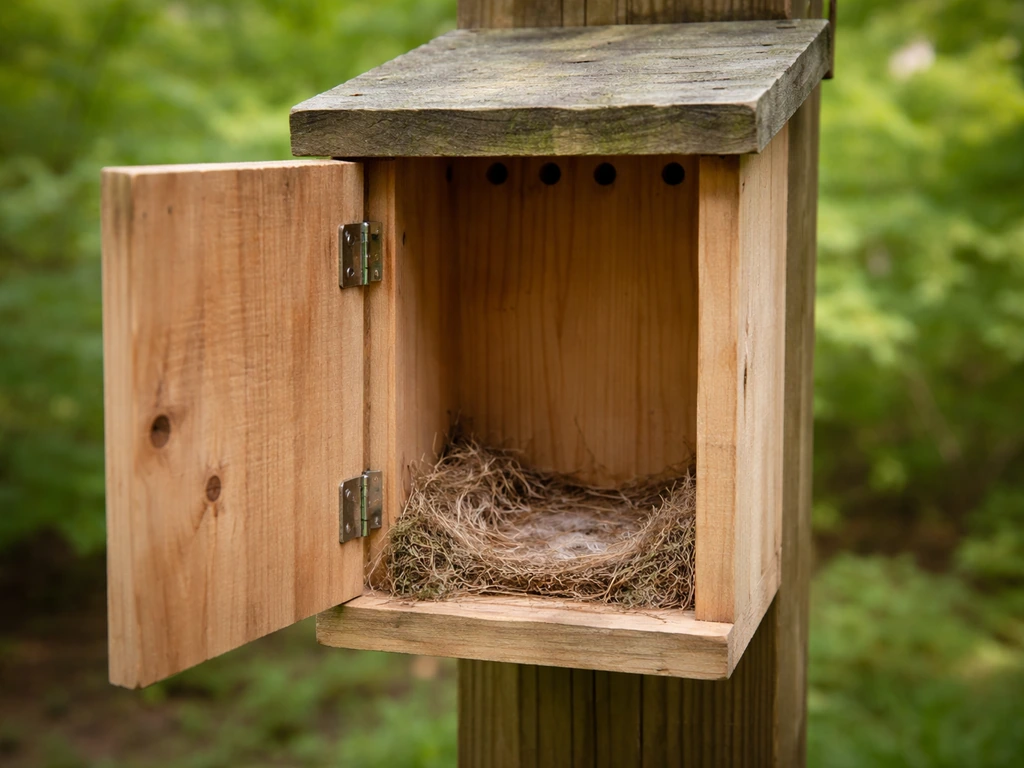
The most important timing rule is simple: never clean or significantly disturb a box while nesting is actively happening. Wait until the chicks have fledged and the adults have clearly stopped using the box for that brood. In practice, this means checking weekly from April through August to stay aware of what's happening inside. If you open a box and see a nest with eggs or young birds, close it quietly and walk away.
Once a brood fledges, clean the box promptly. NestWatch suggests cleaning nest boxes and birdhouses at the end of the breeding season after the birds have left All About Birds. Remove all old nest material, it harbors parasites like blowfly larvae and mites, and a fresh box encourages a second nesting attempt. Scrub the interior with mild dish soap and water. If there's significant fecal buildup, use a diluted bleach solution of 1 part bleach to 10 parts water, rinse thoroughly, and let the box dry completely before closing it back up. Don't leave cleaning products inside the box.
- Late winter (February to early March): Put clean boxes up or confirm existing ones are in place before the first scouts arrive
- April through August: Check boxes weekly; remove house sparrow nests promptly; note active nests and leave them alone
- After each brood fledges: Remove old nest, scrub with mild soap and water, rinse, dry, close
- End of breeding season (September to October): Do a final thorough cleaning with soap or diluted bleach if needed; inspect for damage, rot, or loose hardware
- Late fall or winter: Make repairs, replace worn hardware, re-check entrance hole size, and store or re-mount in place for the following season
One thing worth knowing: leaving old nest material in the box does not attract birds back. It does attract parasites. Some birds will even build a new nest on top of an old one to get distance from the pest load, which eats into their interior space. Clean the box every time.
Common mistakes to avoid and quick troubleshooting
Even well-intentioned birdhouse setups fail for a handful of predictable reasons. Here are the ones I see most often, and what to do about each.
| Problem | Likely Cause | Fix |
|---|---|---|
| No birds using the box | Wrong hole size, wrong habitat, or poor placement | Verify hole diameter matches target species; move box away from feeders and dense shrubs; confirm it's been up at least one full season |
| House sparrows taking over | Box in suburban setting with 1.5" hole | Monitor weekly and remove sparrow nests; consider a slot-entrance box; place in more open habitat away from buildings |
| Wet or moldy nest | No drainage holes in floor | Drill four 3/8" holes in floor corners or cut notches; check that roof overhangs the entrance by at least 2 inches |
| Overheating interior | Dark exterior, western exposure, no ventilation | Paint exterior light color; add 1/4" vent holes below roofline; reorient to face east or southeast |
| Predator raiding the box | No baffle on pole, or box mounted on tree/fence | Move to smooth pole; add stovepipe or cone baffle; ensure at least 6" clearance below the box floor |
| Birds start nest but abandon it | Frequent disturbance during early nesting | Limit checks to once per week; approach quietly; don't tap or shake the box |
| Entrance hole enlarged by gnawing | No hole reinforcer, squirrels present | Add a hardwood block or metal plate over the entrance with the correct hole diameter drilled through it |
The entrance hole is the single dimension that gets wrong most often, so it's worth double-checking with a drill bit or caliper before you mount a new box. For a quick bird house hole size guide by species, check the typical entrance diameter ranges and match them to your target birds before you mount the box birdhouse entrance hole diameter. A hole that measures 1.5 inches is right for bluebirds but too large for wrens, and a hole at 1-1/8 inches is perfect for wrens but impractical for bluebirds. Getting this dialed in from the start saves a lot of frustration. If you're building your own box, a dedicated hole size guide for different species is one of the most useful references you can keep on hand. For a step-by-step bird house run guide, use the species-specific entrance hole, placement, and maintenance checks in this article. If you are using OSRS as a guide, follow the steps in the birdhouse run guide to keep your placements and timing consistent birdhouse run guide OSRS.
One last thing: don't overthink it. The birds aren't grading your woodwork. A simple cedar box with the right hole, good drainage, a clean interior, and a baffled pole in an open habitat will outperform a beautiful store-bought house mounted on a fence post every single time. Start simple, monitor consistently, clean after every brood, and adjust based on what you actually see happening. If you're playing OSRS and want to build and use bird houses there, the process is different from real-world carpentry, but the same basic ideas about species choice and upkeep still matter how to make bird houses osrs. That's the whole system.
FAQ
What should I do if the wrong birds keep taking over my bird house do’s and don’ts setup?
If you find a box is being used by a non-target species (for example, house sparrows in a bluebird box), the key is to stop the cycle without harming active nests. Remove sparrow nest materials promptly while keeping disturbance minimal, then re-check the entrance and mount for weak points. If the sparrows keep taking over despite correct hole size and placement, switching to a different entrance style (for example, a rectangular slot design used by some bluebird groups) can be more effective than changing wood or color.
Can I waterproof or seal the inside of the bird house to prevent rot?
You should not seal the box after building. Wood needs to handle moisture safely through drainage and ventilation features, not through airtight coatings. If you want longer life, use untreated wood and only allow finishing on the exterior (light-colored paint or stain), keeping the interior natural so airflow and cleaning stay practical.
Should I keep cleaning bird houses in winter or only during the breeding season?
A great general rule is to use drainage and ventilation even for winter, because moisture control matters year-round. What changes is monitoring and cleaning timing, you still avoid opening an occupied nest, then clean after fledging. For overwintering, leave the box closed after the last brood cleaning so birds can use it for shelter, but do a fresh inspection before the next breeding season starts.
If my bird house leaks or has a loose floor, will birds still use it?
Yes, but do it carefully. A “partly open” box with a cracked floor or sloppy drainage will still trap water even if it’s tall and baffled. Before the season, test that rain can escape, check ventilation gaps or drilled holes are clear, and confirm the floor is firmly attached so it does not separate under repeated use.
Is it bad to sand or paint the interior for a smoother look?
Avoid sanding the interior smooth if it removes critical texture at the wrong spots. Many builders lightly smooth sharp edges, but you want to keep surfaces functional for climbing and for nest stability. Also, don’t add interior paint or stain, those can introduce odors and make cleaning harder.
What is the safest way to clean a bird house after a brood without harming new nesters?
For safety and cleanliness, wash with mild dish soap and water as your default. If you use diluted bleach for heavy fecal buildup, rinse thoroughly and let the box dry completely before closing it. Don’t leave any cleaning residue inside, and never use strong solvents or scented products.
What if I can’t monitor my bird house do’s and don’ts setup every week?
If you can’t check weekly, prioritize site selection and deterrence before you worry about monitoring. That means correct entrance dimensions for your target species, a baffled smooth pole, a predator-resistant mount, and clear space around the entrance. Weekly checks are about house sparrows and timing, if you cannot monitor, you risk leaving a problem species established for an entire season.
What should I do if I accidentally disturb a bird while checking my box?
Birds that are actively nesting will often ignore a box that smells “fresh” if you keep disturbance low, but the safest practice is to avoid opening at all during active broods. If you accidentally disturb an active nest, close it quietly and step away, then wait at least until fledging to do any cleaning. Repeated disruptions can cause nest abandonment even if the box is otherwise perfect.
How can I tell if my bird house placement is causing wet nests despite good drainage?
If the entrance hole is outdoors facing a windy direction, water and dampness can still become a problem even with a roof. Face the hole away from prevailing rain, keep branches from overhanging the entrance, and ensure ventilation gaps and drainage holes are not clogged by debris or spiders.
Can I add entrance guards or reinforcers to any bird house size without changing anything else?
Use a dedicated reinforcer or guard only if it matches the target species hole diameter, and fasten it securely. A loosely attached block or tube can shift and create gaps, which can allow predators to reach the interior or give competitors easier access. After installing any guard, re-measure the effective entrance opening.
Why do I still need a baffle if my bird house is already mounted on a pole?
A baffled pole helps predators, but it’s not enough if the pole is not smooth or if there’s a climbing route. Also make sure the baffle is positioned to prevent access under it, and keep at least about 6 inches of clear space below the box floor between the floor and the baffle so climbing predators cannot bridge the gap.
Next Article
Bird House Hole Size Guide: Pick the Right Entrance
Bird house hole size guide with species-specific entrance diameters, measuring tips, and placement to attract the right