Ceramic birdhouses can be safe, but only when they meet a specific set of conditions: no cracks or sharp edges, a verified non-toxic and lead-free glaze, proper drainage and ventilation holes, and an entrance sized for the species you're trying to attract. Skip any one of those and you have a real hazard.
Are Ceramic Bird Houses Safe? Safety Checklist and Fixes
Maya Thompson
3 Jul 2026
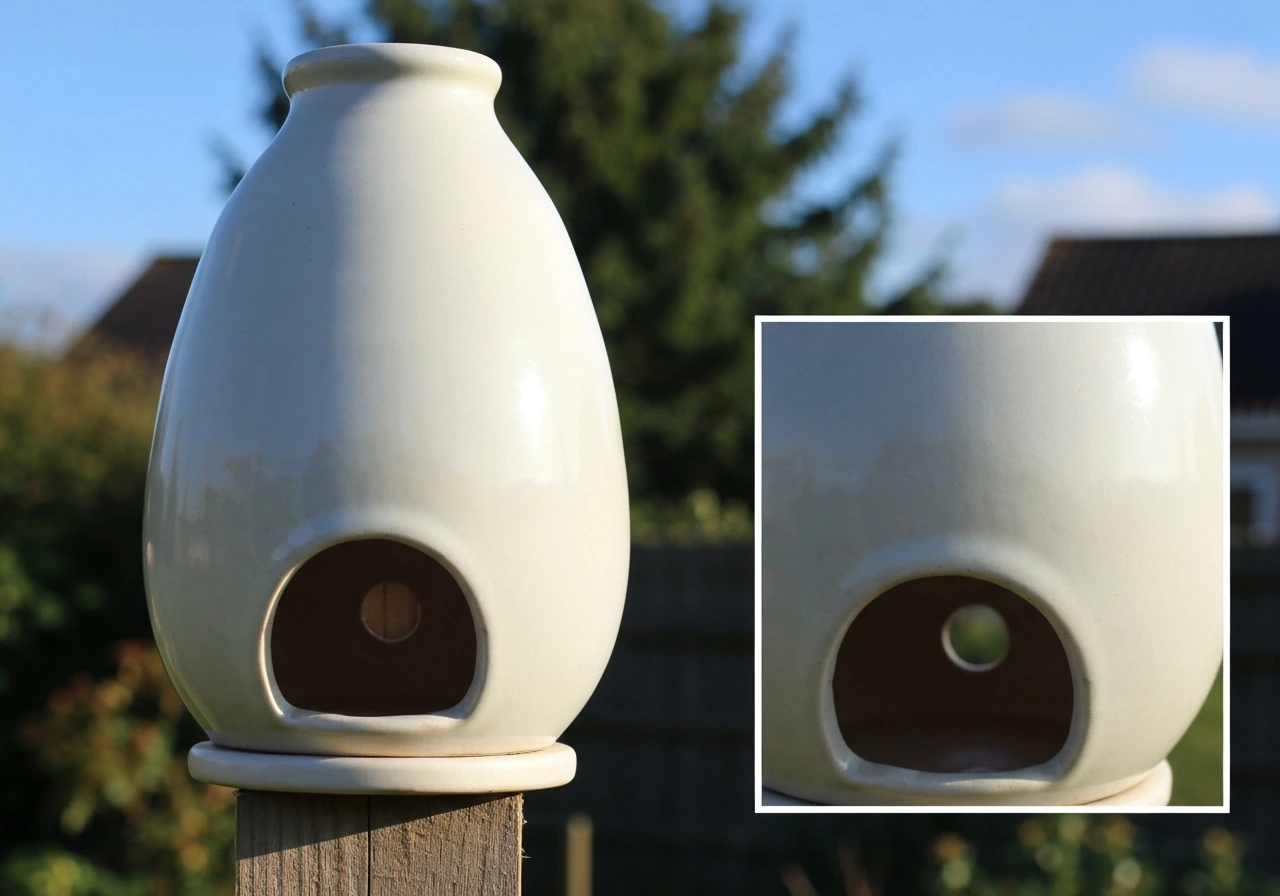
The honest truth is that most decorative ceramic birdhouses sold at garden centers fail at least one of these tests, which is why the RSPB has called ceramic outright unsuitable for nesting birds. That doesn't mean every ceramic house is a write-off. It means you need to do a quick but thorough check before you hang one up.
If you are dealing with summer heat, you also need a plan for how to cool off a bird house safely without disrupting nesting birds mount one up.
When ceramic birdhouses are safe vs. when they're not
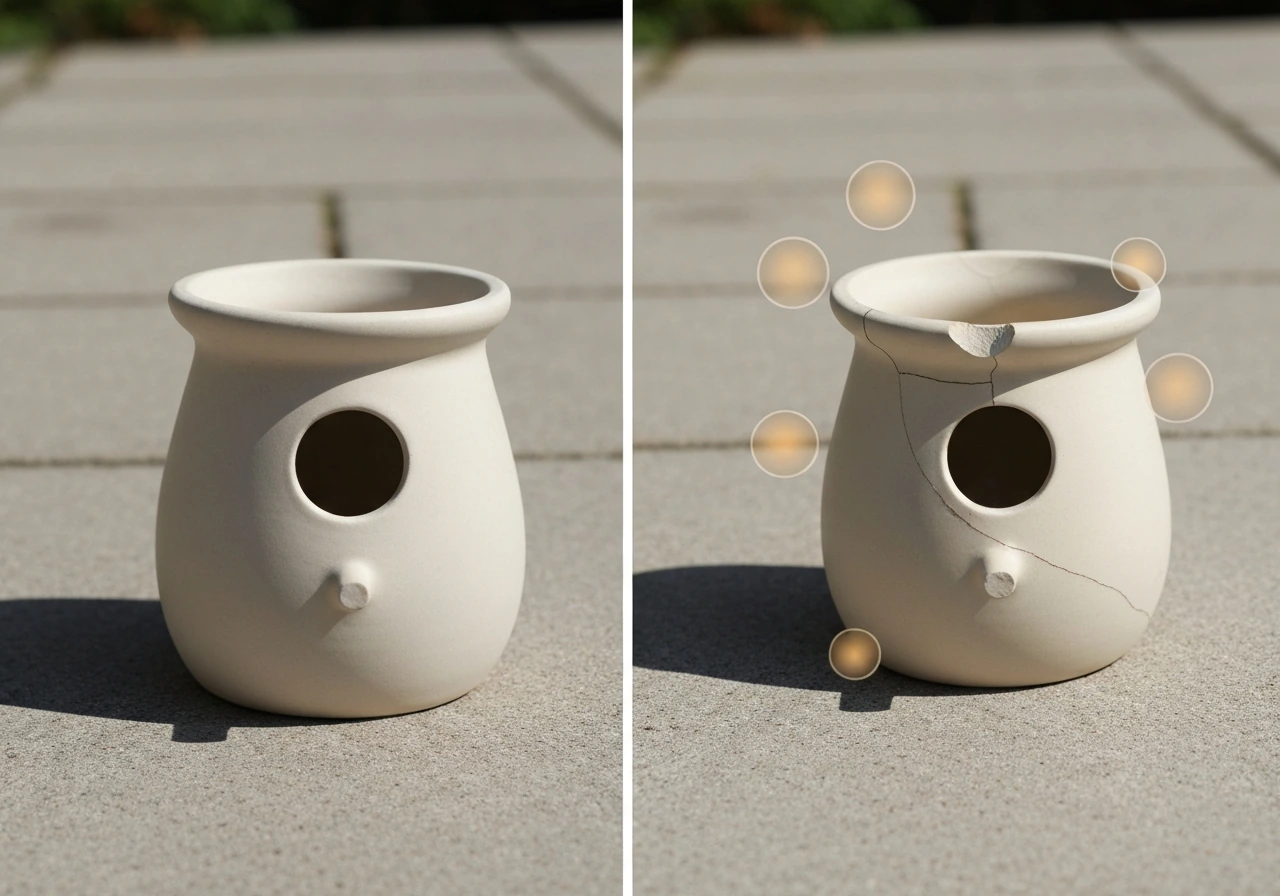
A ceramic birdhouse earns a passing grade when all of the following are true: the ceramic is intact with no cracks or chipped edges, the glaze is confirmed lead-free and non-toxic, the box has drainage holes in the floor and ventilation gaps near the roof, the entrance hole matches the target species, and the house is mounted in a spot that avoids direct afternoon sun. When any of those conditions aren't met, the house poses risks ranging from minor (damp nest) to serious (lead exposure, overheating chicks, or cuts from broken edges). Decorative ceramic houses sold purely as garden ornaments are the most likely to fail on multiple counts simultaneously. If you are wondering whether bird houses are bad, decorative ceramic models are often the biggest problem because they can miss key safety basics are the most likely to fail.
| Scenario | Safe? | What to do |
|---|---|---|
| Intact glaze, lead-free label, correct hole size, drainage present | Yes | Install with proper placement and monitor regularly |
| Decorative ceramic, no drainage holes, no ventilation | No | Do not use for nesting; display only or replace |
| Cracked or chipped ceramic with sharp edges inside | No | Retire it; injury risk to chicks and adults |
| Unlabeled glaze, older or imported piece | Not until verified | Test or contact manufacturer before use |
| Correct dimensions but direct summer sun exposure | Risky | Reposition to north or east-facing with shade |
Physical safety risks: cracks, chips, and thermal stress
Ceramic is brittle and reacts poorly to repeated freeze-thaw cycles, which is a real problem for an object left outdoors year-round. A hairline crack in the body of the house lets rainwater seep in, soaks the nest, and chills eggs and chicks. A crack or chip on the interior, especially around the entrance hole, creates a sharp edge that can cut a bird's feet or a nestling's wing. Run your fingers slowly around the entire interior surface and the entrance hole rim before mounting any ceramic house. If you feel anything that could snag skin, the house is not ready for birds.
Thermal stress is the longer-term problem. Ceramic stores and radiates heat efficiently, which is actually the opposite of what a good nest box does. Wood acts as an insulator; ceramic does not. In summer, a ceramic house in direct sun can reach internal temperatures that are lethal for chicks. In winter, it loses heat rapidly and offers no buffering against cold. This is the core reason the RSPB calls ceramic unsuitable: it works against the insulation and temperature stability that nesting birds need. If you do use ceramic, placement in a north or east-facing spot out of direct afternoon sun is non-negotiable, not just helpful.
Glaze and finish safety: checking for lead and other toxins
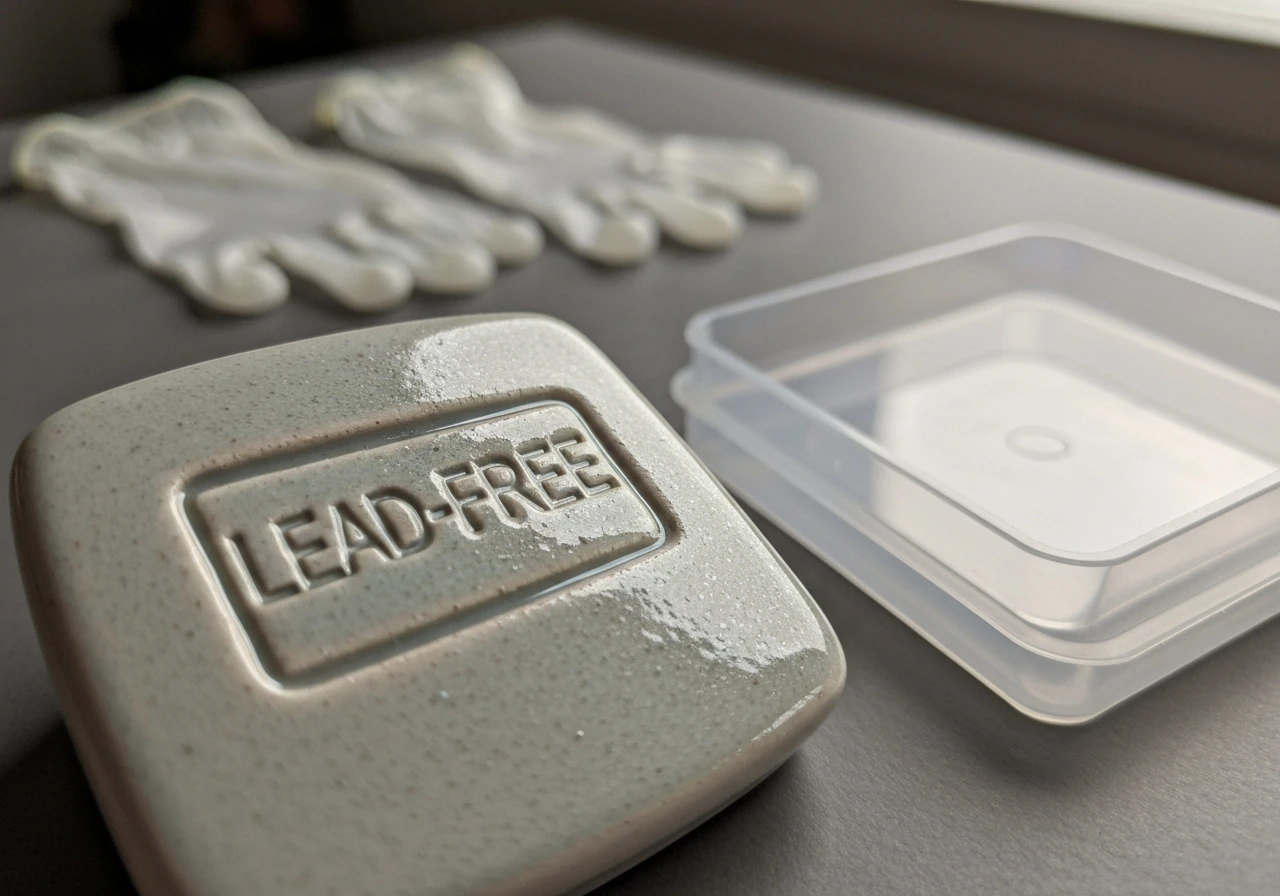
Lead is commonly used in ceramic glazes because it produces a smooth, glossy, durable finish. The FDA and EPA both note that lead from ceramic glazes can leach out when exposed to moisture over time, and the same chemistry applies outdoors when rain, humidity, and acidic debris sit against a glazed surface. Lead is a documented hazard for birds. NH Audubon lists it among pollutants that directly affect bird health. The risk isn't just theoretical: nestlings sitting in a ceramic house could be exposed through skin contact with leaching surfaces, and adults carrying nesting material could introduce contaminated particles.
The label to look for is "lead-safe" or "lead-free" from the manufacturer, but even that needs context. According to Princeton's environmental health guidance, a "lead-safe" label means the glaze will not release lead if it was fired correctly at the right temperature. If the house has no label, no manufacturer statement, or was imported from a country with looser ceramics standards, assume it contains lead until you can verify otherwise. Cadmium is a secondary concern, used in some bright red, orange, and yellow ceramic colorants, and it carries similar leaching risks. Avoid any ceramic house with vivid decorative colors unless the maker explicitly states the colorants are non-toxic.
- Look for a printed or stamped "lead-free" or "lead-safe" label on the base or packaging
- Contact the manufacturer directly and ask for a safety data sheet or material specification
- Avoid unlabeled imported decorative ceramics, especially those with bright, heavily pigmented glazes
- Do not rely on visual inspection alone: lead in glaze is invisible
- If in doubt, default to a wood birdhouse, which carries none of these chemical concerns
Moisture, drainage, and ventilation: keeping the nest dry and breathable
Even a chemically safe ceramic house can harm birds if it traps moisture. Cornell Lab's NestWatch specifies at least four drainage holes in the floor, each 3/8 to 1/2 inch in diameter, as a baseline requirement for any birdhouse regardless of material. Ceramic houses sold as decorative items frequently have no drainage at all, or a single small hole that clogs with debris. Check the floor now: if there are no drainage holes, you cannot safely use the house for nesting. Drilling ceramic is possible with a diamond-tipped or carbide-tipped bit at low speed with water cooling, but it is easy to crack the piece in the process. Weigh that risk before you start drilling.
Ventilation matters for two reasons: heat management in summer and humidity control year-round. Small gaps or holes near the roofline, ideally just under the roof overhang, allow hot air to escape and reduce the moisture buildup that leads to mold. Mold in a nest box is a documented health hazard for nestlings, and ceramic's non-porous interior surface actually makes mold easier to spot during cleaning but harder to prevent without airflow. If your ceramic house has no ventilation gaps and no way to add them without risking a crack, that's another strike against using it for live nesting.
Getting the entrance hole right for the species you want
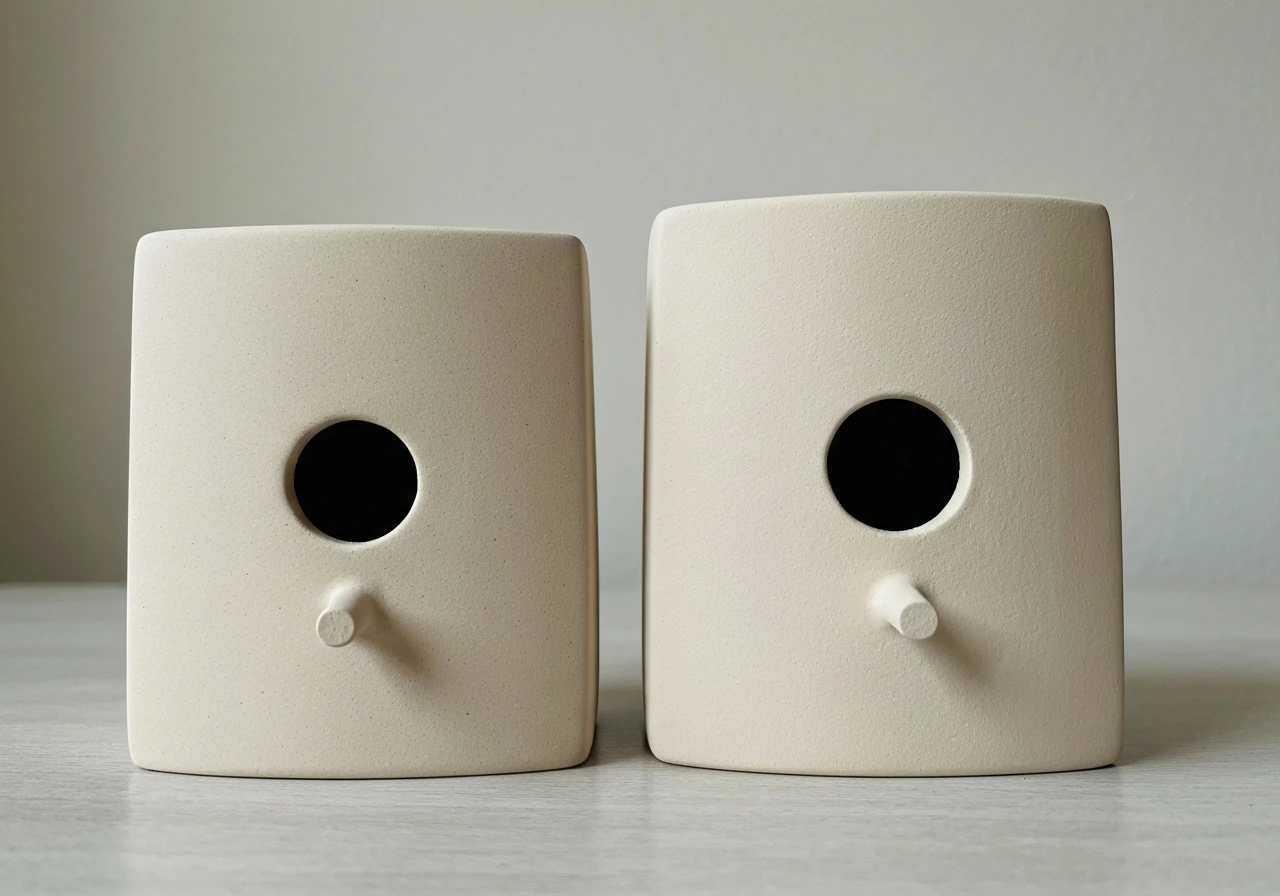
Entrance hole diameter is one of the most important safety features in any birdhouse, and it's frequently wrong on decorative ceramic pieces. A nest-box specifications handout for group building activities lists an [Eastern Bluebird entrance hole size of 1 1/2 inches in diameter](https://www. cbrp. org/wp-content/uploads/2021/08/BuildingNestBoxesandNestBoxKitsasaGroupActivity.
pdf), along with mounting height ranges for placement guidance. A good birdhouse is one where the entrance size matches the species you want to attract, while still keeping the nest safe from predators and injury Entrance hole diameter. The hole needs to be large enough for your target species to enter and exit comfortably, but small enough to exclude larger, aggressive competitors like house sparrows and European starlings.
A hole that's too small can trap a bird; one that's too large invites predators and nest competitors that can injure or kill nestlings.
| Species | Entrance Hole Diameter | Notes |
|---|---|---|
| House Wren | 1 inch | Smallest common cavity nester; very tight spec |
| Black-capped Chickadee | 1 1/8 inches | Excludes most sparrows at this size |
| Tree Swallow | 1 3/8 inches | Also accepts Violet-green Swallow |
| Eastern Bluebird | 1 1/2 inches | Larger opening excludes starlings if kept at 1.5" |
| European Starling (to exclude) | Keep hole at or below 1.5" | Starlings need 2"+ to enter comfortably |
Measure the ceramic house's entrance hole with calipers or a ruler before mounting it. Many decorative pieces have holes in the 1.5 to 2 inch range, which is fine for bluebirds but an open invitation to starlings. A hole smaller than 1 inch is too tight for almost any common cavity nester and creates an injury risk. The interior of the house also needs to be checked: the floor area should be roughly 4 by 4 inches minimum for small species like wrens and chickadees, and the depth from hole to floor should be at least 6 inches to give the nest enough space and make it harder for predators to reach chicks from the entrance.
What to do today: a practical inspection checklist
If you have a ceramic birdhouse sitting in your garage or already mounted outside, run through this sequence before the next nesting season or right now if birds are not currently occupying it. If you want a quick answer to whether bird houses are good, this article shows what to check so the shelter is actually safe for nesting birds are bird houses good.
- Take the house down and bring it inside for a full inspection in good light
- Run your fingers over every interior surface and around the entrance hole rim, feeling for cracks, chips, or sharp edges; reject the house if you find any that cannot be smoothed safely
- Check the floor for drainage holes: you need at least four holes of 3/8" to 1/2" diameter; if absent, decide whether drilling is feasible or whether you should retire this house
- Check near the roofline for ventilation gaps or holes; note whether the roof overhangs enough to shed rain while still allowing airflow
- Find the manufacturer's name, country of origin, and any safety labeling on the base; look for "lead-free" or "lead-safe" language
- If no lead-free label exists, contact the manufacturer or retailer before using the house for nesting
- Measure the entrance hole diameter with a ruler or calipers and compare it to the species chart above
- Measure the interior floor dimensions and the depth from the entrance hole to the floor
- If the house passes all of the above, plan your mounting location: north or east-facing, out of direct afternoon sun, on a metal pole with a baffle rather than on a tree
If your ceramic house fails two or more of these checks, the practical move is to replace it with a wooden box cut to the right species dimensions. Wood is a better insulator, easier to drill and modify, far easier to clean, and carries no glaze toxicity concerns. This is especially relevant if you're new to birdhouse keeping and want something reliable without a lengthy troubleshooting process.
A common question is what to put in a bird house, meaning the right nesting materials and how to help a box stay clean and safe. Whether the overall choice to put up a birdhouse is worthwhile in your yard is a broader question, but for species like bluebirds, wrens, and tree swallows, a properly built box genuinely makes a difference.
Cleaning and seasonal maintenance to keep it safe long-term
A ceramic house that passes your initial inspection still needs regular maintenance to stay safe. After each nesting season, ideally in late August or September once you're confident no birds are still using it, remove the old nest entirely. NestWatch recommends washing the interior with a soapy water solution to reduce parasites and bacteria; for ceramic, a dilute bleach solution of one part bleach to nine parts water also works well and rinses clean without damaging the material. Make sure the house dries completely before remounting it, because a damp ceramic interior going into autumn is exactly the environment where mold establishes itself.
Inspect the ceramic for new cracks or chips every time you clean it. A house that was intact in spring can develop stress fractures over a hot summer or a freeze-thaw cycle in autumn. Pay particular attention to the base and the area around the entrance hole, which take the most mechanical stress. If you find new cracking, retire the house. Re-examine the glaze condition too: glaze that has begun to flake or craze (develop a network of fine surface cracks) is more likely to leach any compounds it contains, and the sharp micro-edges of crazed glaze can abrade a bird's feet over repeated use.
In regions with hard winters, bring the ceramic house indoors from November through February. Ceramic does not handle repeated freeze-thaw cycles as well as wood, and a cracked house in spring is worse than no house at all. When you remount it in late winter ahead of the breeding season, repeat the full inspection checklist above. For ongoing safety, a ceramic birdhouse needs more attention per season than a cedar or pine box, so factor that into your decision about whether it's the right choice for your setup.
The bottom line on ceramic vs. wood
Wood is the better default material for a functional birdhouse. Before choosing a bird house, confirm that it is specifically safe for birds by checking material, drainage, ventilation, and the finish for toxins are bird houses safe for birds. It insulates, it's easy to work with, it accepts drainage and ventilation modifications without the risk of cracking, and it carries no glaze toxicity concerns.
Untreated cedar, pine, or plywood (at least 3/4 inch thick) are the standard recommendations precisely because they are safe, stable, and forgiving. Ceramic has a place as an aesthetic choice, but it demands more vetting upfront and more diligent inspection over time to remain safe. If you genuinely love a ceramic house and it passes every check above, use it carefully and monitor it closely.
If it fails even one critical test, especially on drainage, ventilation, or glaze safety, the birds are better served by a plain wooden box.
FAQ
Can I leave a ceramic bird house up if I’m not sure it’s lead-free or labeled?
If birds are already using the box, do not rush to remove it immediately. Instead, pause checks that require touching the entrance or moving the structure, look from a distance for obvious hazards (dripping water, broken edges, active overheating like birds abandoning in the hottest hours), and plan any replacement for after the nesting attempt ends. A safe alternative while you wait is to shade the area and ensure the mounting spot is not in direct afternoon sun.
What if the ceramic bird house has no label or manufacturer statement about lead or cadmium?
Yes, but only for non-nesting periods or if you can confirm the box is structurally sound and the glaze is verified safe. You can’t reliably “seal” an unknown glaze with a backyard coating because it may trap moisture or introduce new chemicals. If the maker cannot provide lead-free confirmation, treat the box as unsafe for breeding use and either swap it for a verified box or keep it as a decorative item with no live nesting expectations.
Is it safe to sand, scrape, or refinish a ceramic bird house to remove cracks or old glaze?
Avoid. NestWatch-style cleaning guidance assumes you can fully rinse and dry without leaving residue. For ceramic, use the same approach only with dilute, correctly mixed solutions, then rinse thoroughly and let it dry completely before birds return. Also, do not scrape off crazing or flaking glaze aggressively, it can create loose particles that birds could contact.
Can I make a ceramic bird house work without drilling drainage holes, like by adding a lining or using absorbent bedding?
If it has no drainage holes or you cannot confidently add them without cracking the ceramic, do not use it for nesting. While you might be able to create a temporary drainage solution for a non-nesting display, for live nesting Cornell Lab’s baseline requirement (multiple appropriately sized floor holes) exists because pooled water directly increases chilling, mold, and parasite risk.
How much shade is enough to make ceramic safer in hot weather?
For safety, aim for partial shade during peak heat, not just “a cooler location.” Even a north or east-facing mount can overheat if walls or roofs reflect sunlight onto the entrance. Use a quick test, place the box in your chosen spot and check surface warmth and airflow on a hot afternoon, if the opening feels too hot to comfortably touch, move the box or replace it.
What should I do if I find a crack near the entrance rim after inspecting earlier?
Replace it. A repaired chip or crack can re-open under thermal stress, and edges around the entrance are especially risky because birds rub feet and wings there. If you must hold off on replacement, treat it as non-nesting-only, and re-check immediately after the first hot spell or freeze-thaw event.
Can I resize the entrance hole on a ceramic bird house to attract different species?
Yes, but only if you verify the cavity dimensions for the species. Decorative ceramic birdhouses often have entrance holes and internal volume that do not match many cavity nesters, and a larger hole can attract aggressive competitors. Before you change anything, measure the entrance diameter and confirm the target species can enter without leaving it open to predators.
Is adding silicone, epoxy, or a waterproof seal around leaks a good fix for ceramic bird houses?
No, and it’s a common mistake. Cementitious adhesives, craft glues, and many sealants can off-gas or introduce chemicals, plus they can create new moisture traps. If the only goal is shading, use external, removable shade structures that do not cover ventilation gaps or contact the interior.
Is a ‘lead-safe’ sticker enough to guarantee are ceramic bird houses safe?
A “lead-free” label can still require context, because glaze production quality matters. If the house is vintage, imported, or the label is unclear, assume risk until you have specific confirmation of lead-free glaze from the manufacturer or retailer. For certainty, choose a modern, clearly documented lead-free product or switch to a wooden box.
Next Articles
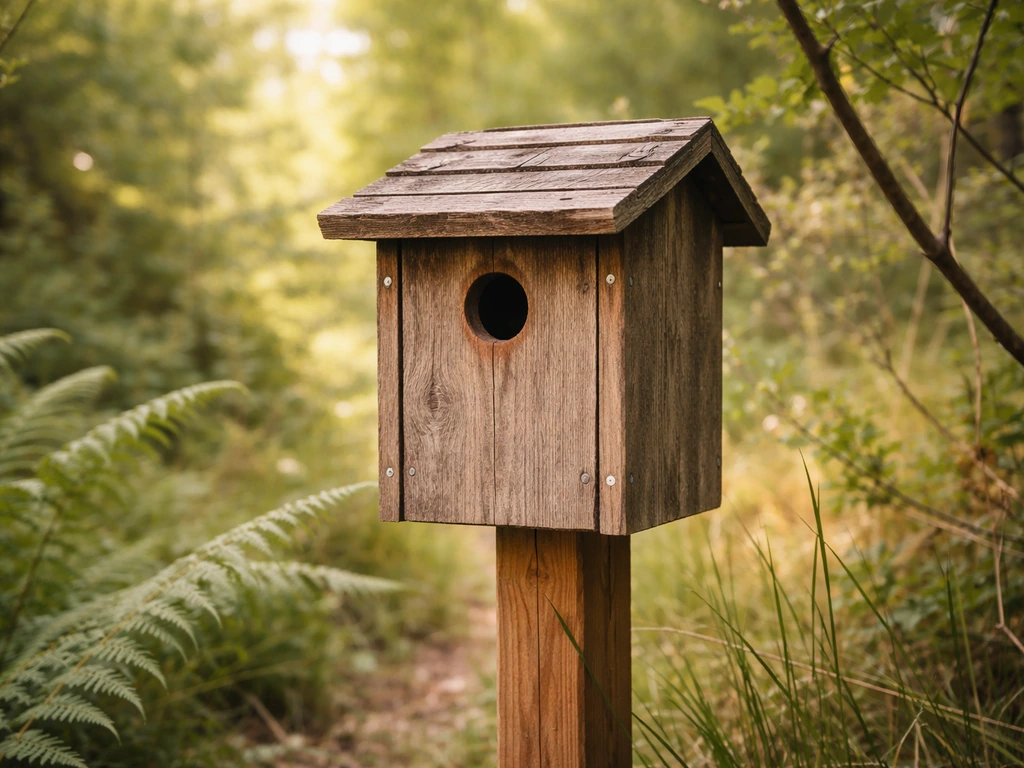
Are Bird Houses Good? When They Help Birds and When They Don’t
When bird houses are good for wildlife and birds, plus sizing, placement, materials, and cleaning to avoid harm.
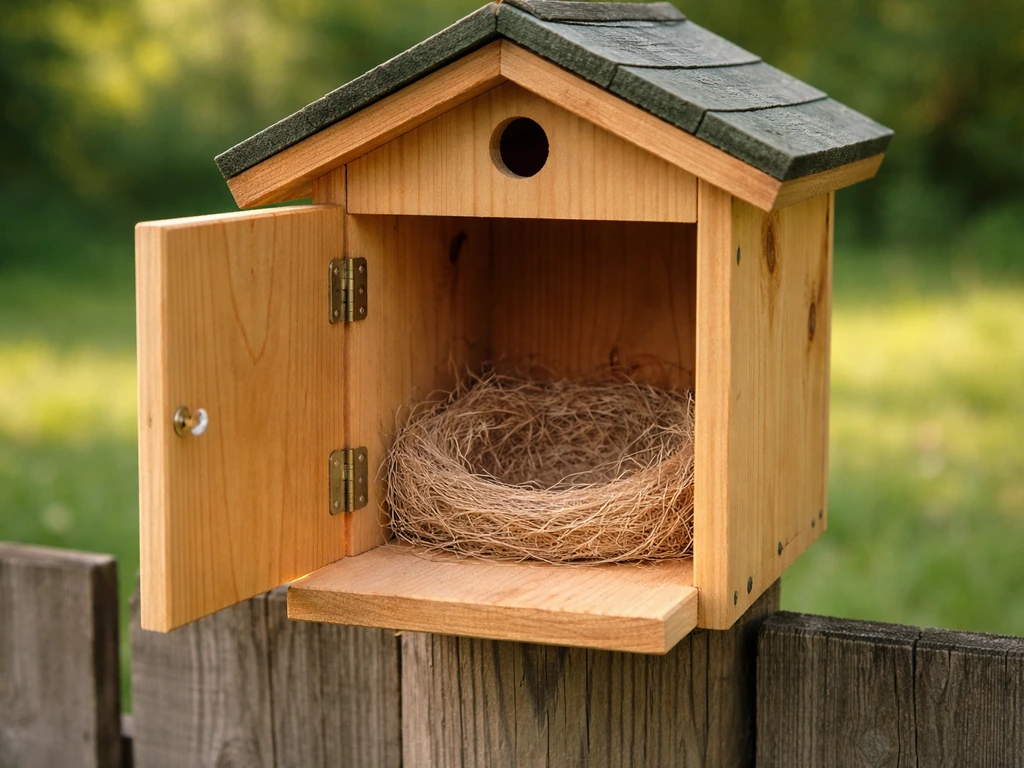
What to Put in a Bird House: Safe Nesting Setup Guide
What to put in a bird house: safe nest liner and floor setup, do and don’t lists, cleaning tips, maintenance for nesting
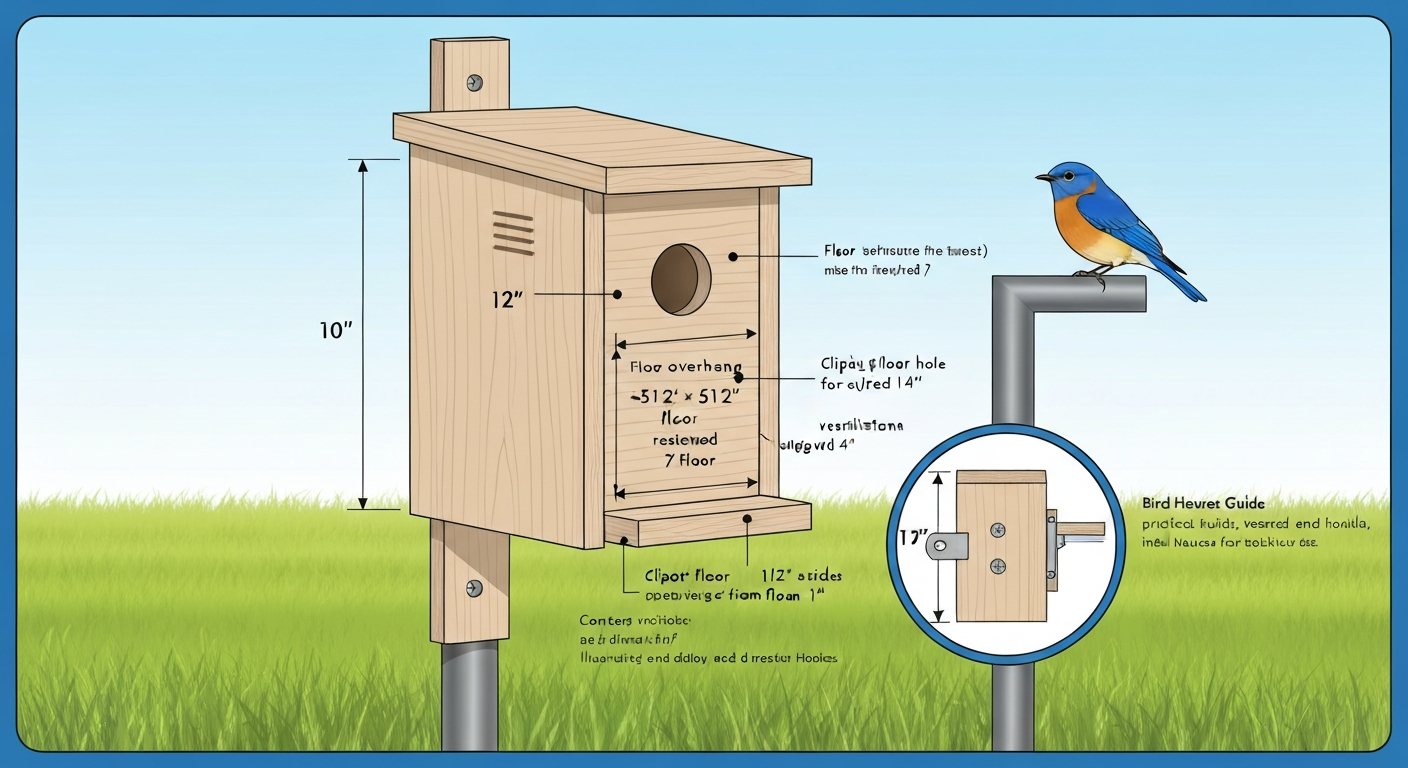
Blue Bird House Instructions: DIY Plans, Sizes & Mounting
DIY bluebird house: step-by-step build, exact cuts and hole sizes, mounting, predator guards, cleaning, and care.