Yes, bird houses genuinely work. Species like Tree Swallows, Eastern Bluebirds, House Wrens, and Mountain Bluebirds use nest boxes reliably and successfully. NestWatch's 2020 season data showed nesting success rates of 75 to 82 percent across common cavity-nesting box users, and the 2022 season computed an overall nesting-success metric of 89.3 percent from volunteer-submitted nest data. Those are real eggs hatching and real chicks fledging, not just birds poking their heads in. The catch is that results depend almost entirely on setup: species match, hole size, placement, and predator management. Get those right and occupancy is very achievable. Get them wrong and a $40 box becomes a wasp nest.
Do Bird Houses Work? What Controls Success and Failure
Maya Thompson
1 Jun 2026
Do bird houses actually attract birds
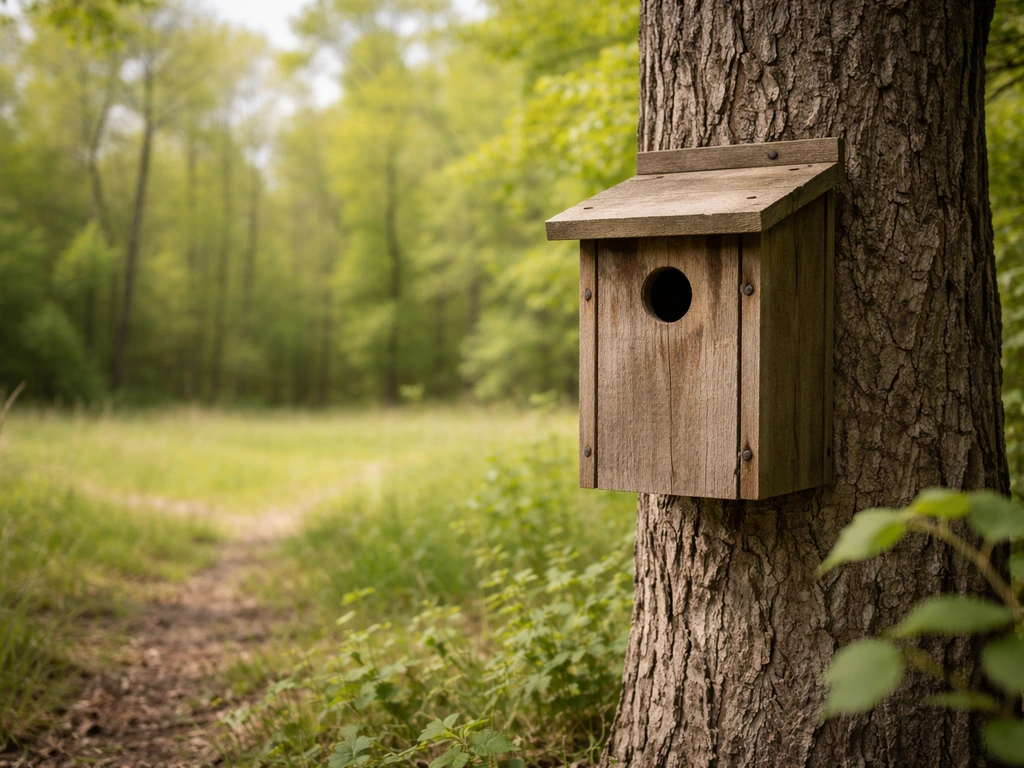
Nest boxes work best when natural cavities are genuinely limited. A US Forest Service study found that in habitats with abundant natural cavities, nest-box occupancy dropped significantly because birds simply had better options available. This does not mean boxes are useless in wooded areas, but it does mean your success depends on your local landscape. Suburban yards, farmland edges, grasslands, and gardens with few dead snags or old trees are exactly the environments where a well-placed box fills a real gap. In those settings, target species will actively seek out and claim boxes, sometimes within days of installation.
The birds that respond most reliably are obligate cavity nesters: species that cannot build a freestanding nest and depend entirely on holes to breed. Eastern Bluebirds, Western Bluebirds, Mountain Bluebirds, Tree Swallows, Violet-green Swallows, House Wrens, Chickadees, Nuthatches, and Purple Martins all fall into this group. If your yard or nearby habitat supports any of these species, a correctly set-up box gives them exactly what they need. Birds that are not cavity nesters, like Cardinals or Robins, will never use a standard nest box no matter how perfect it looks.
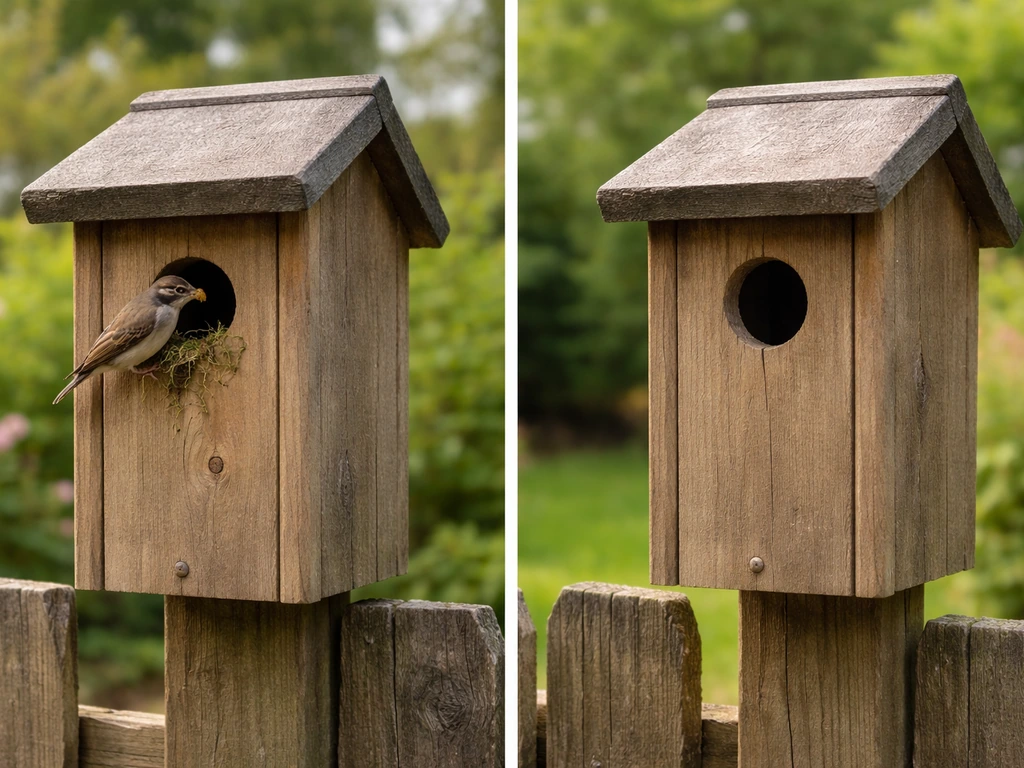
How birds locate a box is worth understanding before you install one. To understand how do birds find bird houses, focus on the scouts’ early territory surveys and the landscape cues around your placement. They are not randomly searching. Males scout territories early in the breeding season, inspect potential sites actively, and make decisions based on hole size, interior dimensions, and location relative to foraging habitat. That scouting behavior is why you sometimes see a bird perch on the entrance hole for several minutes without going in. Timing matters here too: boxes installed in late winter or very early spring, well before breeding season begins, have far higher first-year occupancy rates than boxes put up in May or June.
What determines success: species, dimensions, and hole size
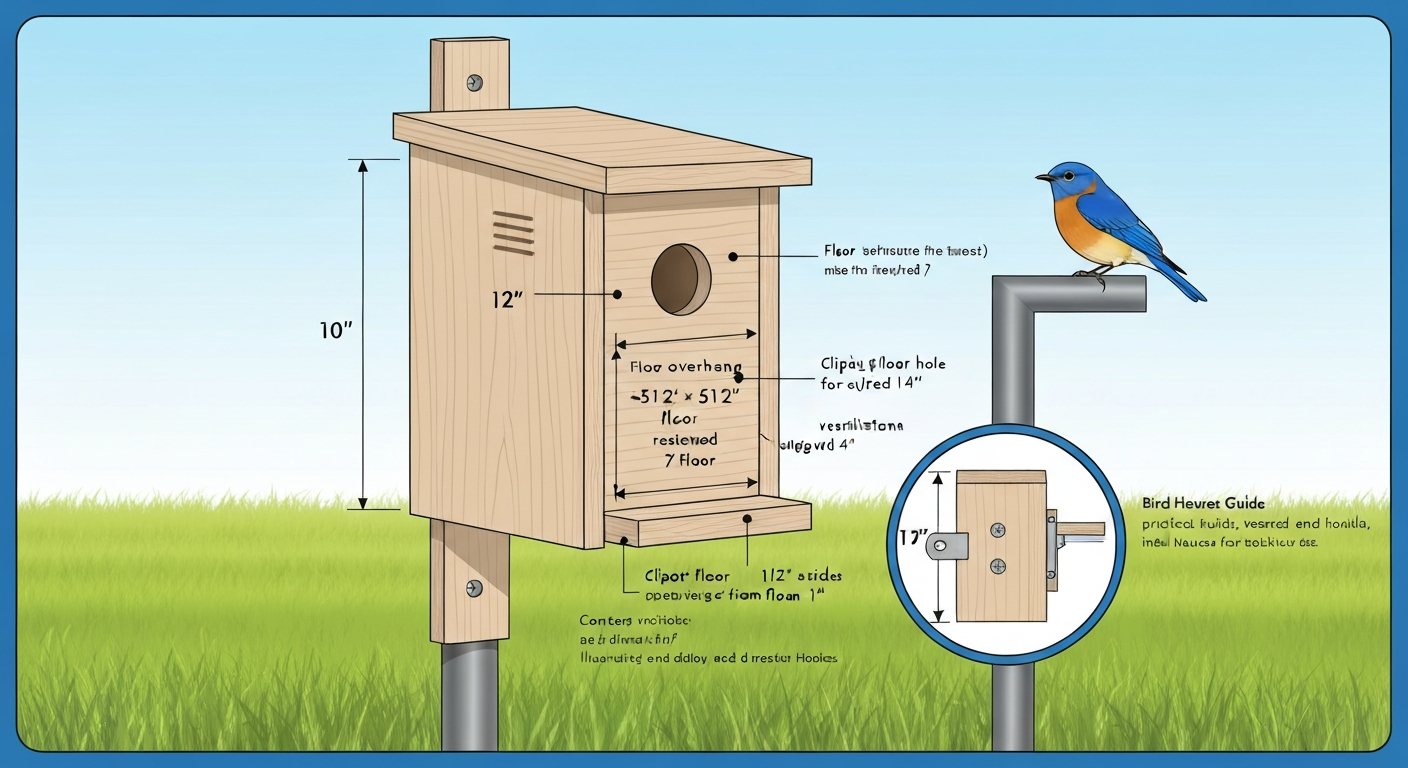
Entrance hole diameter is the single most important dimension on any nest box. It controls which species can enter and, just as importantly, which cannot. For Eastern Bluebirds, Texas Parks and Wildlife specifies a 1.5-inch round hole. House Wrens need just 1.125 inches. Chickadees use 1.125 to 1.25 inches. A hole that is even a quarter-inch too large opens the box to European Starlings, which are aggressive, invasive cavity nesters that will evict or kill native birds. Sizing your hole correctly is the cheapest and most effective form of exclusion available.
| Species | Entrance Hole Diameter | Floor Area | Notes |
|---|---|---|---|
| Eastern Bluebird | 1.5 in (round) | 16–30 in² | Oval or round; excludes starlings |
| Western Bluebird | 1.5 in (round) | 16–30 in² | Same specs as Eastern |
| Mountain Bluebird | 1.5–1.5625 in (round) | 16–30 in² | Slightly larger birds; ventilation critical |
| Tree Swallow | 1.5 in (round) | 16–25 in² | Open area near water preferred |
| House Wren | 1.125 in (round) | 12–16 in² | Dense shrubs nearby needed |
| Black-capped Chickadee | 1.125–1.25 in (round) | 16 in² | Loose wood shavings on floor helpful |
| Carolina Wren | 1.5 in (round) | 16–20 in² | More secretive; likes dense cover |
| Downy Woodpecker | 1.25 in (round) | 16 in² | Pack interior with wood chips |
Interior floor dimensions and box depth matter almost as much as the hole. The North American Bluebird Society recommends floor areas of roughly 16 to 30 square inches for bluebirds, with enough depth below the entrance hole (around 5 to 6 inches) so nestlings cannot accidentally tumble out while still preventing cats or raccoons from reaching in. A box that is too shallow creates a death trap; one that is too deep discourages use because adults are reluctant to navigate an unusually long drop to the nest cup.
Ventilation and drainage are structural details that are easy to overlook but directly affect occupancy. Research comparing ventilated and non-ventilated nest boxes found that boxes with ventilation holes had higher subsequent-year occupancy rates. A hot, humid box stresses chicks and promotes bacterial and parasite growth. For bluebird-style boxes, two small angled ventilation holes near the top on each side wall and drainage holes in the floor corners (quarter- to half-inch diameter) are the standard approach. The roof should overhang the entrance by at least 2 inches to shed rain, and the box must be watertight on the sides even while allowing airflow. Avoid any box made from thin material (under 0.75 inch) because it cannot buffer temperature swings.
Placement and mounting: height, orientation, and habitat fit
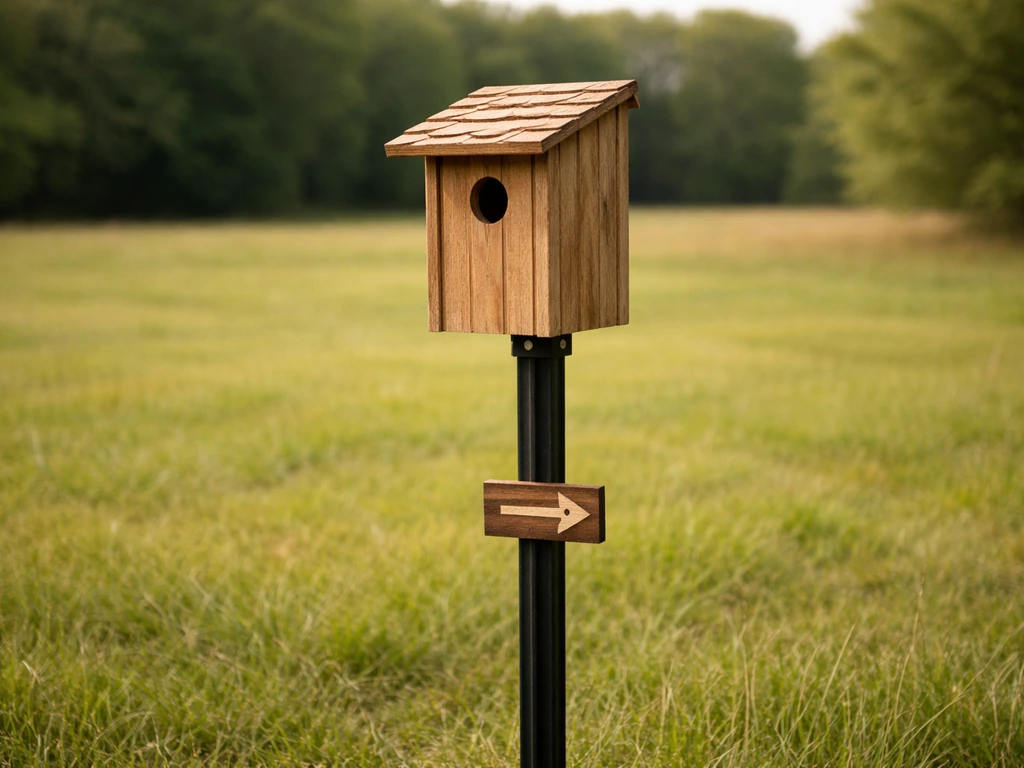
Height and habitat alignment have to match the target species. Bluebirds prefer boxes mounted 4 to 6 feet high on a metal fence post or dedicated pole in open areas with short grass, like fields, pastures, golf course edges, or large yards. Tree Swallows tolerate similar heights but actively compete with bluebirds, so if you want both, space boxes 5 to 10 feet apart in pairs placed 100 or more yards from the next pair.
House Wrens like boxes at 5 to 10 feet on posts or trees near dense shrubs or woodland edges. Chickadees prefer 5 to 15 feet on trees or posts near woodland habitat. Putting a bluebird box in the woods or a wren box in the middle of an open field simply will not work.
Entrance hole orientation is a commonly ignored variable. For most species in most of North America, facing the hole away from prevailing weather, typically south to southeast, reduces rain and wind intrusion and gives nestlings morning sun. NestWatch's Eastern Bluebird guidance also emphasizes orienting the box toward open habitat rather than a fence or dense vegetation, which gives adults a clear flight path in and out and makes the site more attractive to scouts.
Metal conduit pipes or smooth round metal poles are far better mounting options than wooden fence posts or tree branches. Trees and wooden posts give predators easy climbing routes and make guard installation nearly impossible. A half-inch diameter metal conduit pole, set 18 to 24 inches into the ground, is cheap, durable, and pairs naturally with a cone baffle. If you must use a tree, a predator guard is non-negotiable, but understand that nearby branches can still give squirrels or raccoons a launch point that bypasses the guard entirely.
Predators, pests, and exclusion: guards, baffles, and cleanliness
Predator pressure is the leading cause of nest failure in nest boxes. Snakes, raccoons, cats, squirrels, and rats all target boxes. NestWatch analyzed 12,274 nest boxes and found that boxes with multiple predator guards (for example, a cone baffle combined with a hole extender) consistently outperformed boxes with only one guard or none. A cone or stovepipe baffle mounted 4 to 5 feet up the pole, combined with a hole extender (a short wooden or metal collar around the entrance that adds 0.75 to 1 inch of depth), gives you two independent layers of defense. Neither one alone is as reliable as both together.
Snakes are a specific problem for tree-mounted boxes because they can climb almost any surface and are not deterred by a standard cone baffle on a tree trunk. If your box is tree-mounted, NestWatch recommends a wrap-style guard around the trunk, but acknowledges that snakes can still reach the box from nearby branches. The most reliable solution is simply to move the box to a free-standing pole where a cone baffle can be positioned correctly.
Insects and parasites deserve equal attention. Blowfly larvae are a common nest-box pest: female blowflies lay 50 to 200 eggs in or near the nest shortly before or after hatching, and the larvae feed on nestlings at night. Ants, bird mites, and lice are also documented problems. The single most important rule here: never spray pesticide inside a nest box. Not even "natural" sprays. If blowfly larvae are found during a nest check, you can remove the nest, pick out the larvae, and replace the nest material. Bird mites and lice are usually managed through end-of-season cleaning rather than during the active nesting period.
House Sparrows and European Starlings are non-native, aggressive species that compete aggressively with native cavity nesters. Correct entrance hole sizing (1.5 inches or smaller) excludes starlings entirely. House Sparrows can enter bluebird-sized holes, so active monitoring is required. If sparrow nests appear, remove them immediately and consistently; House Sparrows will often give up after repeated evictions and move to a less contested site. Never allow House Sparrow eggs to remain in a box.
How to manage the nesting cycle: checking, maintenance, and timing
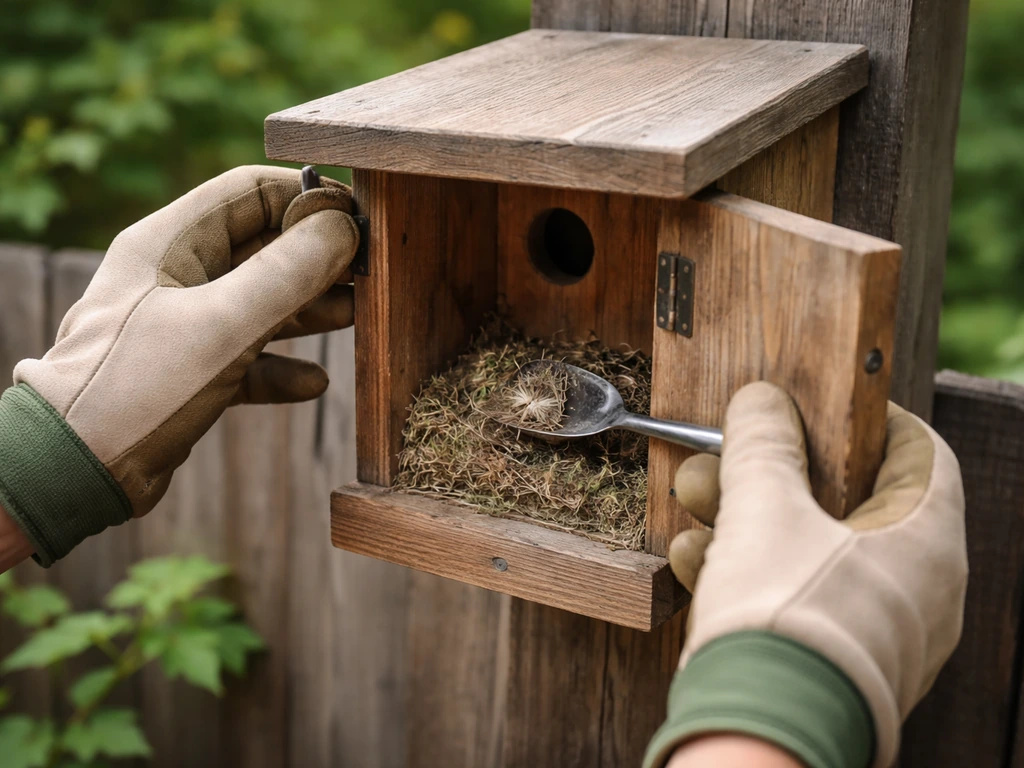
Regular monitoring on a weekly cadence (every 7 days) is the standard recommended practice. A bluebird nest-box procedure PDF from Bvbluebirds.com recommends monitoring on a regular schedule, specifically every 7 days, and cleaning out the used nest after the fledglings leave. Each check gives you a chance to spot problems early: invasive species nests, blowfly infestations, trapped birds, or structural issues. Keep visits brief. NestWatch's code of conduct recommends a "tap and wait" approach: tap the box lightly, wait a few seconds for the adult to exit, then check quickly and move away. Lingering near the box stresses the parents and can attract predator attention to the site.
Timing of checks matters at certain critical points. Once nestlings are approximately 12 days old and approaching fledging, stop opening the box. Disturbing near-fledging chicks can trigger premature fledging, which is dangerous because the chicks may not yet be capable of sustained flight. If you are unsure of the nest's stage, count forward about 14 to 18 days from the date you first noticed eggs (depending on species) to estimate the hatch date, then stop checks about 12 days after that. Similarly, if you find a clutch you suspect has been abandoned, NestWatch advises waiting about four weeks past the expected hatch date before removing eggs, because apparently inactive clutches can still hatch if adults are still tending.
After each brood fledges, remove the old nest material promptly. This eliminates parasite eggs and larvae, discourages rodents, and makes the box attractive for a second brood. Many bluebird and swallow pairs will attempt two or three broods per season if the box is cleaned between each one. To clean, wear gloves, remove all nesting material, and check under the nest for blowfly larvae.
At the end of the entire breeding season, spray the interior with a dilute bleach-water solution (roughly 1 part bleach to 9 parts water), let it dry completely with the box open, then close it up for the off-season. If you monitor for bird mites, record their presence but handle them through end-of-season sanitation rather than mid-season spraying.
Pre-season preparation is just as important as end-of-season cleaning. Inspect boxes in late winter before birds arrive: check for cracks, loose floors, rotted wood, wasp nests from the previous summer, and any hardware that may have rusted or worked loose. Tighten mounting hardware, recheck that the baffle is positioned correctly, and confirm the entrance hole has not been enlarged by woodpeckers. Boxes in good structural condition by early March (in most of North America) are ready for the season.
Troubleshooting when no birds use the house
If your box has been up for a full season without any activity, work through this checklist before concluding that boxes do not work in your yard. Most failures trace back to one or two fixable problems.
- Check the entrance hole diameter. If it does not match the target species exactly, replace the front panel or add a hole reducer. Even an eighth-inch difference changes which birds can enter and which feel comfortable entering.
- Confirm the target species actually lives in your area. Use eBird or a local checklist to verify your target bird is present during breeding season. A bluebird box in a region with no bluebirds will attract wrens or sit empty.
- Assess the habitat around the box. Bluebird boxes in shrubby, wooded, or heavily shaded areas rarely attract bluebirds. Wren boxes in wide-open grassland get ignored by wrens. Relocating the box even 30 to 50 feet can change results.
- Check when the box was installed. Boxes put up mid-season, after territory selection is underway, often sit empty the first year. Leave the box in place for the winter and try again next spring.
- Look for evidence of competitor use. House Sparrow nests (loose, messy, with feathers and grass stuffed to the entrance) or wasp combs inside the box signal why native birds avoided it. Remove and clean, then monitor actively.
- Verify predator guard installation. If there is no baffle, birds may have been disturbed repeatedly by predators and given up on the site. Add a cone or stovepipe baffle and wait for the next season.
- Examine the interior dimensions. If the box is too shallow, too hot, or poorly ventilated, birds may have inspected and rejected it. A box that is excessively thin-walled (under 0.75 inch of wood) heats up badly in summer sun.
- Move the box if it faces a wall, dense vegetation, or into prevailing weather. Re-orient toward open space, ideally south to southeast, and ensure a clear flight path to the entrance.
- Give it more time. First-year occupancy rates vary. Some boxes attract birds within a week; others take a full season or more, especially in lower-density habitat. Citizen-science projects like the Quail Hollow Ranch Nest Box Program and long-running bluebird trail programs document that occupancy builds over multiple years as local birds learn a site.
One final note on expectations: nest boxes are not magic feeders. Unlike a seed feeder that attracts a bird the same afternoon you hang it, a nest box is a breeding-season commitment that depends on a bird choosing your site over every other option available in its territory. So if you are wondering when a bird will use a birdhouse, it usually depends on what species is nearby and whether the box matches its nesting needs breeding-season commitment.
If you are wondering do window bird houses work, the same principles apply, especially species choice and safe predator and weather protection. The good news is that when the setup is correct, the success rates documented by NestWatch volunteers are genuinely impressive. Most failures are fixable. Check the basics, adjust, and monitor consistently, and the odds of real occupancy are solidly in your favor.
FAQ
How long does it take for a bird house to get birds nesting in it?
Usually, yes, but expect a ramp-up rather than instant results. If the box is correctly sized and placed in a habitat that already has the target cavity-nester, many pairs move in within the first days of their scouting period after installation. If you put the box up after the main scouting window, it may sit unused for a full season even though it is “working.”
My bird house is up but no birds are using it, what should I check first?
First, verify species fit. Cardinals and robins typically will not use standard cavity nest boxes, so “no activity” is expected if the target species is not present. Next, check the two highest-impact setup items, entrance hole diameter and placement relative to foraging habitat, then confirm predators can be controlled (cats, raccoons, squirrels, and snakes).
How can I tell the difference between birds inspecting my box and actually choosing it?
Do not assume “a bird was looking” means the box will be claimed. Scouts may perch, inspect, and reject a site if the hole is slightly wrong, the interior depth feels risky, or the flight path is inconvenient. The most reliable sign of acceptance is active carrying of nest material into the box, not repeated visits to the hole.
What should I do if I find wasps using or building near the entrance?
If you see a wasp or hornet nest, remove it promptly and safely before it spreads into the entrance area. Then recheck the entrance dimensions and ventilation and look for gaps around the entrance that might let insects access the interior. Insect problems often come from an overly large entrance hole or poor sealing at the opening.
How quickly do I need to remove House Sparrow nests if they show up?
If House Sparrows appear, remove sparrow nests and eggs immediately and consistently during the season. A single “later I’ll take care of it” delay gives sparrows time to raise young and establish the site as a reliable nesting area, which makes future eviction harder. Also double-check the entrance hole, House Sparrows can enter bluebird-sized openings, so smaller is usually safer.
If no birds used it this year, can the box still work next year?
Missing early nesting does not necessarily mean the box is ineffective. Birds can sometimes use a box for a second attempt later in the season, especially if you clean out the previous brood’s material promptly and predators are controlled. However, if the box has been ignored for the entire season, reassess the entry size, mounting height, and orientation to match the most likely local cavity-nester.
What is the safest way to handle blowfly larvae in a nest box?
Avoid pesticide spraying inside a box during active use, even if the product claims “natural.” For blowfly larvae found during a nest check, the practical fix is to remove the nest contents, remove larvae you can see, and replace with clean nesting material. Mid-season chemical treatments often worsen conditions and can harm the adults or chicks.
Can I place multiple bird house types close together to attract different species?
Yes, but only if the placement and rules support it. If you are hoping for two different species, keep spacing appropriate, and do not create competition by placing species that overlap heavily too close. Also make sure each box has correct hole size, ventilation, and predator protection, because using one “universal” box setup for two species increases the chance of failure or invasive takeovers.
Is it okay to modify a nest box to improve success, like changing the hole or adding parts?
Not always, and DIY modifications can cause subtle failures. The entrance hole diameter must be correct to exclude invasive cavity nesters, and adding materials that change the interior depth can make the box feel “unsafe.” If you change the hole or add a collar, measure carefully and keep the box weatherproof with proper drainage so rain does not pool inside.
My tree-mounted box keeps getting taken by snakes, is there a fix?
You may have to switch locations rather than just adding more guards. For tree-mounted boxes, snakes can reach boxes from nearby branches even if you install a baffle, and that makes protection less reliable. If snake predation is recurring, the most reliable move is to relocate the box to a free-standing pole where you can position the baffle correctly.
When is it safe to clean out a nest box during nesting season?
Do not clean mid-season unless you find an active, specific issue like visible blowfly larvae. Otherwise, keep disturbance brief during weekly checks and focus on removal only after a brood has fully fledged. Premature cleaning or repeated handling near fledging can trigger bad outcomes, including premature fledging.
How do I know when to stop checking so I do not disturb near-fledging chicks?
You should avoid opening or checking right around fledging. Once nestlings are about 12 days old and approaching the point where fledging can begin, plan shorter checks or stop opening the box to reduce stress and confusion. If you are unsure of timing, count forward from your first egg observation and schedule the last careful checks accordingly.
Next Article
Blue Bird House Instructions: DIY Plans, Sizes & Mounting
DIY bluebird house: step-by-step build, exact cuts and hole sizes, mounting, predator guards, cleaning, and care.