Birds won't use a birdhouse just because you put one up. The single biggest reason a box sits empty is a mismatch between the entrance hole size and the species you're hoping to attract. Get that right, hang the box at the correct height in the right habitat before the breeding season starts, and keep predators and competitors out, and you'll have occupants. Here's exactly how to do all of that.
How to Get a Bird to Use Your Birdhouse: Setup Guide
Maya Thompson
9 Jul 2026
Choose the right birdhouse for the target species
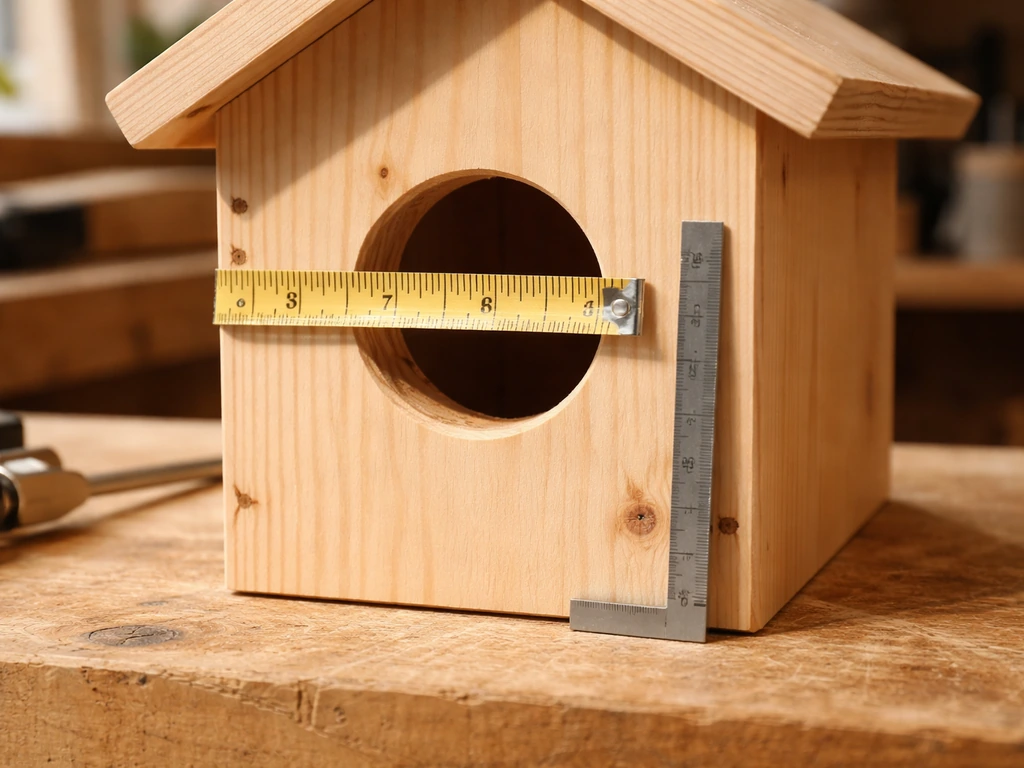
Before anything else, decide which bird you want. Every cavity-nesting species has a preferred entrance hole diameter, interior floor size, and box depth, and being even a quarter-inch off on the entrance hole can mean the box either goes unused or gets taken over by a competitor. A house sparrow can squeeze into a 1 1/4-inch hole, starlings need at least 1 9/16 inches to enter, and eastern bluebirds need exactly 1 1/2 inches. To learn the basics of how to use a bird house, focus on choosing the right hole size, placing the box correctly, and setting up a simple monitoring routine 1 9/16 inches. That 1/16-inch difference between a bluebird hole and a starling-proof hole is not an accident.
| Species | Entrance Hole Diameter | Entrance Height Above Floor | Floor Size (approx.) | Mounting Height |
|---|---|---|---|---|
| Eastern Bluebird | 1 1/2" | 6" | 4" x 4" to 5.5" x 5.5" | 5–10 ft |
| Mountain/Western Bluebird | 1 5/8" | 6" | 5" x 5" | 5–10 ft |
| Black-capped Chickadee | 1 1/8" | 6" | 4" x 4" | 6–15 ft |
| House Wren | 1" | 6" | 4" x 4" | 6–10 ft |
| Tree Swallow | 1 1/2" | 6" | 5" x 5" | 10–15 ft |
Beyond the hole, the interior matters. Bluebirds, for example, need enough depth below the entrance (about 6 inches from hole to floor) so predators can't reach down and grab eggs or nestlings. A shallow box is essentially an open dinner plate. For DIY builds, use untreated, unpainted wood on the interior, birds reject the chemical smell of treated lumber, and painted interiors can trap heat to dangerous levels. Every box should have at least four drainage holes of about 3/8 to 1/2 inch diameter on the floor, plus ventilation holes near the top of the side walls to prevent overheating. These aren't optional extras; they directly affect whether birds accept and successfully raise young in the box. To increase your chances of success, focus on the full process of getting the right bird into your birdhouse, including the right location, timing, and nestbox setup how to get a bird to live in your birdhouse.
Never add a perch to the front of a nest box. Perches give predators and competitors a grip point and do nothing for cavity nesters, who cling directly to the entrance rim on their own.
Right location: placement height, orientation, and habitat
Even a perfectly built box will sit empty if it's in the wrong spot. Each species has a preferred microhabitat, and placing a bluebird box in dense woodland or a chickadee box in an open field gets you nowhere. Match the habitat first, then dial in the height and facing direction.
Habitat matching by species
- Eastern bluebird: open fields, meadows, and pastures with short grass and scattered trees. Avoid dense forest edges.
- Tree swallow: open fields near water — wetlands, ponds, lakes, or slow rivers. A post in the middle of a rural field near a wetland is ideal.
- Black-capped chickadee: woodland edges, mixed forest with shrubby understory.
- House wren: shrubby backyards, woodland edges, thickets near open areas.
Height and entrance facing
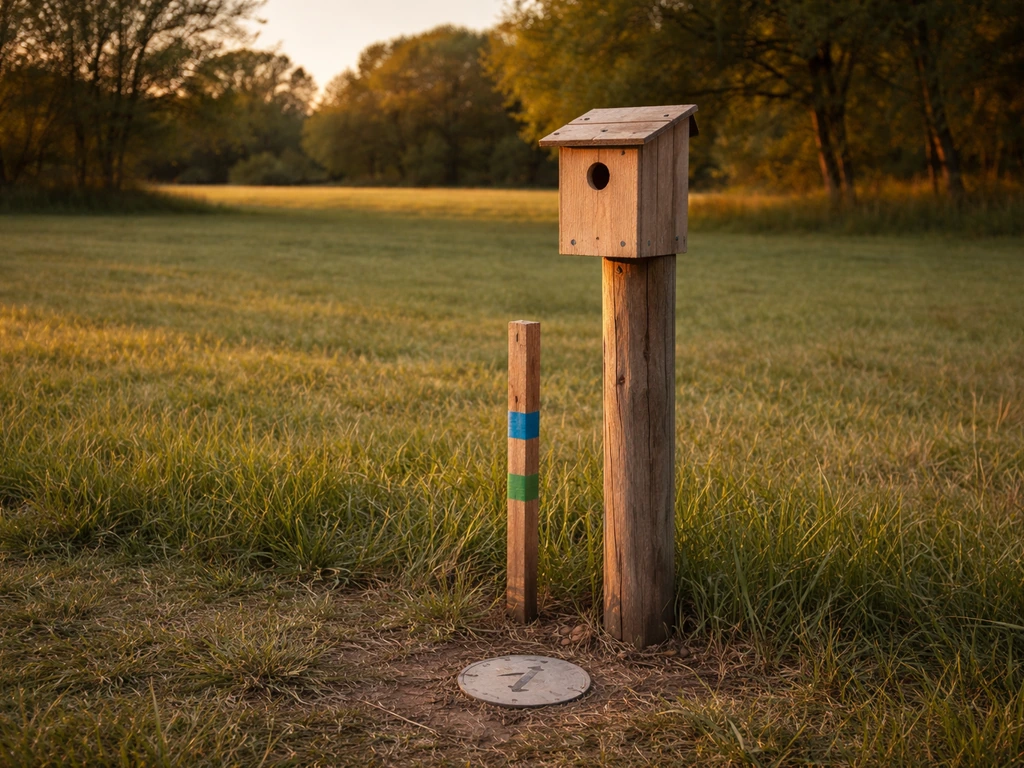
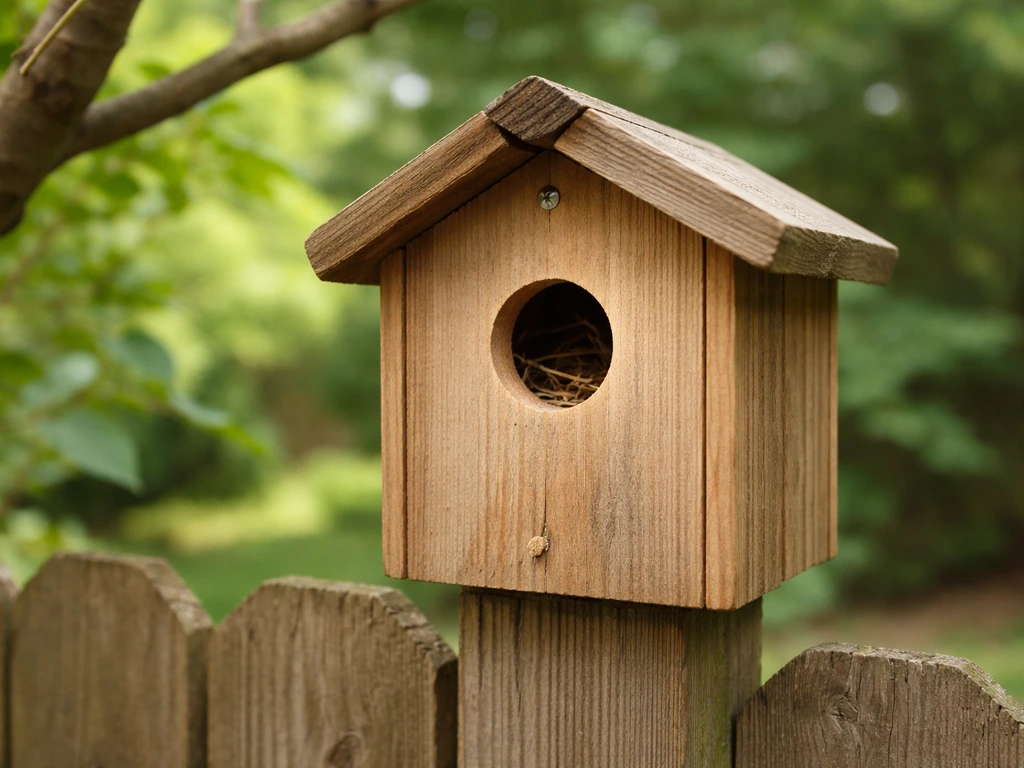
For most common cavity nesters, mounting height falls in the 6 to 15 foot range. Bluebird boxes work well at 5 to 10 feet; tree swallows prefer 10 to 15 feet. Tennessee Wildlife Resources Agency also recommends placing tree swallow nest boxes in open areas, such as the middle of a rural field, near wetlands or a lake tree swallows prefer 10 to 15 feet. Going too low invites ground predators and makes the box feel exposed to the birds. Going too high makes monitoring and cleaning inconvenient, and you will skip it.
Entrance orientation makes a real difference in hot climates. Face the opening north or east to avoid direct midday and afternoon sun baking the interior. Also aim the entrance away from prevailing winds, a cold, drafty box in spring will be abandoned. In moderate climates, east-facing is a reliable default: the birds get gentle morning sun and are shielded from the hot afternoon. Avoid placing boxes near areas that have been sprayed with pesticides or herbicides, which reduce insect food sources and can directly harm nestlings.
Timing and baiting: when to install and what (not) to do
Timing is where a lot of people lose birds before they even start. For bluebirds, have your box up and ready by February. Bluebirds in many regions return early and begin scouting nest sites in late February, with active nesting starting in late March or early April. If your box goes up in May, you've already missed the first brood. Chickadee and tree swallow boxes should be in place by late April at the latest.
On baiting: don't do it. Putting food scraps, nesting material bundles, or scented lures inside a box to draw birds in can attract the wrong visitors (mice, insects, house sparrows), create odor problems, and actually deter the species you want. Birds select cavities based on size, location, and safety, not because something smells interesting inside. The one exception is that providing nearby food sources like mealworms on a tray feeder can help keep bluebirds in your yard while they're scouting, but that's separate from the box itself.
Make it inviting: entrance, interior, and nesting material
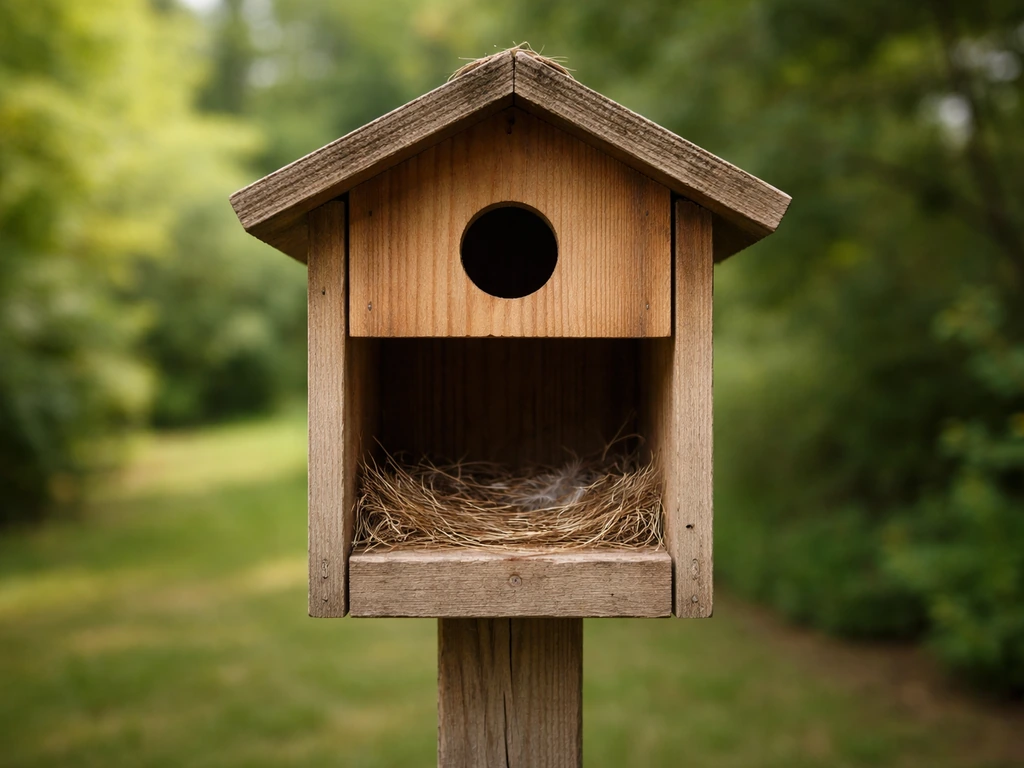
Birds approach a box by landing on or near the entrance and peering in before committing. They need clear, unobstructed flight approach to the hole, no branches or wires crossing right in front of the entrance, and no perch that blocks their line of sight. A rough, unfinished wood exterior near the entry hole gives the bird a natural grip, which helps.
Inside, the box should be dark, dry, and the right depth. A rough-cut interior back wall also helps fledglings climb out when it's time to leave. The entrance hole should sit about 6 inches above the floor for bluebird-sized boxes, deep enough that a raccoon reaching in from the top can't touch eggs or nestlings. Make sure the floor drainage holes are clear and the ventilation slots at the top of the side walls are open and unobstructed.
On nesting material: for most cavity nesters, do not pre-stuff the box with grass, straw, or commercial nesting pads. Female eastern bluebirds, for example, build their own loosely constructed nests from grasses and forbs, it's part of their nesting behavior, and they'll do it themselves. Adding material can actually trigger rejection because it signals prior occupancy or pest activity. The only real exception is for species like purple martins, which sometimes benefit from a small handful of dry leaves as a starter, but that's a different setup entirely. For the common backyard species covered here, leave the box clean and empty.
Reduce deterrents: predators, competition, and pests
Predator-proofing
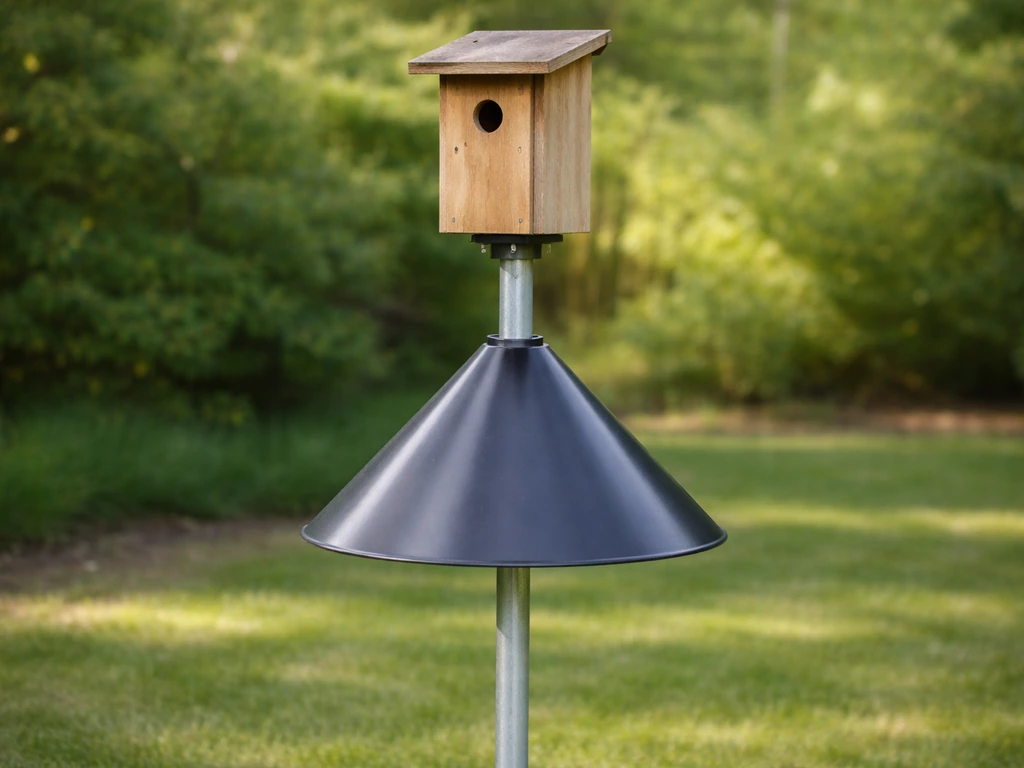
Raccoons, cats, opossums, and snakes are the main threats to nest boxes in most of North America. A stovepipe or conical baffle mounted on the pole below the box is the most effective defense. The key is that the baffle must spin or wobble freely on the pipe, a fixed baffle can be climbed. The Virginia Bluebird Society uses a heavy wire mesh guard mounted directly on the box front as a secondary defense against cats, raccoons, and large birds. Use both if predators are a known problem in your yard.
Mount the box on a smooth metal pole rather than attaching it to a fence post or tree, which give predators a natural climbing path. Grease on the pole can work short-term but washes off; a properly sized free-swinging baffle is a permanent solution.
Managing competition from house sparrows and starlings
House sparrows and European starlings are the two biggest nest competitors for native cavity nesters. Starlings cannot fit through a hole of 1 1/2 inches or smaller, so proper hole sizing already handles them. House sparrows are trickier, they can use most of the same hole sizes as bluebirds and wrens. The most effective strategies are: sizing the hole down to 1 1/8 inches for chickadees (house sparrows struggle with that diameter), placing boxes away from buildings and dense shrubs where sparrows congregate, and actively monitoring so you can remove house sparrow nests before eggs are laid. No entrance design is completely sparrow-proof, so monitoring is non-negotiable.
If you're running multiple boxes, space bluebird boxes at least 100 yards apart (125 to 150 yards is even better) to avoid territorial conflict between bluebird pairs, which will abandon a box if a competing pair is too close.
Mites, blowflies, and insects
Most insects found in nest boxes are harmless, but blowfly larvae and mites are real problems when they build up. Blowfly larvae (small white maggots) live beneath the nest cup and feed on nestlings at night. A heavy infestation can weaken or kill chicks. If you find maggots during a check, brush them out and remove infested nesting material. The best long-term prevention is cleaning the box thoroughly between broods, which removes the eggs and larvae before they can cycle up to problem levels.
Maintenance and sanitation: cleaning schedules and monitoring
How to monitor without disturbing the nest
Checking on the box is important, but there's a right way to do it. Approach the box quickly and quietly, making a small amount of noise so the brooding bird isn't startled. A sharp knock on the box before opening gives the adult a chance to flush before you open the door, which is safer for both bird and eggs. Check under the nest cup for blowfly larvae and count eggs or chicks to track the nesting stage. Stop all internal inspections once chicks are about 14 days old, at that age, premature flushing can cause them to jump out of the box before they're ready to fly.
Knowing the difference between a bird investigating and one actively nesting takes a few visits. Investigating birds will perch at the entrance, peer in, and leave, sometimes repeatedly over several days. Active nesting begins when you see a female carrying nesting material into the box or when you open the box and find a nest cup being built. Once egg-laying starts, keep your checks brief and infrequent.
Cleaning between broods and at season's end
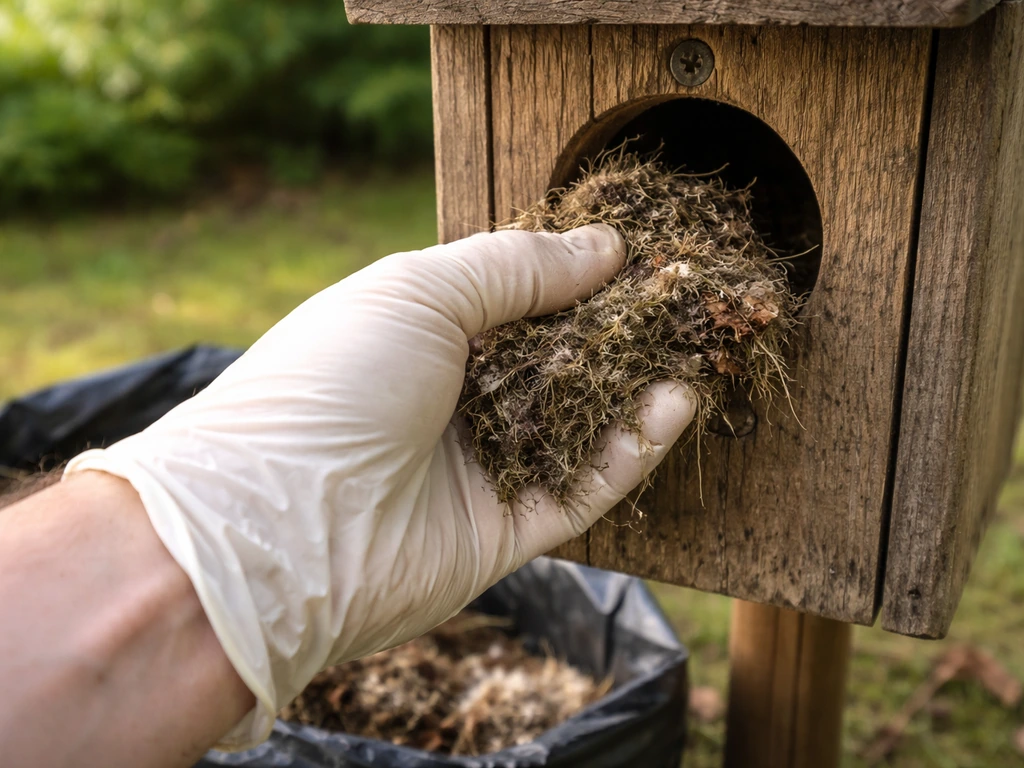
Clean out the box after each brood fledges, not just at the end of the season. Old nesting material harbors mite eggs, blowfly pupae, and bacteria that can harm the next clutch. Wait until you're confident the fledglings have left (usually about 16 to 21 days after hatching for bluebirds), then remove all nesting material and check the box interior for damage.
- Remove all old nest material and dispose of it away from the box area.
- Scrub the interior with a stiff brush and a dilute bleach solution (one part bleach to nine parts water).
- Rinse well with clean water and let the box dry completely in the sun before closing it back up.
- Check drainage holes and ventilation slots — clear any debris blocking them.
- Inspect for cracks, loose screws, or warped wood and repair before the next use.
- At the very end of the season (fall), leave the box open or remove the front panel to air out over winter, then reinstall and prepare it again by February for the earliest returning species.
One nuance worth knowing: some research suggests that a small amount of residual nesting material can actually signal to the next female that the site has been used successfully before, which can encourage reuse. If you're working with a species that raises multiple broods (bluebirds can raise two to three broods per season), you can experiment with leaving a thin layer of the old nest base rather than stripping the box completely bare. But if you ever find evidence of blowfly larvae, mites, or ants, clean everything out without exception.
If you go through all of these steps, right box, right hole, right habitat, right timing, predator guard, regular monitoring, and the box still sits empty after a full season, revisit the habitat match first. If you are still wondering how to get a bird to nest in birdhouse, keep troubleshooting with the habitat match and then revisit the box and hole setup before assuming the birds will not use it. That's the most common missed variable. Everything else in this guide builds on getting the species, hole size, and location right from the start.
FAQ
What should I do if birds are investigating my box but never start nesting?
If birds are checking but not committing, the fix is usually approach conditions. Look for obstructions within a few feet of the entrance, like small branches, netting, or wires that break the line of sight. Also remove nearby “ground cues” like perches on nearby posts and keep tall grass trimmed so the birds can land and enter cleanly.
Can weather or early spring conditions prevent birds from using the birdhouse even if everything is built correctly?
Spring weather can delay acceptance. If the box is correct but nights stay cold or storms are frequent, birds may postpone breeding. In that case, keep the box up and undisturbed, verify the entrance is not heating from afternoon sun, and do only one quick check to confirm predators are not taking over.
Is it ever okay to mount the birdhouse on a tree or fence instead of a pole?
For many cavity nesters, the entrance height and interior clearance matter more than the exterior mounting material. Even on a tree or fence, you can still succeed, but the key is predator control, so prioritize a free-swinging baffle or pole setup. If you must mount on a fence or tree, add a guard system, because those surfaces give raccoons and cats an easy climb path.
Can I paint or seal the birdhouse to protect it from weather and still get birds to use it?
Yes, but avoid “improvements” that can change chemistry or safety. Do not apply treated wood products to the interior, paint the interior, or seal drainage and ventilation openings. If you need to weatherproof the outside, use exterior-safe, breathable finishes only on the exterior surfaces, and keep the interior dark and dry.
How do I clean the birdhouse without accidentally causing the birds to abandon the nest?
A common mistake is cleaning at the wrong time. If you remove the nesting material while eggs or chicks are present, you can cause abandonment. Use a simple rule: only remove material after a brood has completely fledged, and avoid opening the box on hot days. Quick, minimal checks are best once eggs or young are inside.
What is the best way to handle house sparrows if they start to take over?
Leave the box in place after nesting begins, but you should intervene if there is active nest takeover. Remove house sparrow nests early, before eggs are laid or as soon as you confirm them, and check often enough during that window to catch them promptly. For native species, avoid removals or internal changes unless there are clear safety issues like infestations you can’t tolerate.
My box has the right hole size, but birds won't enter. What other details commonly cause rejection?
If you only see birds perching at the entrance and not entering, the entrance might be incorrect or the approach may feel unsafe. Re-check the hole diameter against the target species, confirm the hole is centered and unobstructed, and ensure the entrance opening is not blocked by the box’s mounting hardware or an angled cover. Also confirm the box depth and floor placement match the species needs, since some birds reject boxes that feel too shallow or cramped.
Can I leave some old nest material in the birdhouse to encourage reuse, and when should I avoid that?
For multi-brood species, acceptance can increase with consistency. Many keepers remove everything after fledging, but you can experiment carefully only if there are no mites or blowfly larvae present, and only leave a thin layer of old nest base if your species is known to reuse sites. If you ever see pests, remove all material completely that same day.
Will adding a baffle or predator guard reduce the chances that birds will use the box?
If a predator guard is new, birds may be temporarily cautious but should still enter once it does not interfere with their flight. Make sure the baffle or guard does not cover the entrance or create a visual barrier at the approach path. Test by watching from a distance, if birds repeatedly approach and then turn away, adjust the guard so it is below the entrance and not near the hole.
Next Articles
How to Attract Birds to a Birdhouse: Step-by-Step Guide
Species-appropriate setup, placement, timing, cues, predator-proofing, and a troubleshooting checklist to attract birds
Blue Bird House Instructions: DIY Plans, Sizes & Mounting
DIY bluebird house: step-by-step build, exact cuts and hole sizes, mounting, predator guards, cleaning, and care.
Wine Cork Bird House Instructions: DIY Steps and Bird-Safe Specs
Step-by-step wine cork mini birdhouse build with bird-safe dimensions, safe materials, mounting, cleaning, and weatherpr