Birds won't just move into any box you hang on a fence post. They're picky, cautious, and have real requirements about hole size, height, location, and safety before they'll even investigate. The good news is that once you get those factors right, cavity-nesting birds will find your birdhouse on their own. You don't need decoys, lures, or any tricks. You need the right setup. Here's exactly how to do it.
How to Attract Birds to a Birdhouse: Step-by-Step Guide
Maya Thompson
9 Apr 2026
Start with the right birdhouse for local birds
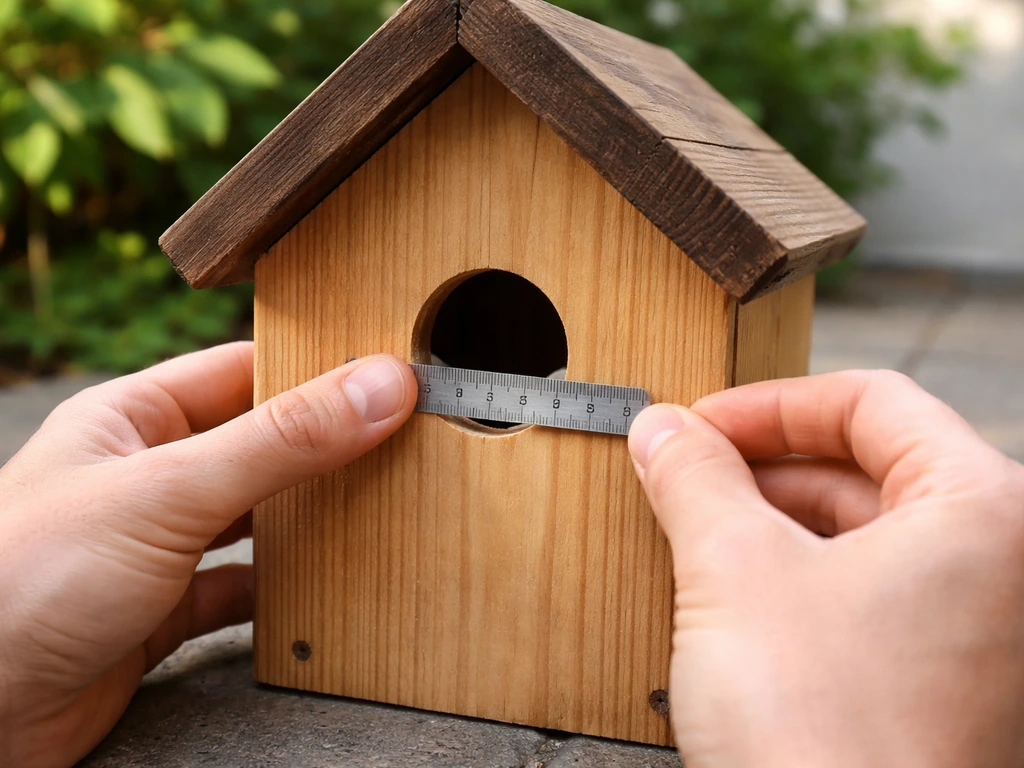
The single biggest reason birds ignore a birdhouse is a mismatch between the box and the species in your area. Every cavity-nesting bird has a preferred entrance hole diameter, interior floor size, and cavity depth. Get those wrong and the birds you want either can't get in, won't bother, or worse, a different species takes over. Before you think about placement or timing, confirm that your box matches the birds actually living near you.
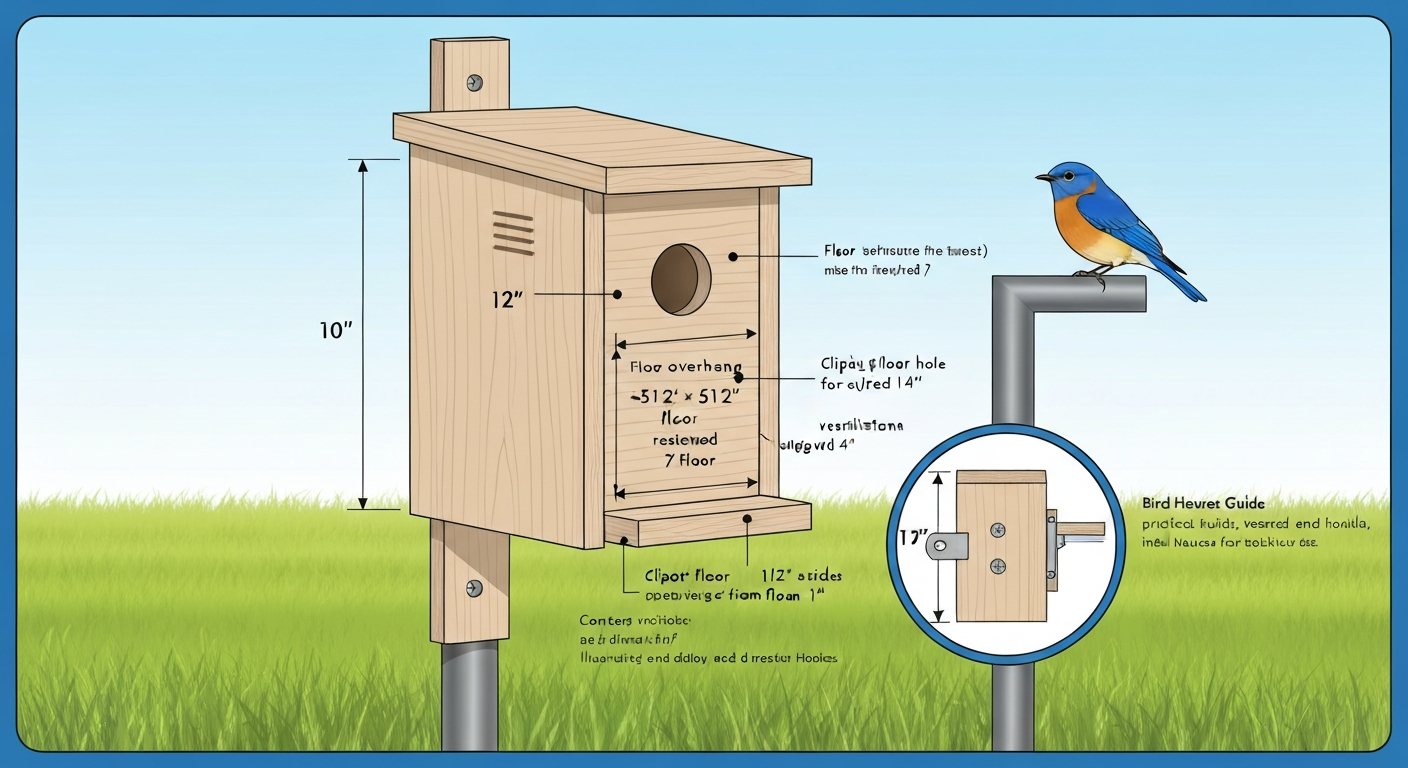
Here are the key dimensions for common backyard cavity nesters. These come directly from USDA/NRCS, NestWatch, and Texas Parks and Wildlife reference specs:
| Species | Floor Size (in) | Cavity Depth (in) | Entrance Hole Diameter (in) | Mounting Height (ft) |
|---|---|---|---|---|
| Eastern Bluebird | 4 x 4 to 5 x 5 | 8–12 | 1.5 (round) or 2.25 x 1.375 (oval) | 3–6 |
| Tree Swallow | 5 x 5 | 6–8 | 1.5 | 5–10 |
| Black-capped Chickadee | 4 x 4 | 8–10 | 1.125 | 4–15 |
| House Wren | 4 x 4 | 6–8 | 1.0–1.25 | 5–10 |
| Downy Woodpecker | 4 x 4 | 8–10 | 1.25 | 5–20 |
The entrance hole is the most critical number. A 1.5-inch hole is the standard size for bluebirds and tree swallows but is too large for chickadees and wrens, which prefer something closer to 1.125 to 1.25 inches. Going too large opens the box to House Sparrows and European Starlings, which will outcompete native species. The North American Bluebird Society actually recommends a specific oval portal design for bluebird boxes specifically to restrict other species from entering.
Beyond the hole, check that your box has proper ventilation and drainage. NestWatch recommends at least four drainage holes in the floor, each about 3/8 to 1/2 inch in diameter. OSU Extension guidance adds 4 to 5 of these holes and suggests side ventilation gaps or vent holes of roughly 3/4 to 1 inch.
The USFWS recommends 1/4-inch vent holes or gaps in appropriate areas of the box. If your birdhouse has no drainage and no airflow, it's going to be a damp, hot box that birds will avoid. A roof overhang matters too: it sheds rain away from the entrance and reduces how much water gets inside in the first place.
If you're still figuring out the basics of setting up your box correctly, how to use a bird house walks through the full setup process from the beginning.
Pick the right location and mounting setup
Once you have the right box, location is everything. Birds are not going to squeeze into a birdhouse that's mounted in the wrong spot, no matter how perfect the dimensions are. Each species has habitat preferences, but there are universal placement principles that improve acceptance rates across the board.
Height and orientation
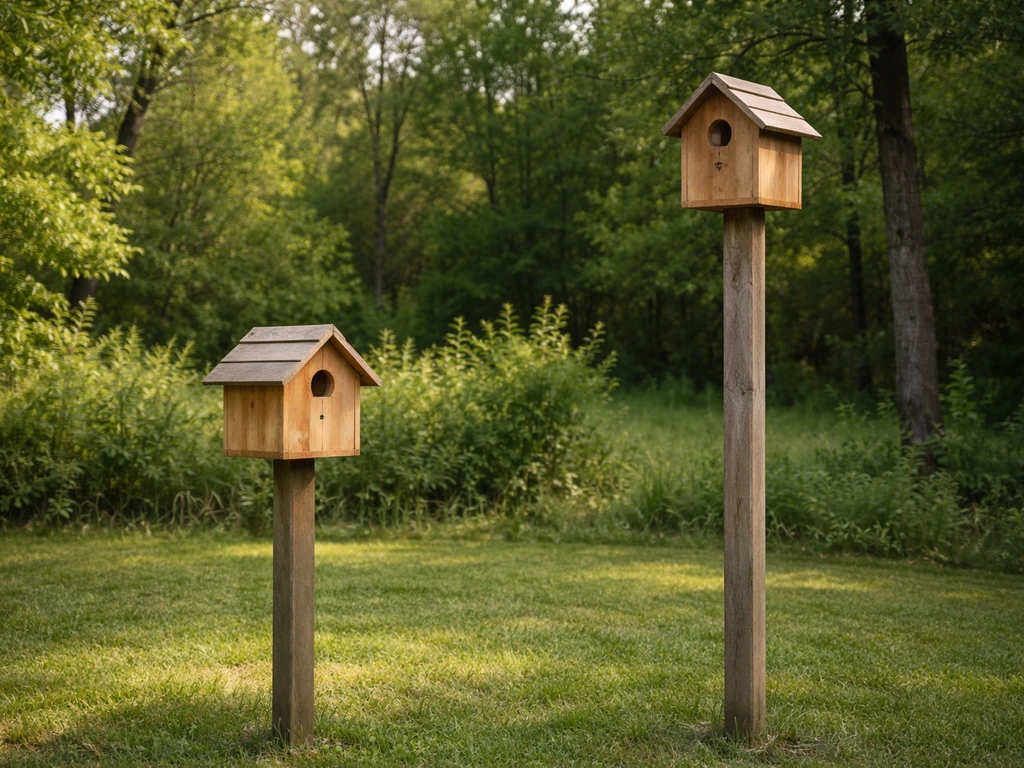
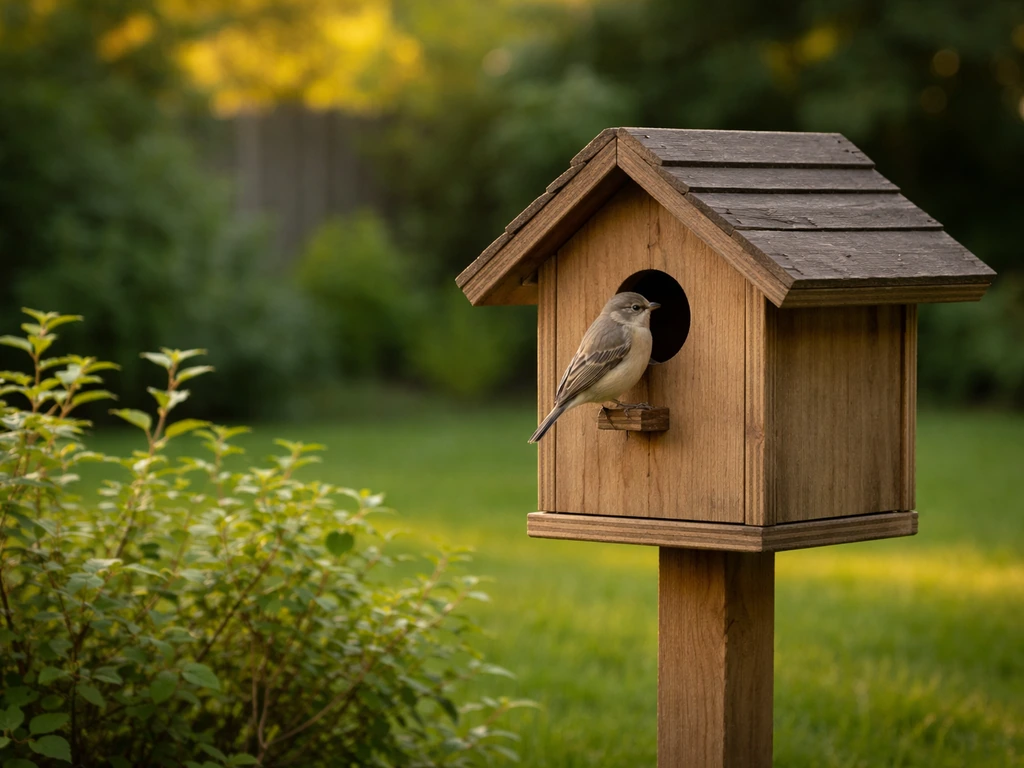
Mounting height varies by species (see the table above), but most common backyard birds prefer boxes between 4 and 10 feet off the ground. Bluebird boxes are an exception at 3 to 6 feet, which is lower than people expect. For orientation, face the entrance hole away from prevailing winds and harsh afternoon sun. In most of North America, that means pointing east or southeast. This keeps the interior cooler in summer and reduces rain exposure. If you're in a hot southern climate, shade from a nearby tree can actually help, but avoid locations with dense overhanging branches that give predators an easy jumping point.
Habitat match and nearby features
Bluebirds and tree swallows want open fields or meadow edges with short grass and no thick shrubby cover nearby. Wrens and chickadees prefer woodland edges and brushy yards. If you put a bluebird box in a heavily wooded backyard, you'll likely get a wren or nothing. Match the box to the bird, and match the placement to the habitat those birds actually use.
Keep birdhouses at least 100 feet from active feeders. Feeder activity creates noise, foot traffic, and attracts species like House Sparrows that may harass nesting birds. A nearby water source, on the other hand, is a real positive, just keep it 10 to 20 feet away so it draws birds to the area without creating commotion right at the nest.
Mounting method
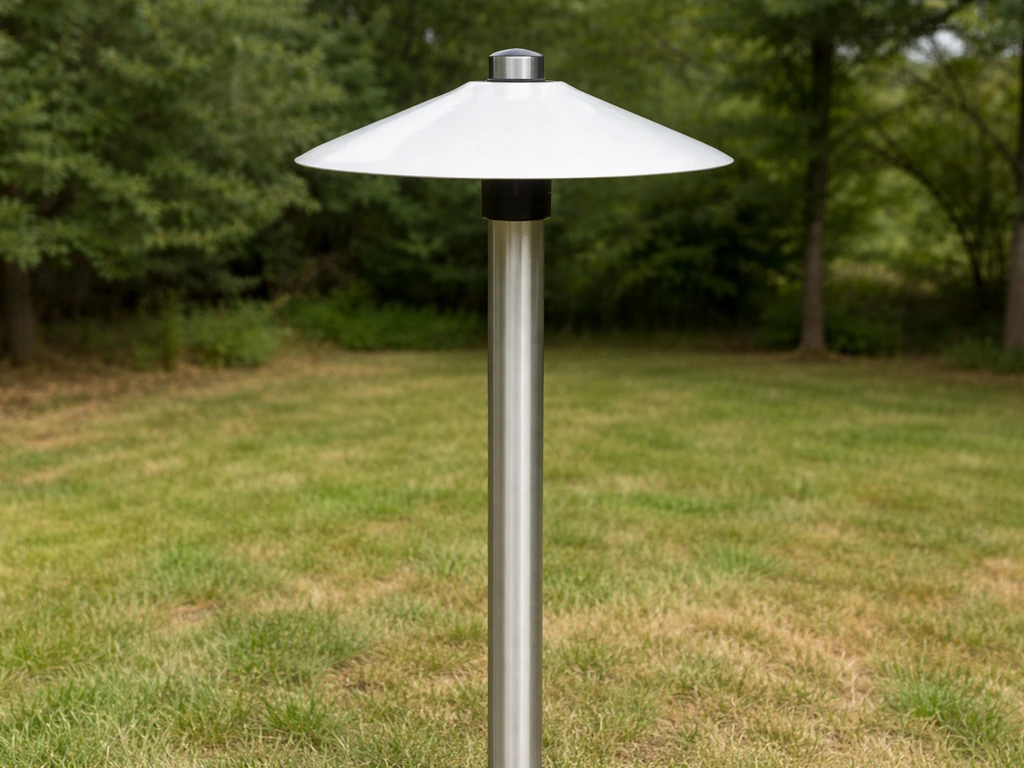
Mount on a smooth, freestanding pole rather than a tree trunk, fence post, or building wall whenever possible. This alone dramatically reduces predator access and gives you more control over placement. Galvanized steel pipe and PVC are both good choices because they're slippery and hard for predators to grip. A freestanding pole in an open area away from climbable structures is the gold standard.
Timing: when to put it up and how long to wait
You can put a birdhouse up any time of year, but the earlier the better. Cornell Lab and NestWatch guidance specifically recommends installing nest boxes in the fall, well before the spring breeding season. Here's why: birds scout potential nest sites during late winter and early spring, sometimes months before they actually build. A box that's been sitting in the right spot since October is far more likely to be noticed than one you hang in late April when nesting is already underway. Some species also use boxes for winter roosting, which makes early installation a double benefit.
If you're installing in spring, aim to have the box up by late February or early March for most temperate North American species. Bluebirds start scouting in February in warmer regions. Wrens and swallows are a little later, typically March through May depending on your latitude. For a more in-depth look at timing relative to nesting behavior, how to get a bird to nest in birdhouse covers the nesting cycle in detail.
After you install, be patient. NestWatch is direct about this: don't be discouraged if birds don't begin nesting immediately. It can take days, weeks, or even a full season for birds to discover a new box, especially if it's in a location that isn't on their regular patrol route. Don't move the box every few days out of frustration. Consistency matters. A box that stays in one spot builds familiarity. Birds investigating the area will note it, remember it, and often return when they're ready to nest.
Using nesting cues (what actually helps and what to skip)
Some people ask about putting nesting materials in or near the birdhouse to encourage birds to move in. The honest answer is: it's mostly unnecessary and can sometimes backfire. Birds are extremely particular about nesting materials and will remove what they don't want and start from scratch anyway. Shoving a handful of grass or string into the box doesn't speed up the process and can actually make the box look occupied or unappealing.
What does help is providing natural materials nearby. A bare patch of ground, a muddy edge near a water source, small piles of dry leaves, or bundles of dry grass clippings left loose in the yard give birds the raw materials they'll gather on their own terms. This supports nesting without interfering with their instinct to build. For an overview of how birds naturally transition from investigating to actually moving in, how to get a bird to live in your birdhouse covers the behavioral side of that process.
Skip the following: perfumes or commercial attractant sprays (they don't work and may contain chemicals harmful to birds), placing food inside the box (it attracts pests and can mold), and painting the interior (birds prefer bare, natural wood inside). Outside the box, an unfinished or natural wood exterior is fine, but avoid bright colors or highly reflective finishes that could spook wary birds.
Predator-proofing: the step most people skip
If your birdhouse gets visited by a raccoon, snake, or cat even once, the nesting birds will abandon it, sometimes permanently for that season. Predator-proofing isn't optional if you want birds to actually commit to nesting. The good news is that a few simple measures handle most threats.
NestWatch's top recommendation is to mount the box on a smooth, slippery pole (galvanized pipe or PVC) and add a predator baffle on that pole. The baffle should be a metal "stovepipe" or cone-style guard installed below the box, positioned so a climbing animal hits it before it can reach the box. Sialis. org details baffle design and warns that the baffle needs to extend far enough that a predator can't get around or under it.
The ODWC also recommends clearing any vegetation from the base of the pole so snakes and cats can't use it as a launch point or hiding spot. Avoid mounting boxes on trees, wooden fence posts, or building walls unless you add a wrap-around metal baffle, because these surfaces are easy to climb.
House Sparrows and European Starlings are a separate problem. Both are non-native, invasive species that aggressively take over nest boxes intended for native birds, sometimes killing nestlings or adults in the process. Sialis.org is very clear: prevent House Sparrows from using boxes meant for native cavity nesters. The best approaches are using entrance holes sized correctly for your target species (which excludes starlings from most small boxes), monitoring actively during the season, and removing House Sparrow nests before eggs are laid if they appear in boxes you've designated for native birds.
Keep it clean to keep it appealing
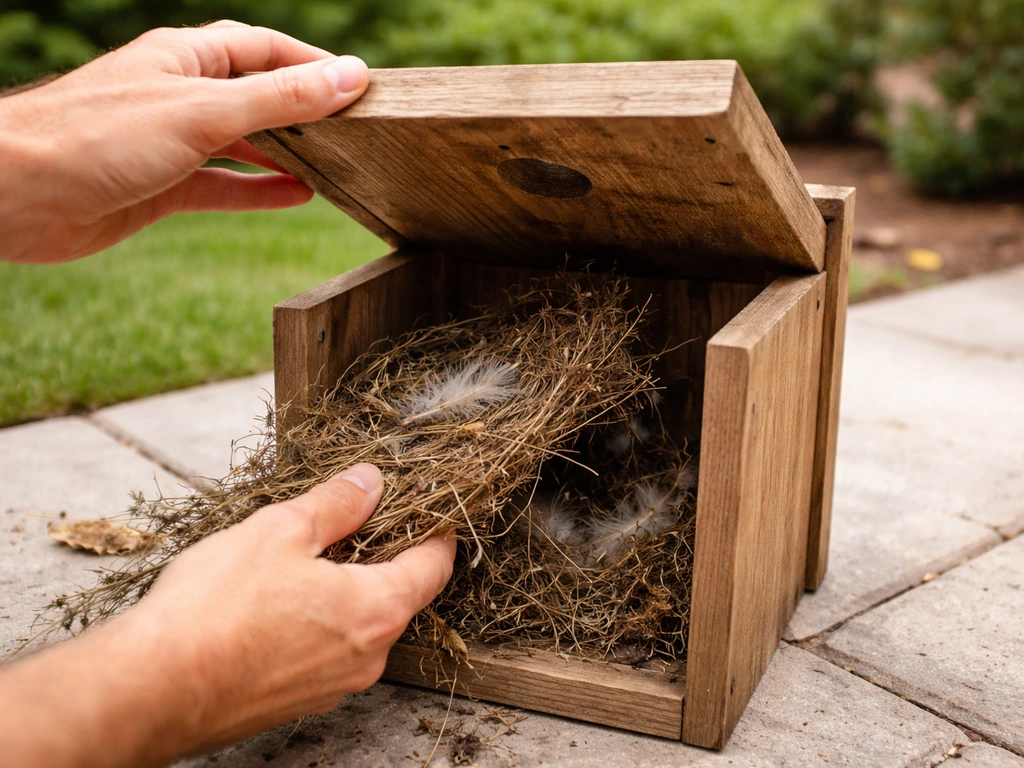
A neglected birdhouse becomes a parasite hotel. Old nesting material harbors mites, blowfly larvae, and other parasites that make a box uninhabitable for the next brood or the next season's tenants. Regular cleaning is one of the most effective things you can do to keep a birdhouse consistently attractive, and it's especially important for a new box after its first season of use.
The cleaning schedule is straightforward. NestWatch and All About Birds both recommend cleaning out nest boxes at the end of the breeding season. The Mountain Bluebird Trails Conservation Society describes a September workflow: once fledglings have taken flight, that's the time to clean and prep boxes for the following year. Remove all old nesting material completely. Wildlife Trusts recommends scalding the interior with boiling water to kill parasites, then allowing it to dry completely before closing the box back up. For a more thorough disinfection, Sialis.org recommends a 1:9 bleach-to-water solution (10% bleach) as an option, with the caution that mouse nests require extra care due to hantavirus risk and should be handled with a mask and gloves.
During the active nesting season, you can do quick nest checks without harming the birds. Sialis.org advises that monitoring during the March through August nesting window should be quick and quiet. One important rule: don't open boxes to check on nestlings once they're 12 to 14 days old, because at that stage they may fledge prematurely if startled. A brief, calm check every week or two earlier in the cycle is fine and lets you catch problems like predator damage, parasite loads, or invasive species nests before they get out of hand.
Why birds still aren't using it (and what to fix now)
If your birdhouse has been up for a full season with no activity, work through this checklist before giving up or buying a new box. Most problems are fixable. For a thorough walkthrough of specific adoption barriers and how to overcome them, how to get a bird to use your birdhouse goes deeper on each of these issues.
- Wrong entrance hole size: Measure it. If it doesn't match the target species spec within 1/8 inch, drill it out or replace the faceplate. This is the most common problem.
- Wrong species for the habitat: Bluebird box in a dense wooded yard, or wren box in an open field, won't get used by the intended bird. Identify what cavity nesters actually live near you and match the box.
- Too close to feeders or heavy foot traffic: Move the box at least 100 feet from active feeders and away from high-traffic areas. Birds won't nest where they feel constantly disturbed.
- Pole or surface is too easy to climb: Switch to a smooth metal or PVC pole with a baffle. If predators are visiting at night, birds will sense the scent and avoid the box entirely.
- Box interior is too hot or too wet: Check that drainage holes are clear and the box has adequate ventilation. A damp or overheated interior is a deal-breaker.
- House Sparrows or starlings are monopolizing the box: Remove their nests (before eggs appear) and recheck your entrance hole size. Consider relocating the box if invasive pressure is very high in that spot.
- Box was installed too late: If you put it up in April or May, the birds may have already committed to other sites. Leave it up, keep it clean, and get it in position by February next year.
- Not enough time: If the box has been up for less than a full season, keep waiting. Birds may investigate in fall or early spring without you noticing and nest the following year.
- Box condition or smell: A new birdhouse with strong chemical or paint smells may need a few months of weathering. Avoid treated lumber, pressure-treated wood, or interior paint entirely.
- No clear flight approach: Make sure the entrance hole has a clear, unobstructed flight path of at least 6 to 10 feet in front of it. Dense shrubs or branches right at the entrance make birds nervous about approaching.
Most of these issues have quick fixes. Start with hole size, habitat match, and predator-proofing because those three address the majority of "birds won't use it" situations. Then check timing and location. If you've addressed all of these and still have no activity after a full spring and summer season, try relocating the box 50 to 100 feet in a slightly different microhabitat and see if that changes things. Sometimes a small shift in positioning is all it takes.
FAQ
Should I put nesting material (grass, feathers, string) inside the birdhouse to get birds to move in faster?
Most native cavity nesters will use the box without you doing anything inside it. If you want to help, add only natural nesting material nearby (dry grass, leaf litter, or a small muddy patch near water), and keep the interior bare. Avoid putting loose material in the box because birds may reject it, and it can make the box look occupied or attract pests.
I’m seeing birds inspect the birdhouse but they never nest, what should I check first?
If you see a bird entering and then leaving, that can still be a good sign. What matters is whether nesting begins. Watch from a distance for carry-ins of nesting material and repeated visits. If there is no traffic for several weeks, the most common causes are wrong entrance size for local species, poor habitat match, or easy predator access.
How long should I wait after installing a birdhouse before assuming it won’t be used?
Yes, timing affects discovery. A box mounted in fall tends to be found earlier because birds scout before breeding. If you installed late, give it at least into mid-season before changing anything major. If it is already breeding season and you move the box, do it only once and try for a location with the right microhabitat, not every few days.
Can I modify an existing birdhouse (like enlarging the entrance) to attract more species?
You can, but only if the box still matches the target species needs. Increasing the entrance size or altering the hole shape can allow invasive competitors like House Sparrows or starlings. Also, switching to a different style without matching floor size and cavity depth can make the box unusable for the birds you’re trying to attract. If you must change it, redesign the whole box to the correct spec rather than just resizing the hole.
When is it safe to open the birdhouse to check on nestlings?
During the nesting window, keep checks brief and quiet. If nestlings are about 12 to 14 days old (often when the young start to look very feathered and close to fledge), avoid opening the box at all because they can fledge early. A good compromise is to do one quick look earlier in the cycle, then switch to distance monitoring until birds are fully on their own.
How often should I clean my birdhouse, and can I clean it during the breeding season?
A full cleaning is important after a nesting season and before the next brood attempts. For the current active season, avoid cleaning out active nests. When you do clean, remove all old material and let the box dry fully. If you live where multiple broods are common, prioritize minimal disturbance during the season, then do the full clean at the end.
If my yard is too clean or has no leaf litter, will that prevent birds from nesting in the box?
Not typically. Birds can build with natural materials even if your yard is tidy, but a completely bare area far from any foraging or water source can reduce the nearby cues birds use. The best “aid” is nearby opportunities for gathering: a patch of bare ground, scattered dry leaves, or access to a water source at an appropriate distance (attracting birds without creating constant commotion at the entrance).
I have no birds after one season, can I relocate the birdhouse and still expect success?
Relocating is reasonable, but treat it like a one-time experiment. Move 50 to 100 feet into a slightly different microhabitat, for example shifting from an edge with thick shrubs to an area with the shorter grass or woodland edge that matches the target species. Keep the box consistent afterward, and confirm predator-proof mounting before moving again.
What placement details matter most for predator avoidance?
Yes, even if you use the right box. Dense overhanging branches can give predators a route to reach the entrance, and mounting near a climbable structure can increase risk. Clear vegetation at the base of the mounting pole and avoid placing the box where cats or snakes can launch. If you ever have predator visits, birds may abandon the site for the season.
How do I stop House Sparrows or starlings from taking over my native birds’ birdhouse?
One clue is which species you see using it. If House Sparrows repeatedly take over, entrance size and active monitoring usually need adjustment. If you find a nest inside a box intended for native species, remove the House Sparrow nest before eggs are laid, and keep monitoring so you can respond early next time. Correctly sized entrances remain one of the best long-term barriers.
Next Article
Blue Bird House Instructions: DIY Plans, Sizes & Mounting
DIY bluebird house: step-by-step build, exact cuts and hole sizes, mounting, predator guards, cleaning, and care.