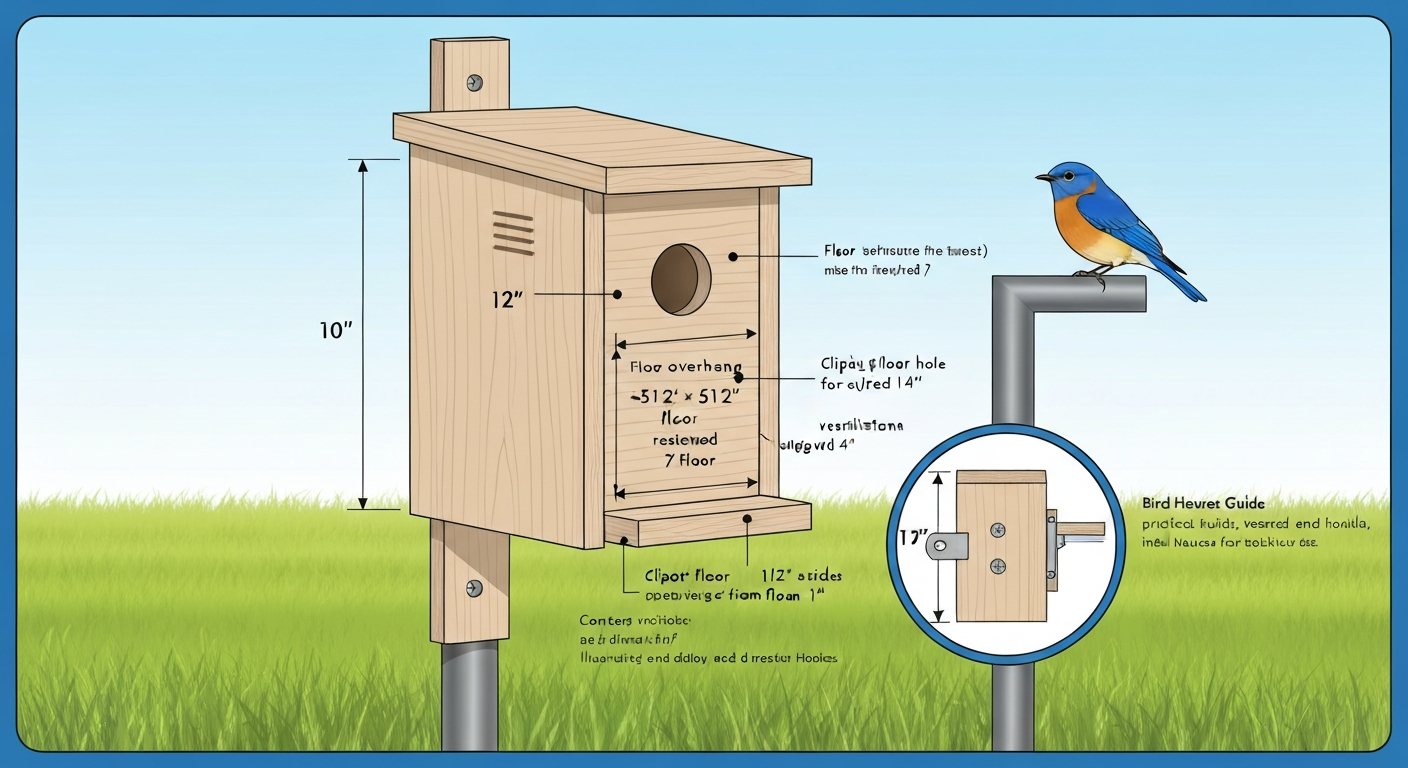
Most backyard bird houses should be mounted between 5 and 15 feet off the ground, but the right number depends almost entirely on the species you're trying to attract. Bluebirds do best at 4–6 feet, tree swallows at 5–6 feet, chickadees and wrens at 5–10 feet, nuthatches at 5–20 feet, kestrels at 12–20 feet, and purple martins at 12–18 feet. Nail those species-specific ranges, add a predator guard to the mounting pole or post, face the entrance away from prevailing wind, and you'll be in good shape before the first pair even scouts the box.
How High Should a Bird House Be Mounted? Exact Tips
Maya Thompson
5 May 2026
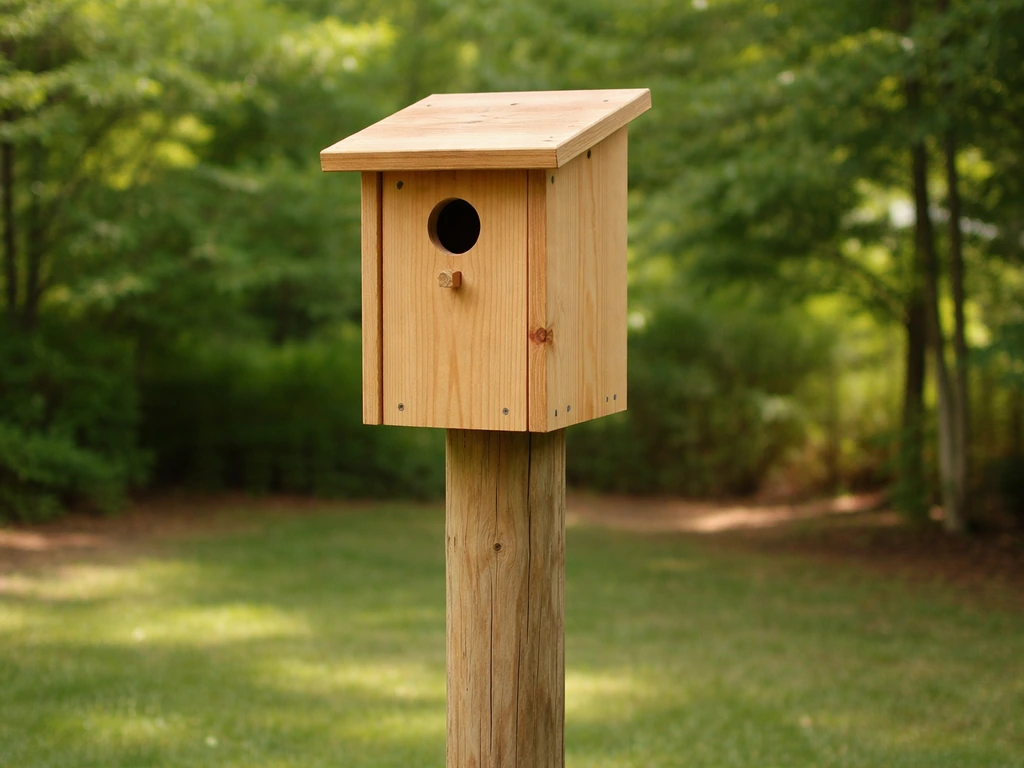
Height Guidelines by Bird Type
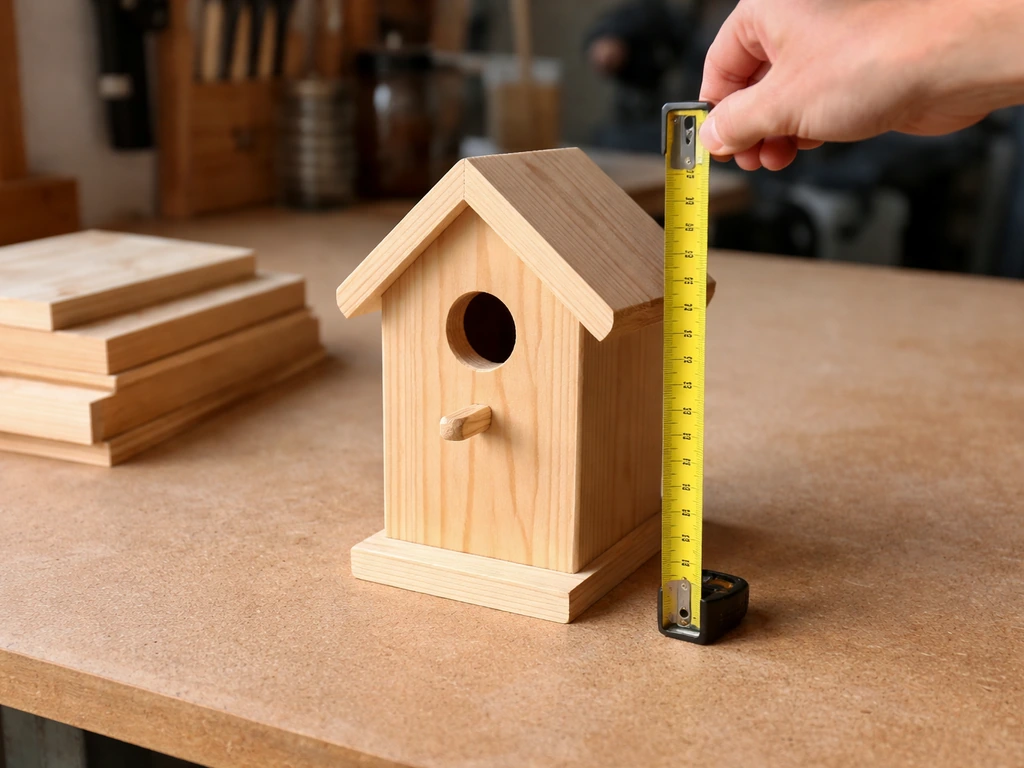
These are the numbers you actually want to hang on the wall of your workshop. If you are still unsure where to start, use this guide to dial in the best height for bird house based on bird type and yard conditions. Heights are measured from the ground to the bottom of the entrance hole, which is the standard reference point used by NestWatch and most wildlife agencies. If your box plan gives you a floor-to-hole measurement, add that to however high the box bottom sits off the ground to get your true mounting height.
| Species | Entrance Hole Size | Recommended Height (entrance hole) | Minimum Box Spacing |
|---|---|---|---|
| Eastern Bluebird | 1 1/2" | 4–6 ft (up to 8 ft if predator pressure is high) | 250–300 ft |
| Tree Swallow | 1 3/8" | 5–6 ft | 35 ft (paired boxes) |
| Black-capped Chickadee | 1 1/8" | 5–15 ft | N/A (territorial, one box per territory) |
| Carolina Wren | 1 1/2" | 5–10 ft | 200 ft |
| House Wren | 1 1/8" | 6–10 ft | 200 ft |
| White-breasted Nuthatch | 1 1/4" | 5–20 ft | ~1,040 ft |
| American Kestrel | 3" | 12–20 ft (range 8–30 ft) | Large open territory |
| Purple Martin | 2 1/8" (round) | 12–18 ft | Open colony housing |
A few quick notes on the outliers. Bluebirds are flexible in the wild (they'll use cavities anywhere from 2 to 50 feet up in trees), but for nest boxes in suburban yards where cats and raccoons are active, 6–8 feet is a safer floor. Tree swallows are unusually tolerant of close neighbors of the same species when boxes are paired, but pairs should still be at least 35 feet from the next pair. Purple martins are in a class of their own: housing height is more critical for them than for any other species on this list, and getting into the 12–18 foot sweet spot matters a lot for initial colony establishment. That topic deserves its own deep dive, which is why martin housing height gets its own detailed treatment elsewhere on this site.
What Actually Changes the Right Height for Your Yard
The species table above is a starting point, not a final answer. Three variables can push you toward the top or bottom of any species range: habitat structure, predator pressure, and competition from other birds or boxes.
Habitat and Surroundings
Open yards with short grass or meadow favor lower mounts for bluebirds and swallows because the birds hunt from low perches and want a clear flight line to the entrance. Wooded edges with shrubs and saplings around the box generally call for mounting at the higher end of the range so the entrance hole has a clear line of sight and the box isn't buried in vegetation. For kestrels specifically, you want open grassland or agricultural fields with minimal overhead obstruction. Purple martin housing has the strictest habitat rules of any species here: the pole must be in an open area with no tall trees within 40 feet and it needs to be within about 30–120 feet of human housing. Martins associate human presence with safety, so putting the colony housing out in the far corner of a large rural property usually backfires.
Predator Pressure
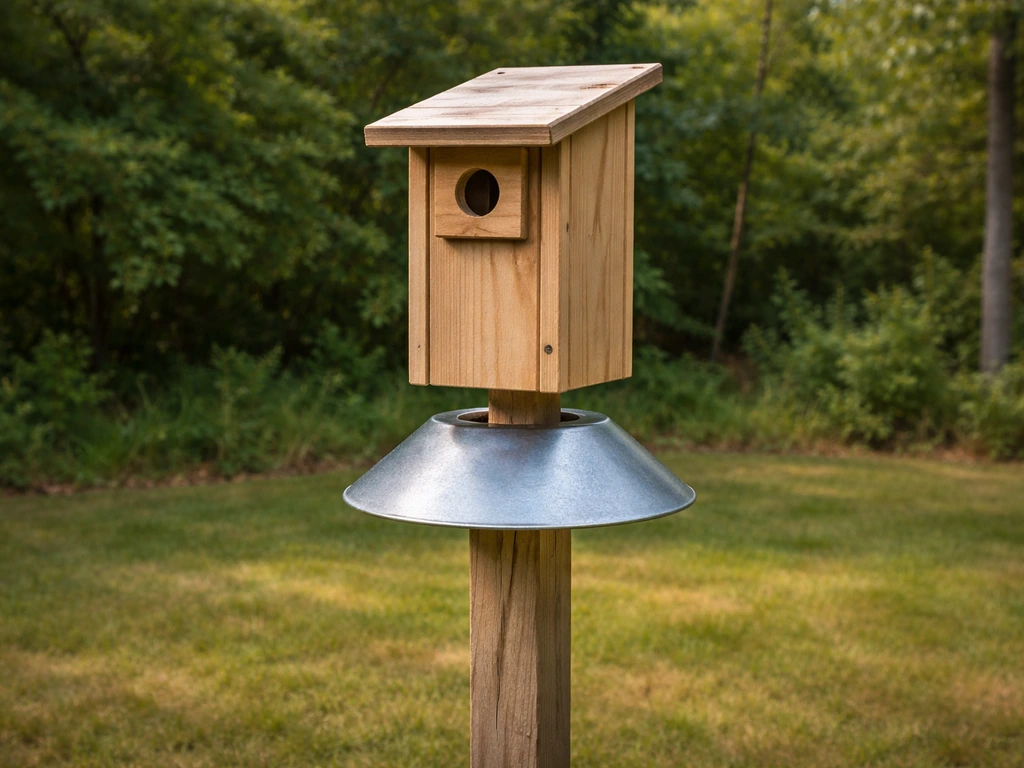
This is the variable most people underestimate. If raccoons, cats, or snakes are common in your area, mounting a bluebird box at 4 feet with no guard is essentially setting a trap for the nesting birds. Texas Parks & Wildlife also advises mounting many cavity-nesting birdhouses at least about 5 feet above the ground and cautions against using unsuitable structures mounting a bluebird box at 4 feet with no guard. In high-predator environments, bump to the upper end of the recommended range and always add a predator guard to the mounting pole. Research tracked by NestWatch shows boxes with predator guards have roughly 6.7% higher nesting success than unguarded boxes, which is a meaningful difference across a season. Raccoons and cats will leap onto a box roof and reach down through the entrance hole with a front paw, so even a large roof overhang (the recommended minimum is about 5 inches of extension beyond the front face) helps reduce that risk alongside a baffle.
Competition and Spacing
Boxes placed too close together invite territorial fights that result in both boxes sitting empty. House sparrows and European starlings will claim boxes intended for native species and evict or kill nesting birds. Starling-resistant entrance holes (the crescent or oval shape the PMCA recommends for martin housing) and standard NestWatch entrance sizes help filter out unwanted tenants before they move in. If you're running a bluebird trail or managing multiple boxes, keep individual boxes a minimum of 250–300 feet apart, or use the tree-swallow pairing trick: put two boxes 5–10 feet from each other with pairs set 300 feet apart. Tree swallows will occupy one box and actually chase away competing swallows, leaving the paired box free for bluebirds.
Measuring Mounting Height the Right Way
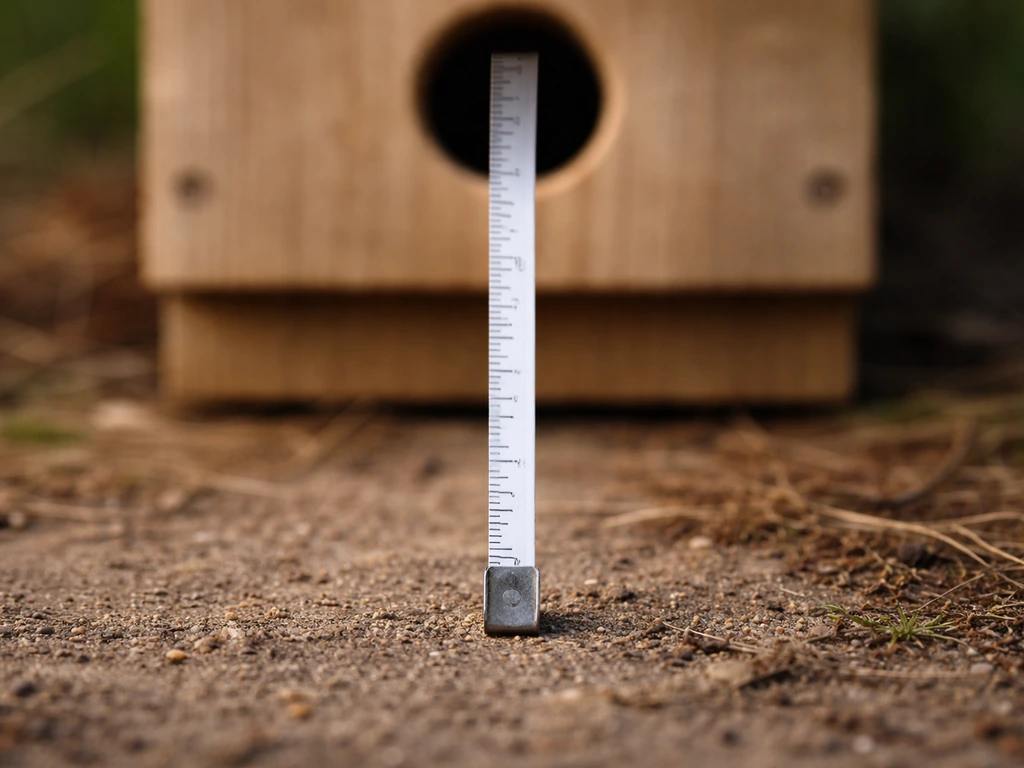
Always measure from the ground to the bottom edge of the entrance hole, not to the box floor, not to the roof, and not to where the pole meets the box. The NestWatch monitoring protocol is explicit on this: entrance hole height is the standard reference point for nest box height. If you measure to the roof or the floor, your numbers will differ from published species guidance and you'll second-guess yourself unnecessarily.
The practical process is simple. Mount the box at your target height, then use a measuring tape from the ground straight up to the center of the hole opening. If you're working alone on a tall pole, a laser distance meter pointed straight up from the ground level makes this a one-person job. For most songbird boxes in the 5–10 foot range, a standard tape measure works fine. Mark your pole before you set it in the ground: subtract the below-ground depth from your total pole length, mark the above-ground section where the box bottom will attach, and confirm that the entrance hole bottom will land at your target height once the box is bolted on.
Mounting Setups: Pole, Post, Fence, Eave, and Rail
Each mounting style has real tradeoffs for height adjustment, predator-proofing, and long-term maintenance access. Here's how they compare and where each one works best.
| Mounting Type | Best For | Predator Guard Options | Height Flexibility | Notes |
|---|---|---|---|---|
| Freestanding steel pole | Bluebirds, wrens, swallows, chickadees | Stovepipe or cone baffle on pole | High (adjust before setting) | Best all-around option; set in concrete 18–25" deep for stability |
| Wooden post (4x4) | Bluebirds, wrens, general songbirds | Cone baffle or wrap-around guard | Moderate (height fixed once set) | Readily available; can wobble over time without concrete footing |
| Fence post or rail | Wrens, chickadees in smaller yards | Difficult to baffle effectively | Low | Convenient but hard to guard; avoid if cat/raccoon pressure is high |
| Tree trunk | Nuthatches, chickadees, kestrels | Acetate wrap below box on trunk | Low (height fixed at install) | Hard to baffle; use acetate sheet method to deter snakes |
| Building eave or soffit | Wrens, swallows, occasionally kestrels | Very limited | Low | Works for species comfortable near human activity; no guard = vulnerable |
| Telescoping martin pole | Purple martins | Pole-mounted predator guard | High (pole adjusts for nest checks) | PMCA-recommended; set in concrete; never attach wires to pole or house |
One important caution from TWRA: never mount a nest box on a fence post, tree, or structure where you cannot physically attach a predator guard. If you can't get a baffle on it, predators will eventually find it. The stovepipe baffle design is widely recommended for climbing predators, specifically a cylinder about 24 inches long and 8 inches in diameter centered on the pole below the box. Cone baffles work well too and are easier to source commercially. For tree-mounted boxes protecting against snakes, wrapping a smooth acetate sheet around the trunk below the box creates a slippery surface snakes can't grip.
For purple martin poles specifically: no wires attached to the pole or housing. Ever. Raccoons and snakes will use those wires as a bridge directly to the colony, and the Connecticut DEEP specifically flags this as a critical mistake. Set the pole in concrete with 18–25 inches below ground, use a pole with a pulley or tilt mechanism so you can lower the housing for nest checks, and install a predator guard at the base of the pole.
Step-by-Step Installation and Spacing
- Choose your target species and confirm the correct entrance hole size and height range from the species table above. Cut or purchase a box sized to match that species before you dig anything.
- Select a mounting location with appropriate habitat: open lawn or meadow for bluebirds and swallows, woodland edge for nuthatches and chickadees, open area clear of tall trees for martins and kestrels.
- Mark the pole or post at the below-ground depth (18–25 inches for most steel poles; deeper is better in soft soil or high-wind areas). Dig or auger the hole, set the pole, and pour a concrete footing. Let it cure at least 24 hours before loading the pole with a box.
- Before raising the box, attach your predator guard to the pole at a height that a jumping raccoon or climbing snake can't bypass — typically 3–4 feet off the ground for a cone or stovepipe baffle.
- Mount the box so the entrance hole bottom lands at your target height. Measure ground to hole bottom and adjust the mounting bracket position on the pole as needed before final tightening.
- Orient the entrance hole. Face it away from prevailing wind and driving rain (in most of the US, this means east or southeast). Avoid facing the hole into afternoon western sun, which can overheat a box during summer. TWRA specifically recommends an eastward-facing orientation for most songbird boxes.
- Check clearance: make sure there are no branches, fence rails, or wires within a few feet of the entrance that predators could use to jump across to the box or that would block the birds' flight path in and out.
- If placing multiple boxes, verify your spacing matches species requirements. Use the species table above. For bluebird trails, walking the site and marking your 250–300 foot intervals before digging saves a lot of re-work.
- Record the final height (ground to entrance hole bottom), GPS coordinates, and orientation in a simple notebook or monitoring app. This makes year-to-year comparison much easier.
Safety, Access, and Maintenance After Hanging
Getting the height right is only half the job. A bird house that you can't safely access and clean becomes a liability rather than a benefit over time. Parasites, old nesting material, and unhatched eggs accumulate and reduce the chance any bird will use the box the following year.
When and How to Clean
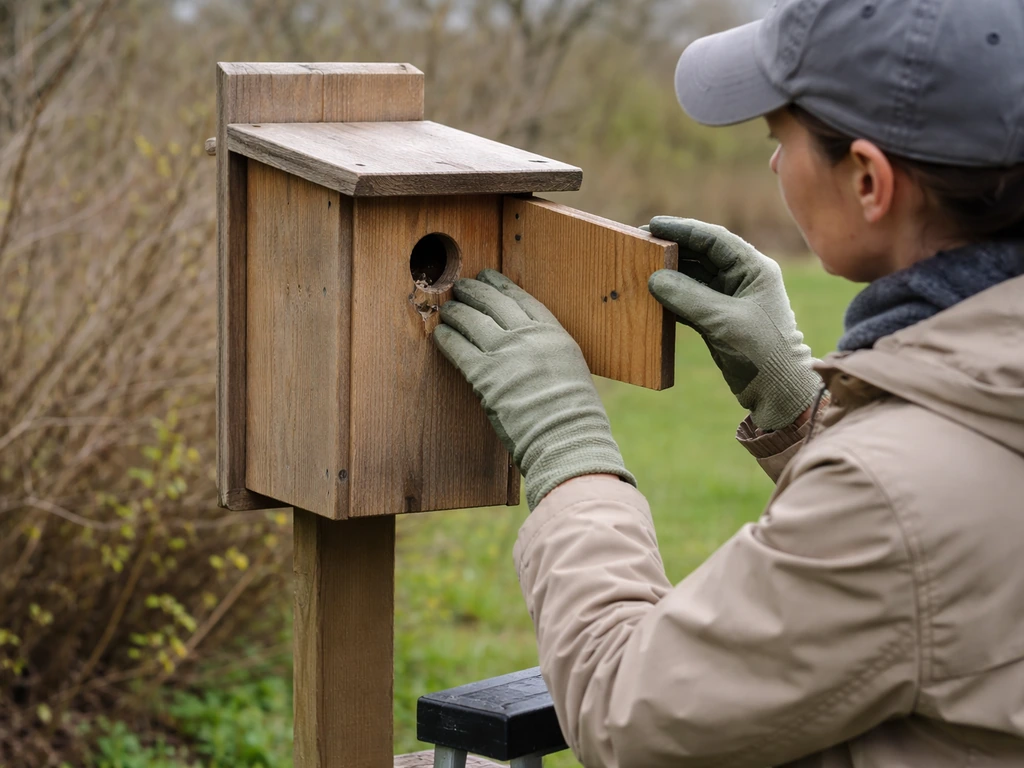
Clean out boxes in late fall after breeding season is definitively over for your area, or again in very early spring before the first scouts arrive. For most of the continental US, a November clean and a February check-and-clean covers both windows. Open the box, remove all old nest material (gloves recommended, as some birds carry mites), scrub the interior with a stiff brush, and let it dry completely before closing it up. Do not use pesticides or chemical cleaners inside the box.
Checking Boxes During the Nesting Season
If your box is at a height you can reach from the ground or a short step ladder, weekly nest checks during active nesting are fine and help you catch predator damage early. Keep checks brief: open, look, close in under 30 seconds. Never check a box that contains eggs or nestlings in cold or rainy weather. If your martin housing is on a telescoping pole, lower it for checks during the day when adults are out foraging. This is exactly why the PMCA emphasizes vertically accessible martin poles: you cannot responsibly manage a martin colony from the ground.
How Height Relates to Your Own Safety
For any box mounted above about 8 feet, use a stable ladder rated for your weight plus tools. Have a second person hold the base when working above 6 feet. For kestrel boxes and martin housing in the 12–20 foot range, a combination of a good ladder and a telescoping pole design is far safer than trying to reach a fixed-mount box at that height repeatedly over a season. If you're on a slope, set the ladder on a board to level the feet before climbing.
Why Birds Aren't Moving In (and How to Fix It)
Empty boxes after a full season are frustrating, but the cause is almost always traceable. Work through this checklist before you move or replace anything.
- Wrong height for the species: Double-check your entrance hole bottom against the species table. A bluebird box at 10 feet or a wren box at 2 feet are both outside the sweet spot and will often sit empty.
- Wrong entrance hole size: Too large and house sparrows or starlings take over. Too small and the target species physically can't get in. Measure the hole with calipers or a drill bit gauge.
- No predator guard: If there's been any predator activity (scratch marks around the hole, box knocked off the mount, broken eggs on the ground), adding a baffle is your first step. Predator raids cause nest abandonment even if the adults aren't killed.
- Entrance facing into prevailing wind or afternoon sun: A hot, drafty box gets avoided. Reorient toward the east or southeast if possible.
- Too much vegetation blocking the approach: Birds, especially bluebirds and swallows, want a clear visual and flight path to the entrance. Trim back any branches or tall grass that grew up around the mount since last season.
- Box placed too close to another box: Territorial competition keeps both boxes empty. Increase spacing to match the species minimums in the table above.
- Habitat mismatch: A bluebird box in a dense woodland won't attract bluebirds, even at the perfect height. Match the box site to the species' known habitat preference.
- Poor drainage or ventilation: A wet, stuffy box gets avoided. Confirm that drain holes exist at the box floor corners and that ventilation gaps are open at the top of the side walls. This is especially critical in humid climates.
- Box is brand new and smells like fresh-cut wood or chemical treatment: Give it a season to weather. Do not paint the interior or use pressure-treated lumber inside the box.
- Timing: If you just put the box up in June, most cavity nesters have already chosen a site. Install or clean boxes before early March in most regions so scouts find them ready during the peak search window.
If you've addressed all of the above and still have no occupancy after two full seasons, the most honest answer is usually habitat. The best-built, perfectly-mounted box in the wrong yard will sit empty indefinitely. Consider whether the target species is actually present in your area at all: check eBird or a local birding group to confirm. If the species is genuinely present but not using your box, try relocating the mount to a different spot in your yard before assuming the box itself is the problem. Sometimes 30 feet in a new direction is all it takes.
FAQ
How do I measure “how high” a bird house should be if my box plan uses floor-to-hole or roof height?
If your plan lists “box height” as floor-to-hole or top-to-ground, convert it. Your target measurement is from the ground to the bottom edge of the entrance hole, so add the below-floor-to-hole distance from the plan to the height of the box bottom above ground (or re-measure from the ground using a tape to the hole opening).
What height should I choose if I’m trying to attract more than one bird species with the same setup?
Don’t average two species recommendations. Even if the boxes are mounted on the same wall, each entrance height should match the species you want, because birds choose based on entrance access and flight patterns. If you can’t mount separately, choose the dominant target species and follow its height range.
How should my yard layout change the mounting height within a species’ recommended range?
For bluebirds and swallows, mounting at the low end works best when the birds have an open, unobstructed approach path (short grass, minimal shrubs). If your yard is thick with vegetation around the box, move toward the upper end so the entrance has a clear sightline and isn’t partially “hidden” by cover.
If I move the bird house up or down for habitat, do I need to adjust the predator guard too?
Yes, but treat it as a separate decision from entrance height. Predator guards are most effective at the pole or post level, so if you adjust height for habitat or competition, make sure the baffle still sits in the correct position below the box and doesn’t leave gaps predators can exploit.
What’s the best way to relocate a bird house when it stays empty, without creating confusion about the cause?
Move cautiously. If you relocate a box, keep the height consistent and change only one variable at a time, usually the horizontal placement. A common strategy is shifting 30 feet in a new direction while preserving the same entrance-hole height so you can tell whether location versus height is the cause.
Is it okay to mount a bird house higher than the recommended range if I can’t easily reach it?
If you’re above about 8 feet, plan for maintenance access before you finalize the height. A box that’s “right” for birds but impossible to inspect and clean becomes a long-term liability, so prioritize reachable designs (ground access tools, telescoping poles, or ladder safety) over maximum height.
How far apart should multiple bird houses be if I want them to stay occupied?
Yes for some species, but not as a substitute for the correct height and spacing rules. If you’re trying to manage territorial conflict, keep individual boxes at least 250 to 300 feet apart for the same species, or use pairing distances like putting two boxes 5 to 10 feet apart with those pairs separated from the next pair by about 300 feet.
Why might purple martins ignore a box even when I’m in the correct 12 to 18 foot height range?
For purple martins, height is only part of the setup. They also require a pole placement in open conditions (no tall trees nearby) and they prefer being near human housing within their zone of use, far-corner rural placement often reduces interest even when height is perfect.
On a slope or uneven yard, how should I measure entrance-hole height correctly?
Measure on the same day and from the same reference point. Entrance height should be ground to the bottom edge of the hole centerline, not to the roof, not to the box floor, and not to the point where the box meets the pole. If your ground slopes, level your measurement by using the actual ground level under the pole at the ladder or tape reference point.
When is the safest time to clean or check a bird house without reducing the odds of next use?
The “best” time is after most breeding is over (late fall) for a definitive clean-out, or in very early spring before first scouts arrive. Avoid deep disturbance during active nesting, and when you do check, keep it brief and never check if eggs or nestlings are present during cold or rainy weather.
If I’m getting starlings or sparrows, does changing height fix the problem or should I adjust the box design and placement?
Yes, because it’s possible to get the height right but still invite unwanted occupants. If house sparrows or starlings are common, ensure the entrance design matches the target species guidance (for example, martin-appropriate entrance shapes) and avoid putting boxes too close together, since conflicts can cause both boxes to go unused.
What’s the practical way to do nest checks safely for high-mounted bird houses?
If you can reach weekly from the ground or a short step ladder, brief checks during active nesting can help you catch damage early. For boxes mounted high (especially kestrels and martins in the 12 to 20 foot range), use a ladder plan or a telescoping pole, because repeatedly reaching a fixed mount increases risk and often leads people to skip needed checks.
Next Article
Blue Bird House Instructions: DIY Plans, Sizes & Mounting
DIY bluebird house: step-by-step build, exact cuts and hole sizes, mounting, predator guards, cleaning, and care.